

(UroToday.com) The 2024 GU ASCO annual meeting featured a prostate cancer session and a presentation by Dr. Hong Song discussing the utility of total and anatomically contextualized quantitative 18F-DCFPyL PET at biochemical recurrence to predict subsequent biochemical progression-free survival in patients with prostate cancer. PSMA PET has been shown to detect more metastasis and alter management at biochemical recurrence, but it remains to be determined that it changes oncologic outcome. As such, Dr. Hong and colleagues assessed the quantitative parameters on 18F-DCFPyL PET at biochemical recurrence and evaluated their association with tumor volume and metastatic locations with the subsequent biochemical progression free survival.
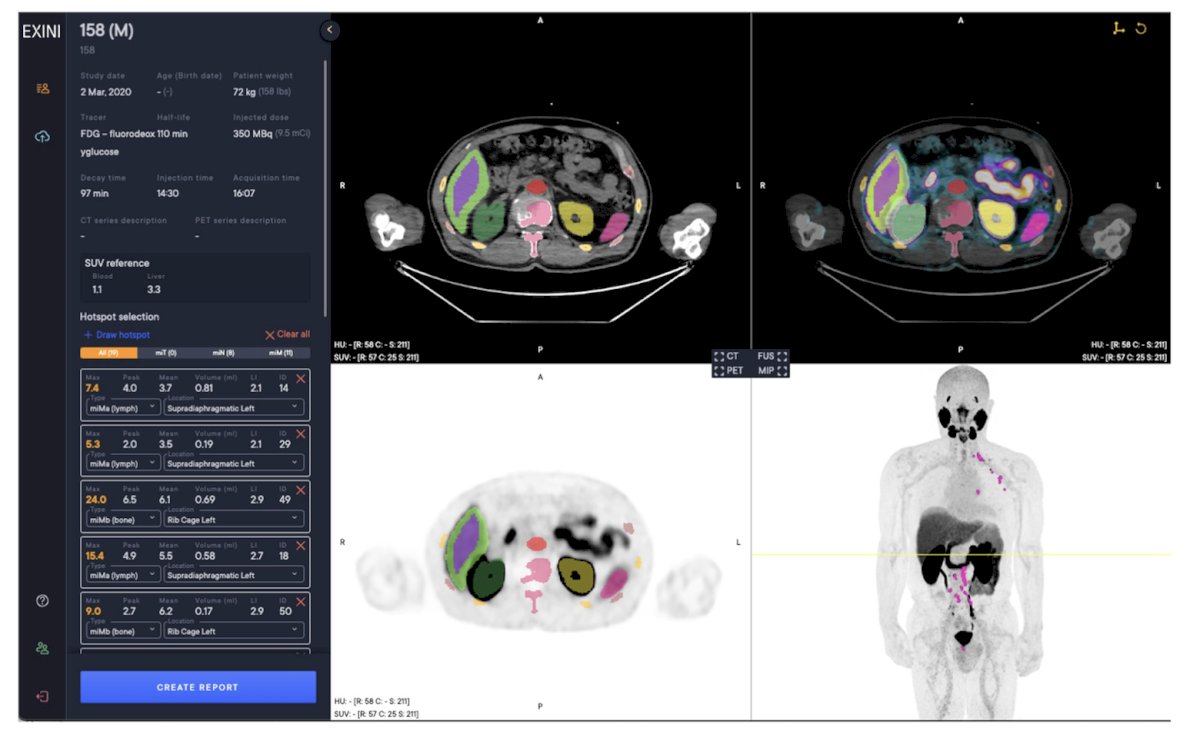
This study was a retrospective image analysis and longitudinal follow up of a prospective study evaluating 18F-DCFPyL PET in biochemical recurrence. Patients were treated with ADT and/or metastatic directed therapy based on imaging findings. The 18F-DCFPyL PET images were quantitatively analyzed by the aPROMISE (PYLARIFY AI) application, a semi-automated software for comprehensive analysis and structured reporting of PSMA PET/CT. aPROMISE uses deep learning to segment detailed anatomical information from the CT images and uses this information in combination with the PET images to detect and quantify candidates for prostate cancer lesions. The reader works in tandem with the software to vet the final list of lesions, from which the quantitative assessments and final report is created automatically:
SUV mean, PSMA positive total tumor volume, and aPSMA scores (a quantitative score for tumor burden measuring the interaction of tumor volume and uptake), stratified by local tumors (aPSMA-miT), regional lymph nodes (aPSMA-miN) and distant metastases (aPSMA-miMa for extrapelvic metastases, miMb for bone metastases and miMc for other organ metastases) were obtained based on the miTNM classification:
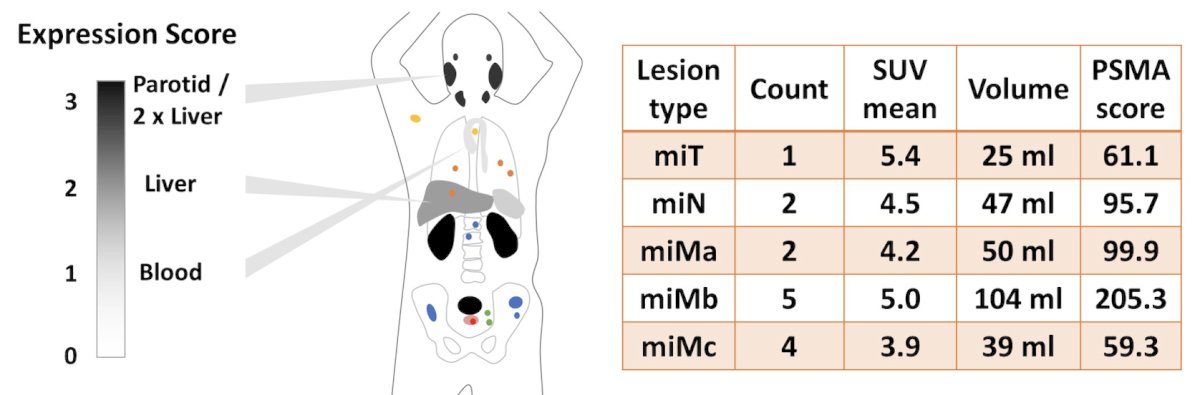
The association of these quantitative parameters with the subsequent biochemical progression free survival was evaluated.
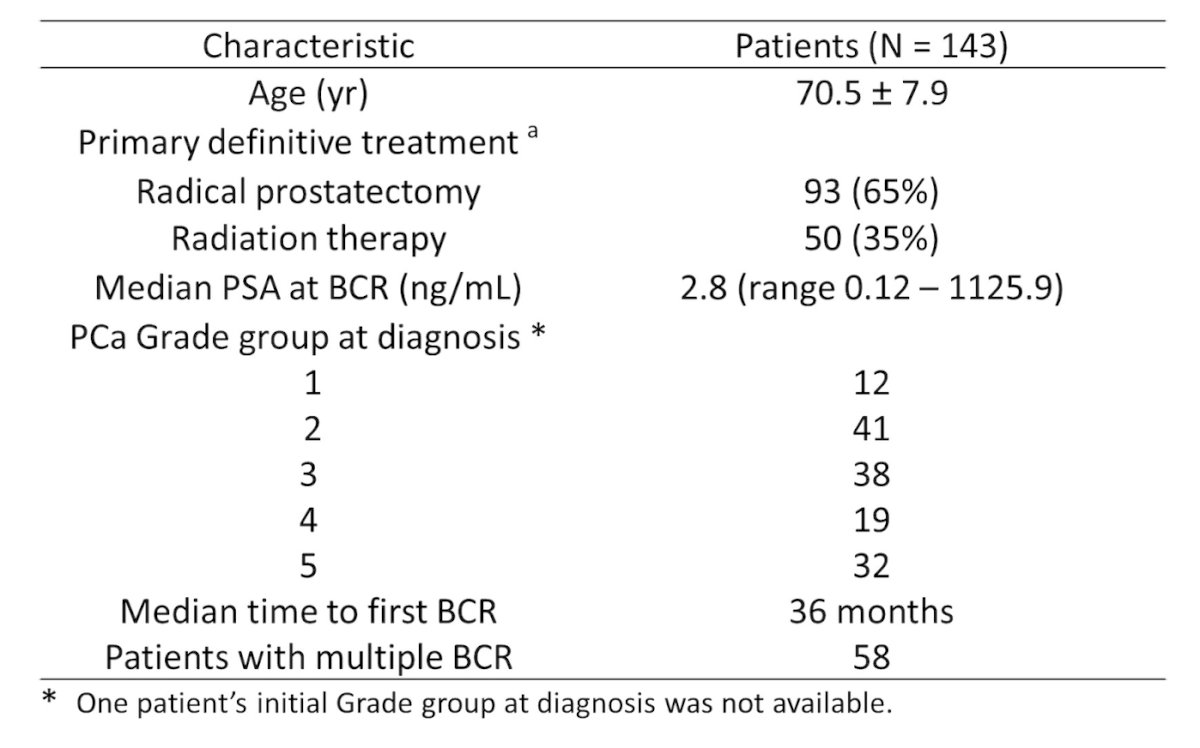
There were 143 patients in this study with a mean age of 70.5 ± 7.9 years (range 50 -93 years) and median PSA 2.8 ng/mL (range 0.12 – 1125.9 ng/mL) included in the quantitative image analysis:
There were 80 of 143 patients (56%) that had nodal metastases, 51/143 patients (36%) had bone metastases, and 16 of 143 patients (11%) had visceral metastases. Over a median follow up of 40 months, 82 of 143 patients (57%) progressed again biochemically after metastatic directed therapy. The median biochemical progression free survival was 26.9 months. Quantitative analysis of 18F-DCFPyL PET found that the subsequent biochemical progression free survival is significantly associated with aPSMA-miMb (p = 0.003), aPSMA-miN (p = 0.005), aPSMA-miT (p < 0.001), and PSMA positive total tumor volume (p = 0.006), but not with SUVmean, SUVmax or aPSMA-miMc:
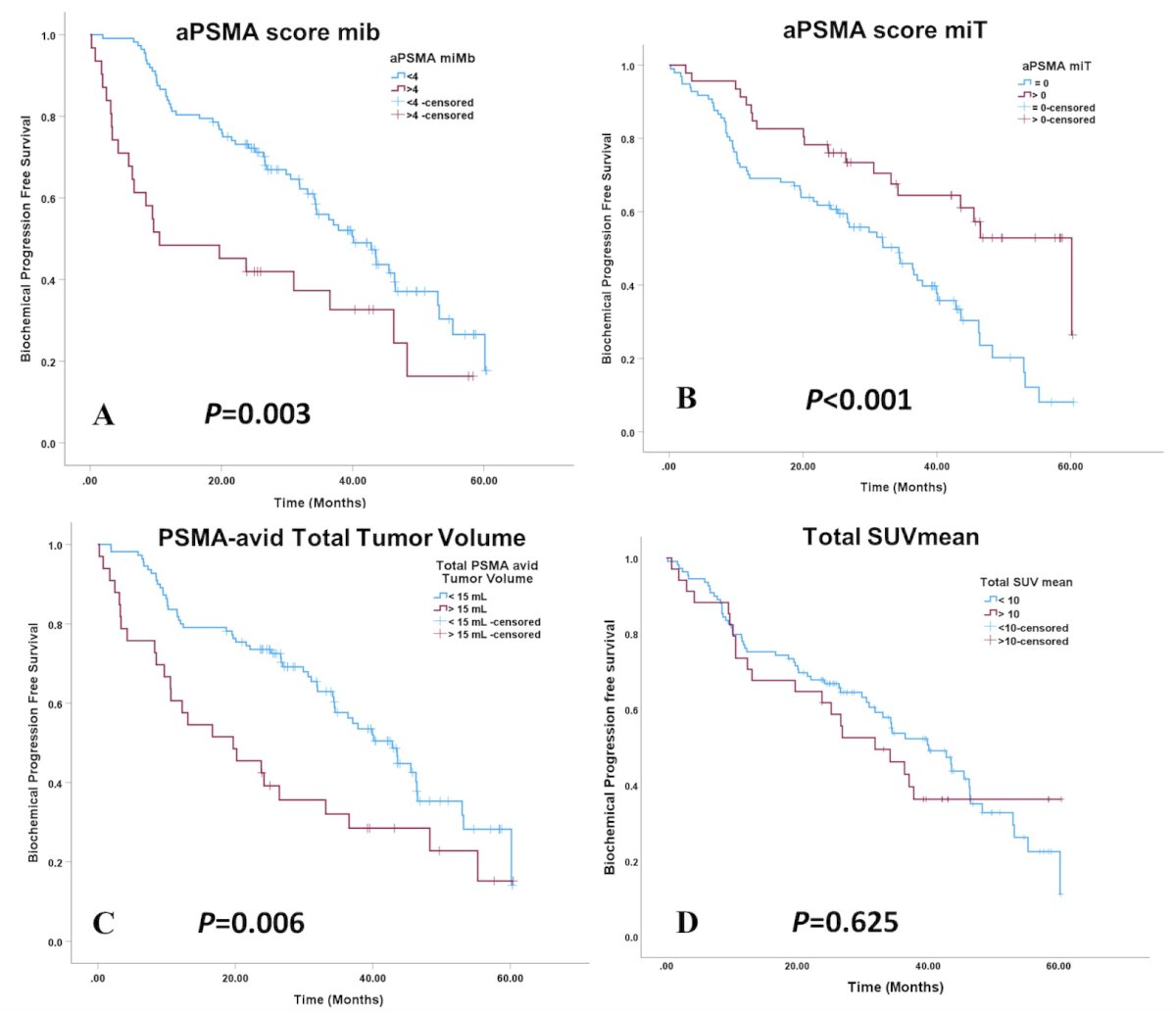
Dr. Song concluded his presentation discussing the utility of total and anatomically contextualized quantitative 18F-DCFPyL PET at biochemical recurrence to predict subsequent biochemical progression-free survival in patients with prostate cancer with the following take-home points:
- Anatomically contextualized aPSMA score and total volume predicts subsequent biochemical progression free survival in biochemical recurrent prostate cancer patients
- Future research directions include applying aPROMISE to other disease stages of prostate cancer, such as de novo metastatic cancer at staging
Presented by: Hong Song, MD, PhD, Stanford University, Palo Alto, CA
Written by: Zachary Klaassen, MD, MSc – Urologic Oncologist, Associate Professor of Urology, Georgia Cancer Center, Wellstar MCG Health, @zklaassen_md on Twitter during the 2024 American Society of Clinical Oncology Genitourinary (ASCO GU) Cancers Symposium, San Francisco, CA, January 25th – January 27th, 2024