

(UroToday.com) The 2024 GU ASCO annual meeting featured a urothelial carcinoma rapid oral abstract session, including a presentation by Dr. Syed Muneeb Alam discussing defining molecular features associated with microsatellite instability (MSI) and response to immune checkpoint blockade. Identifying biological determinants of response to immune checkpoint blockade in urothelial carcinoma remains an ongoing challenge.
Numerous clinical trials have demonstrated that MSI and deficient mismatch repair (dMMR) are associated with sensitivity to immune checkpoint blockade in urothelial carcinoma. However, MSI status may only partially explain this sensitivity, and the molecular features that distinguish MSI-high (MSI-H) urothelial carcinoma are not well described.
This was a retrospective review of urothelial carcinoma patients having undergone targeted exome sequencing of up to 505 genes. Using the previously validated MSIsensor score, Dr. Alam and colleagues identified MSI-H (score ≥10) and MSI stable (score <3) urothelial carcinoma tumors. Additionally, tumor mutational burden was quantified. Gene alterations enriched in MSI-H urothelial carcinoma were evaluated using the false discovery method with q<0.05 considered statistically significant. Mutational signatures were derived and gene enrichment analysis was performed comparing MSI-H and MSI stable urothelial carcinoma. Survival analysis was performed using the Kaplan-Meier method with Cox proportional-hazards to determine progression-free survival and overall survival based on molecular features.
Targeted exome sequencing data were available for 2,872 urothelial carcinoma specimens, of which 60 (2.1%) were MSI-H tumors. The median tumor mutational burden was 51.8 mut/Mb (IQR 40.1 – 61.7) and the MMR gene most frequently altered was MSH2 (57%) with few mutations in PMS2 (3%). Germline testing (n = 52) revealed that 24 (46.1%) patients carried germline mutations: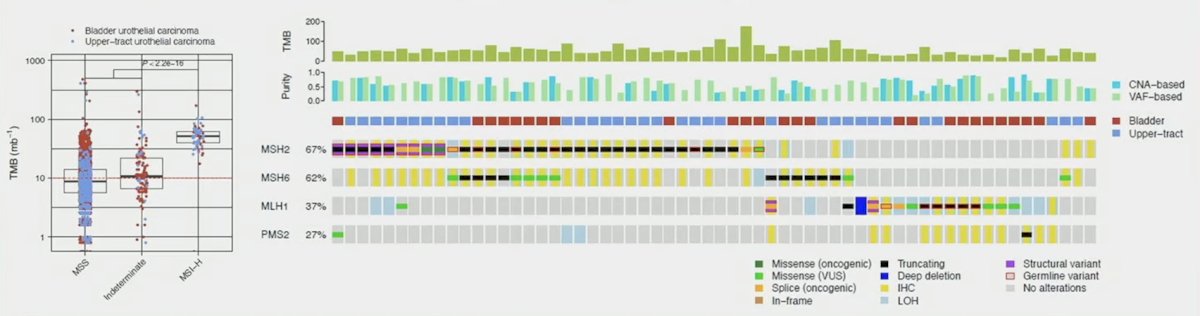
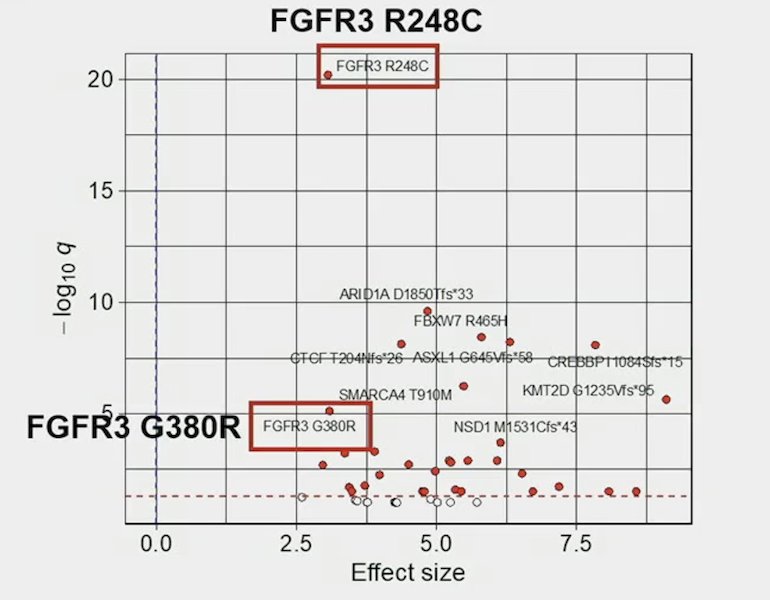
Notable gene alterations enriched in MSI-H tumors included:
- FGFR3 R248C, which has previously been described in Lynch-Syndrome associated upper tract urothelial carcinoma
- FGFR3 G380R, which is infrequently associated with MSI-H/dMMR tumors
- Chromatin-modifying gene mutations (ie. CREBBP, KMT2D, ARID1A)
Dominant mutational process signatures in MSI-H urothelial carcinoma included 67.3% of tumors being APOBEC-dominant and 2.5% were dMMR-dominant. Most MSI-H tumors carry dMMR-dominant mutational signatures, and some MSI-I (11.2%) and MSI-stable (0.3%) tumors carry dMMR dominant mutational signatures: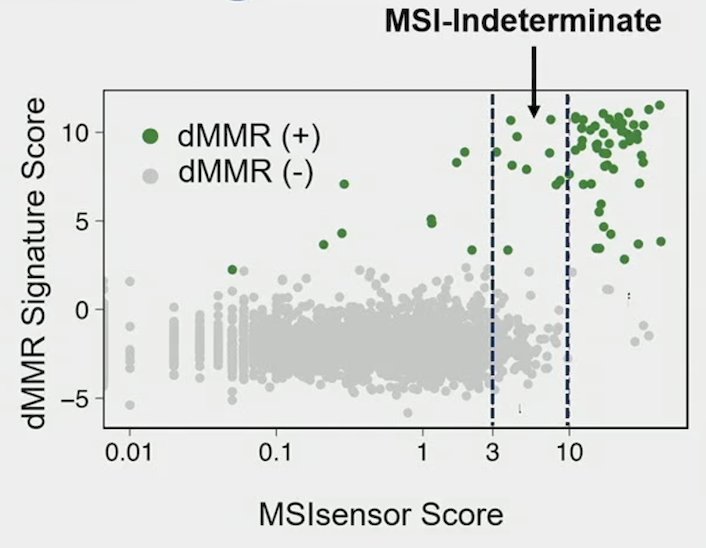
Over a median follow-up of 18.4 months, MSI-H urothelial carcinoma demonstrated superior overall survival (p < 0.001) following immune checkpoint blockade. Additionally, among patients with tumor mutational burden ≥10 mut/mB, MSI-H patients had improved overall survival (p = 0.0027):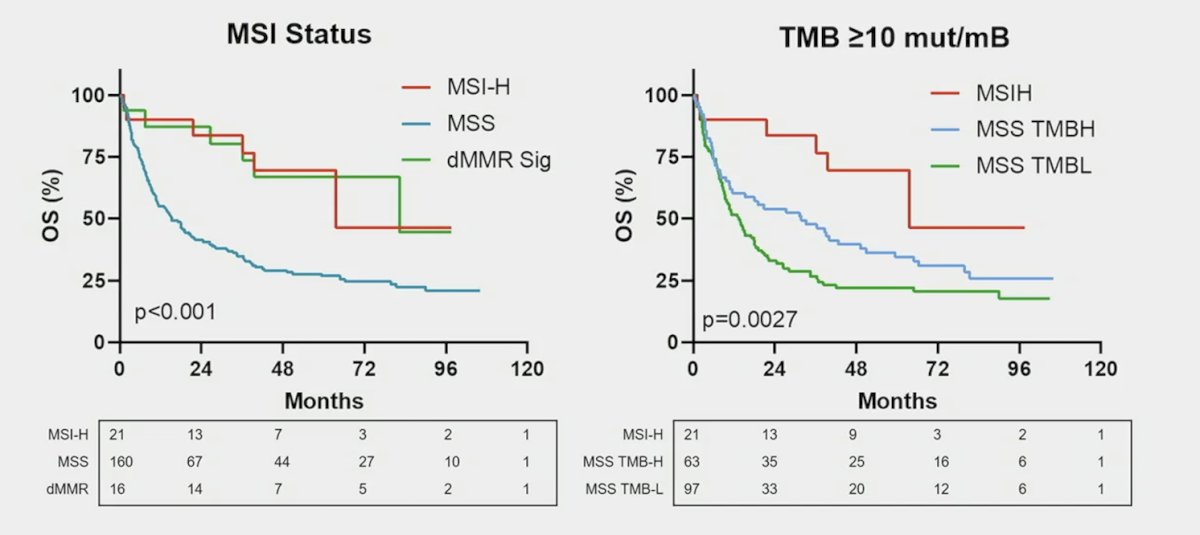
Dr. Alam concluded his presentation discussing defining molecular features associated with MSI and response to immune checkpoint blockade with the following take-home points:
- The most frequently altered MMR gene in MSI-H urothelial carcinoma was MSH2
- Over half of MSI-H cases did not harbor a germline component
- MSI-H urothelial carcinoma has a distinct genomic profile characterized by:
- High tumor mutational burden
- Enrichment in FGFR3 and chromatin modifying gene alterations
- Defining mutational signatures
- MSI-H urothelial carcinoma is exquisitely sensitive to immune checkpoint blockade
Presented by: Syed Muneeb Alam, Memorial Sloan Kettering Cancer Center, New York, NY
Written by: Zachary Klaassen, MD, MSc – Urologic Oncologist, Associate Professor of Urology, Georgia Cancer Center, Wellstar MCG Health, @zklaassen_md on Twitter during the Genitourinary (GU) American Society of Clinical Oncology (ASCO) Annual Meeting, San Francisco, CA, Thurs, Jan 25 – Sat, Jan 27, 2024.