

(UroToday.com) On the first day of the American Society for Clinical Oncology (ASCO) Genitourinary Cancer Symposium 2022, Poster Session A focussed on the care of patients with prostate cancer. Dr. Tutrone presented results from the HERO study, focusing on men who did not continue androgen deprivation therapy on an ongoing basis. By way of background, the phase 3 HERO study evaluated the oral GnRH receptor antagonist, relugolix, and demonstrated superior sustained testosterone suppression to leuprolide (96.7% vs 88.8%; difference: 7.9% [95% CI, 4.1 to 11.8; P < 0.001]).
While the design of HERO has been previously reported and published, to briefly summarize, this was a phase 3 trial which randomized 934 men with advanced prostate cancer in a 2:1 fashion to relugolix 120 mg orally once daily after a single oral loading dose of relugolix 360 mg on Day 1 or leuprolide injections every 12 weeks for 48 weeks. In this subset analysis, the authors examined testosterone recovery among 184 patients who completed 48 weeks of treatment and who did not plan to start alternative androgen deprivation therapy within the following 12 weeks (or within 24 weeks following the last injection of leuprolide 3-month depot). During the 90-day recovery period, assessments included time to testosterone recovery (≥ 280 ng/dL, the lower limit of the normal range) using the Kaplan-Meier method, PSA concentrations in testosterone recovery phase, and adverse events during the recovery phase.
Among the 184 men included in this subset analysis, 137 had received relugolix and 47 had received leuprolide during the randomized phase of the trial. The mean (standard deviation) testosterone levels for men entering the recovery assessment were 427±142 ng/dL and 404±127 ng/dL in the relugolix and leuprolide groups, respectively.
The 90-day cumulative incidence of testosterone recovery to ≥280 ng/dL was 53.9% in the relugolix group compared with 3.2% in the leuprolide group (p = 0.0017).

Of 137 men who had received relugolix, 74 recovered testosterone levels, at a median of 86.0 days (95% CI: 65.0, 92.0). In contrast, among the 47 men who received leuprolide, only two recovered testosterone levels, at a median of 112.0 days (95% CI: 112.0, not estimable).
Not surprisingly then, at the 90-day follow-up visit, the median PSA values were higher among men randomized to relugolix (0.39 ng/mL, range: 0 to 233.1) than leuprolide (0.06 ng/mL, range 0 to 14.0) in the relugolix and leuprolide groups, respectively.

Incidence of adverse events was generally similar in the treatment groups during the recovery phase, with 96% of men experiencing at least one adverse event and 15% of men experiencing a grade ≥3 adverse events in both treatment groups during the recovery phase.
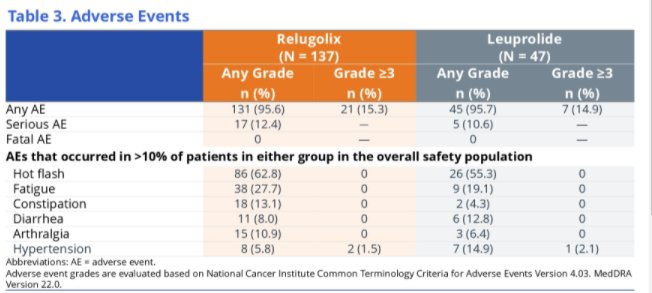
Dr. Tutrone, therefore, concluded that relugolix, an oral nonpeptide GnRH receptor antagonist, had faster and more complete recovery of testosterone to normal levels after treatment discontinuation as compared with leuprolide in this subgroup analysis of men from the phase 3 HERO study.
Presented by: Ronald Tutrone, MD, Chesapeake Urology, Towson, MD