

(UroToday.com) On the first day of the American Society for Clinical Oncology (ASCO) Genitourinary Cancer Symposium 2022, Poster Session A focussed on the care of patients with prostate cancer. Dr. McKean presented a poster focused on the role of chimeric antigen receptor T (CART) cells in the treatment of patients with metastatic castration-resistant prostate cancer (mCRPC) based on the CART-PSMA-02 trial, a multi-center, open-label, phase 1 trial. In this study, the authors assessed both the safety and feasibility of CART-PSMA-TGFβRDN T-cells (PSMA-CART). These PSMA-CART cells are engineered to express a chimeric antigen receptor with specificity to PSMA and a dominant-negative form of TGFβRII which renders PSMA-CART resistant to TGFβ-mediated immunosuppression.
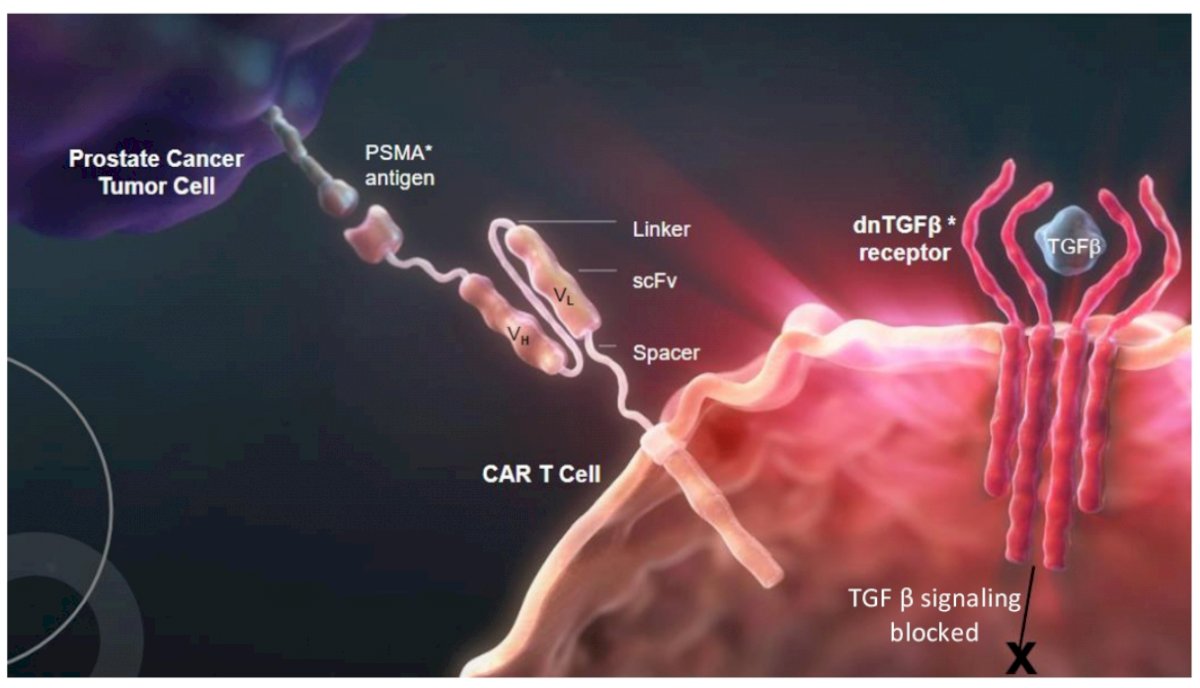
In this phase 1 study design, the authors used a 3+3 dose-escalation study to assess preliminary safety and efficacy of treatment with the goal of determining the recommended phase 2 dose and schedule of PSMA-CART cells following lymphodepleting chemotherapy (LD) with cyclophosphamide and fludarabine.
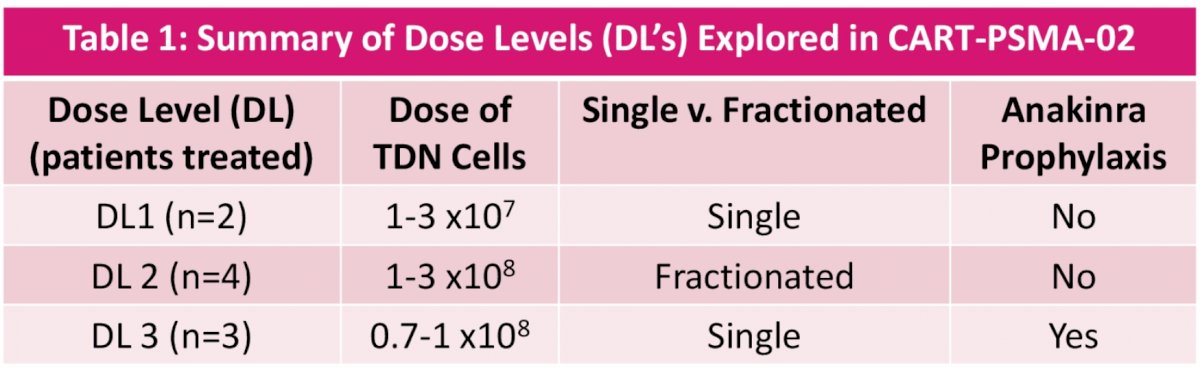
With a data cut-off of October 2021, 9 patients were treated with PSMA-CART of whom 2 received 1-3x10⁷ cells, 4 received 1-3x10⁸ cells, and 3 received 0.7-1x10⁸ cells with anakinra prophylaxis. Grade 1-2 cytokine release syndrome (CRS) was observed in all patients receiving 1-3x10⁸ cells and 2 of 3 patients who received anakinra prophylaxis though no patients developed CRS > G2. In addition to the CRS events, there were two events of immune-effector cell-associated neurotoxicity syndrome (ICANS) of which one was a grade 2 event and one was a grade 5 event.
Two patients experienced dose-limiting toxicity (DLTs) at dose level of 1-3x10⁸, one of whom developed grade 5 events of ICANS and multi-organ failure (MOF) after receiving 30% of his fractionated dose (total dose = 0.9x10⁸). Both the clinical course and autopsy findings for this patient were consistent with macrophage activation syndrome.
After this event, the trial continued with a modified dose of 0.7-1x10⁸ and the incorporation of prophylactic anakinra (100mg SC daily x7 doses). At this dose, another grade 5 event was observed, likely related to immune toxicity, with ferritin levels peaking at >100,000 ng/mL prior to death. For this patient, the autopsy did not identify a definitive cause of death and contributing factors were felt to include metastatic prostate cancer, MOF and coagulopathy.
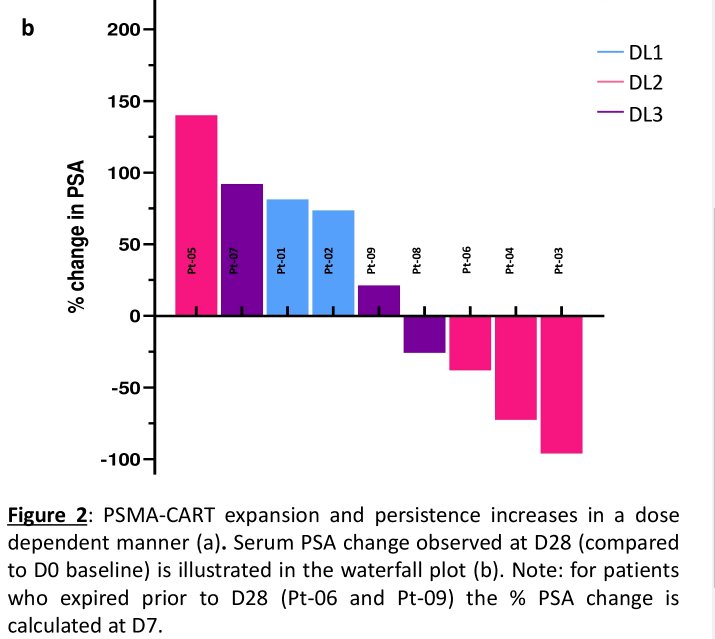
The cytokine levels of the two patients experiencing grade 5 events were elevated compared to all other patients (e.g., IL-6, sIL2RA, MIG/CXCL9, MIP1b/CCL4, IP-10/CXCL19, IL2 and IL1b). Among those patients receiving ≥ 0.9x10⁸ cells (n=7), preliminary efficacy results demonstrated stable disease by RECIST v1.1 at day 28 in four of five evaluable pts. Additionally, decreases in serum PSA were observed in four of seven evaluable patients, with >50% decreases observed in two of five evaluable pts at day 28.
In conclusion, Dr. McKean suggested that PSMA-CART demonstrated preliminary evidence of biological activity in the absence of clear indications of on-target/off-tumor toxicity. However, there is severe immune-mediated toxicities, without clearly understood mechanisms. This study was closed to further enrollment through ongoing research efforts are aimed at exploring patient-specific factors, tumor microenvironment factors, and the PSMA-CART construct (including both functional components and armored modules).
Presented by: Meredith McKean MD, Sarah Cannon Research Institute, Tennessee Oncology PLLC, Nashville, TN