

(UroToday.com) The 2026 ASCO annual meeting featured a radioligand innovation in prostate cancer session and a presentation by Dr. Louise Emmett discussing AcTION, a phase 1 study of 225Ac-PSMA-617 in men with metastatic castration resistant prostate cancer (mCRPC) with or without prior 177Lu-PSMA radioligand therapy. 225Ac-PSMA-617 is an alpha-emitting PSMA-targeted radioligand therapy, utilizing the same ligand as beta-emitting 177Lu-PSMA-617 but delivering higher linear energy transfer:
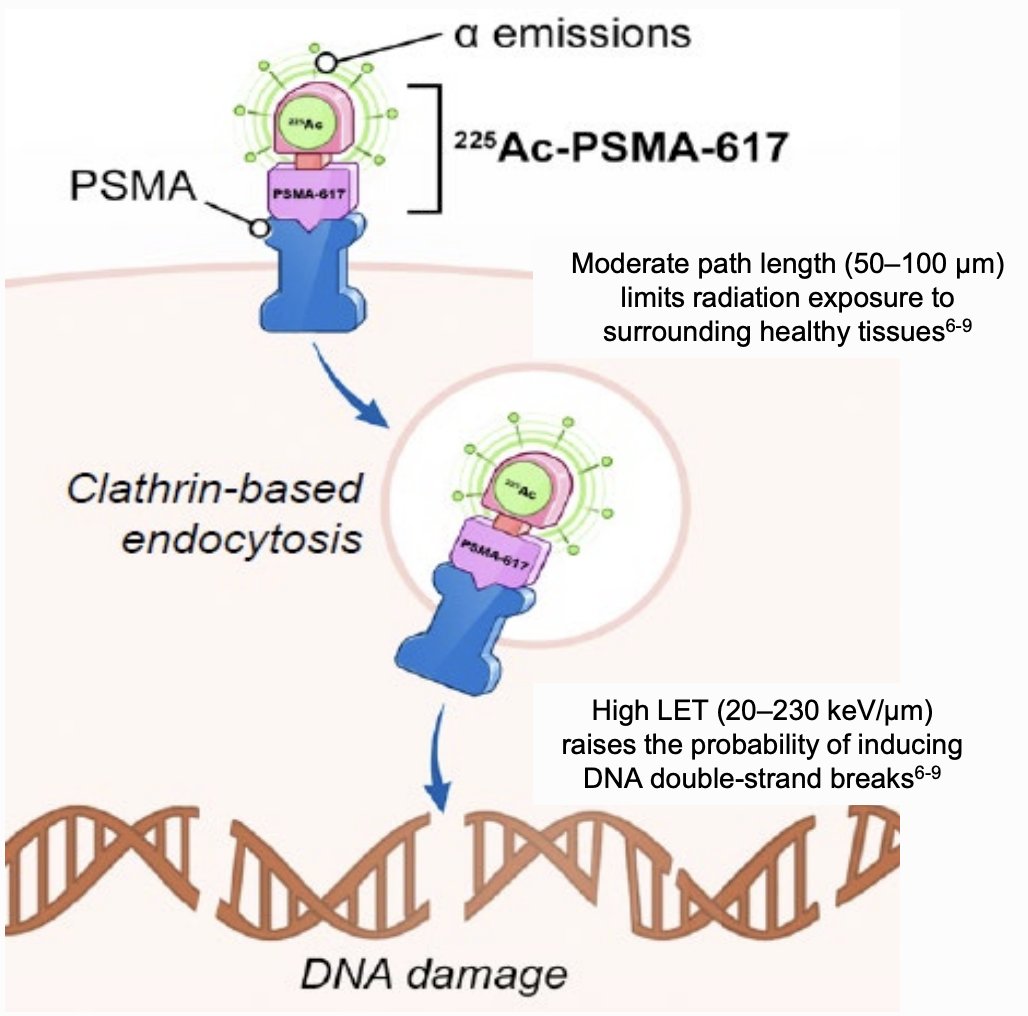
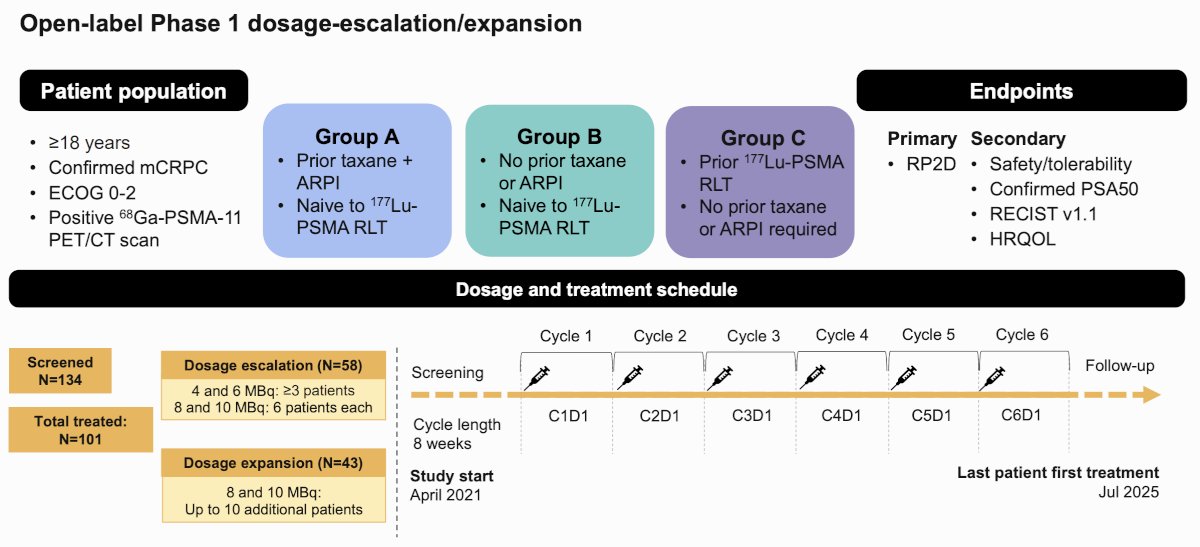
Prior data suggest antitumor activity with alpha-emitting radioligand therapy,1 however prospective clinical evidence is limited. AcTION is the first prospective dosage escalation study of 225Ac-PSMA-617, an alpha-emitting, PSMA-targeted radioligand therapy in patients with mCRPC (NCT04597411). This study enrolled patients with progressive, PSMA-positive mCRPC in 3 groups:
- Group A: prior chemotherapy and an androgen receptor pathway inhibitor (ARPI), but no prior 177Lu-PSMA radioligand therapy
- Group B: no prior chemotherapy, ARPI, or 177Lu-PSMA radioligand therapy (chemotherapy/ARPI-naïve)
- Group C: prior 177Lu-PSMA radioligand therapy
Dosage escalation of 225Ac-PSMA-617 used a Bayesian logistic regression model with administered activities of 4, 6, 8, or 10 MBq given intravenously for ≤6 cycles every 8 weeks. The primary objective was to identify the recommended phase 2 dosage, based on dose-limiting toxicities within the first 6 weeks of 225Ac-PSMA-617 administration:
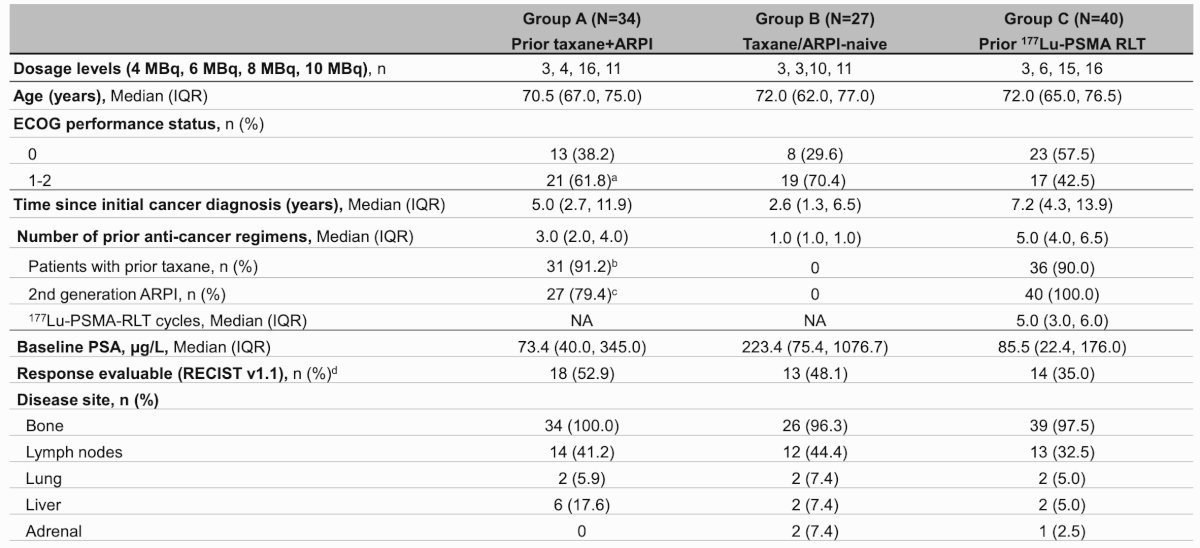
This analysis includes all 101 treated patients as of November 13, 2025. Group A patients had a median of 3 prior systemic therapies and a median baseline PSA of 73.4 ng/mL (range 1-3,320 ng/mL). Group B patients had a median baseline PSA of 223.4 (range: 5-12,308) ng/mL, and Group C patients had 5 prior systemic therapies and a median baseline PSA of 85.5 (range: 5-1,760) ng/mL.:
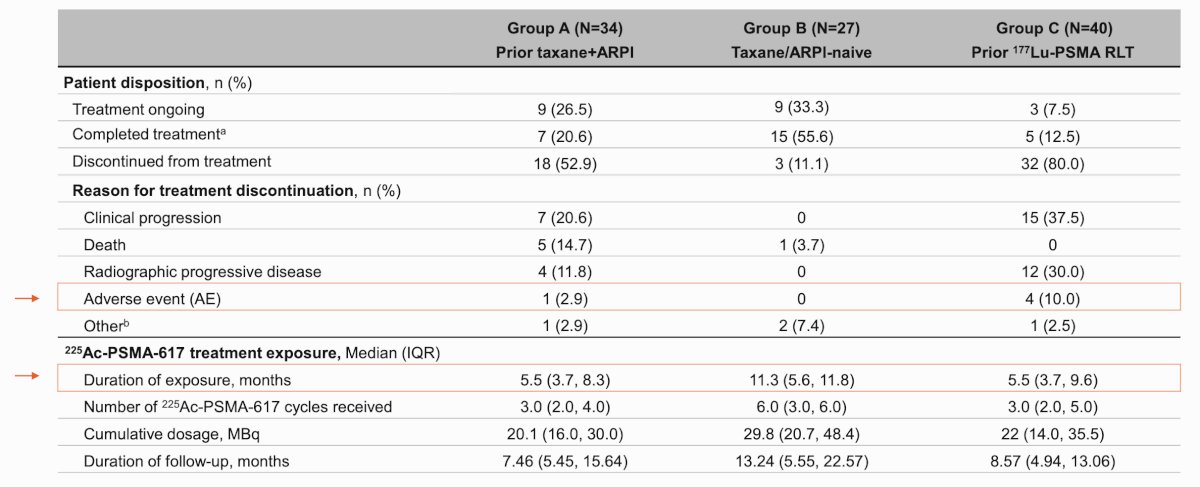
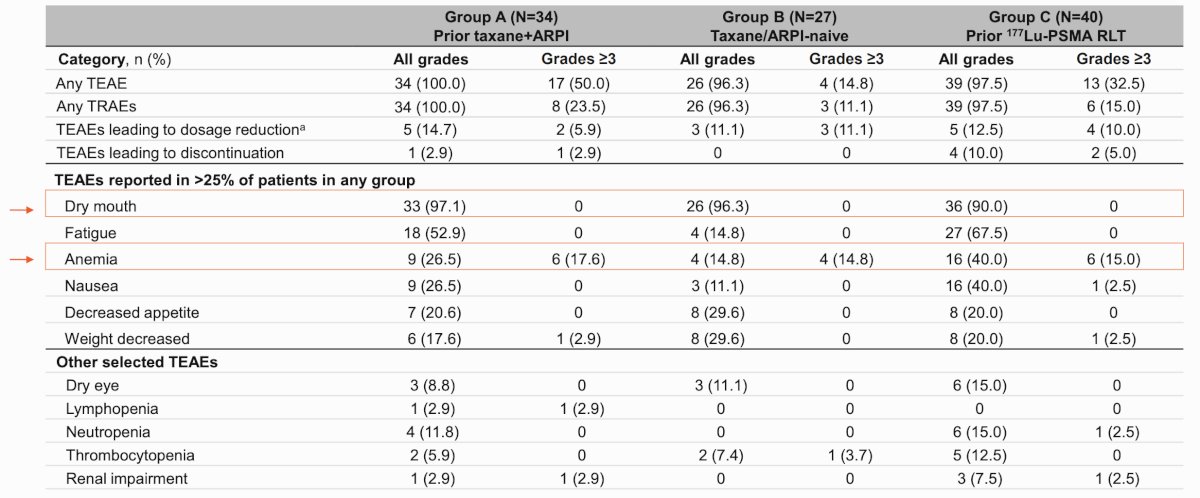
Across all 3 groups, there were no dose-limiting toxicities, and a maximum tolerated dosage was not reached. No grade 4/5 treatment-related adverse events occurred, and no dosage-dependent safety signals were observed. The duration of exposure to 225Ac-PSMA-617 across the three groups ranged from 5.5 to 11.3 months. Adverse event-related discontinuations were infrequent across all groups, and treatment completion rates were higher in the taxane/ARPI naïve Group B:
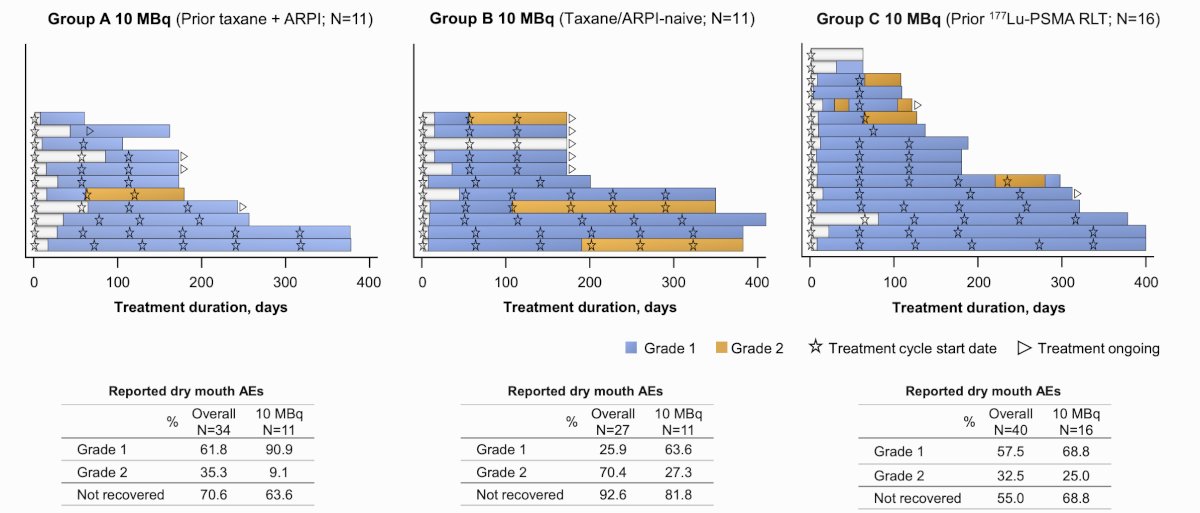
Dry mouth (grade 1/2 only) was the most common treatment-related adverse event, observed in > 90% of patients across all groups and mostly reported as not resolved at data cut-off. Across all groups, there were 3 grade 3+ treatment-related adverse events that led to discontinuation:
Dr. Emmett noted that there was no dosage-related trend for dry mouth frequency or severity, and there was one treatment discontinuation due to dry mouth in Group C at 8 MBq:
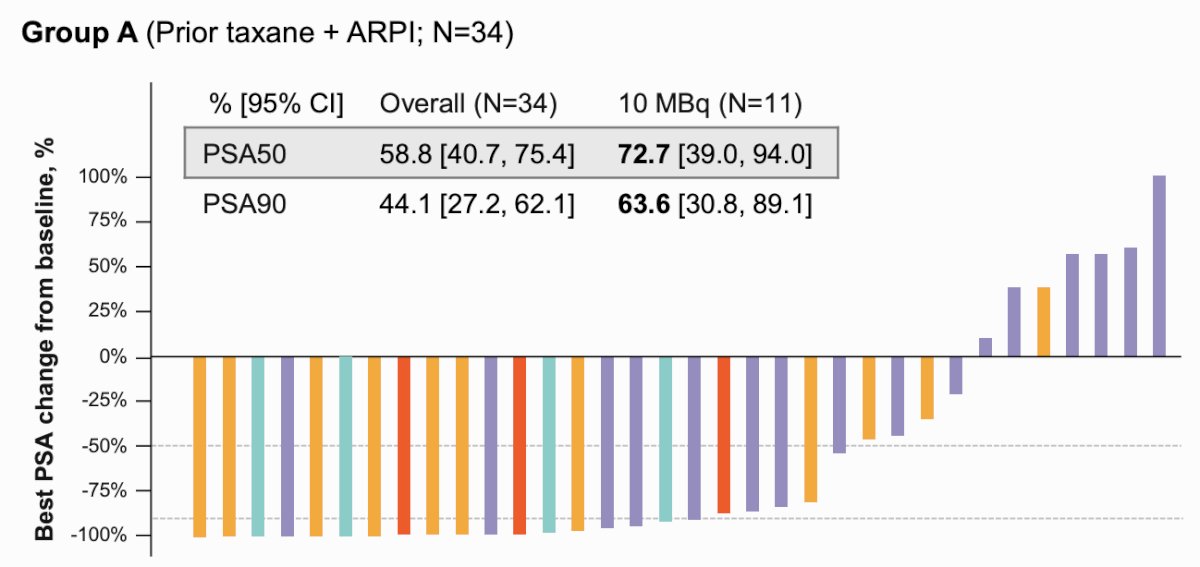
In Group A, the PSA50 rate was 58.8% (95% CI 40.7, 75.4) and the PSA90 rate was 63.6% (95% CI 30.8, 89.1):
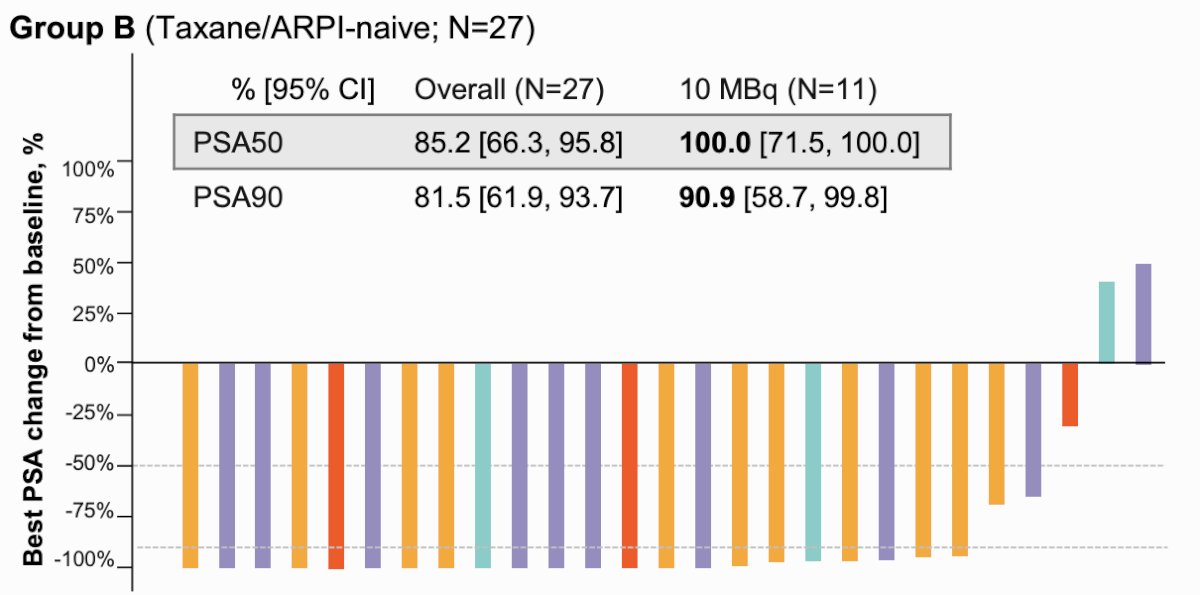
For Group B patients, the PSA50 rate was 100% (95% CI 71.5, 100) and PSA90 rate was 90.9% (95% CI 58.7, 99.8):
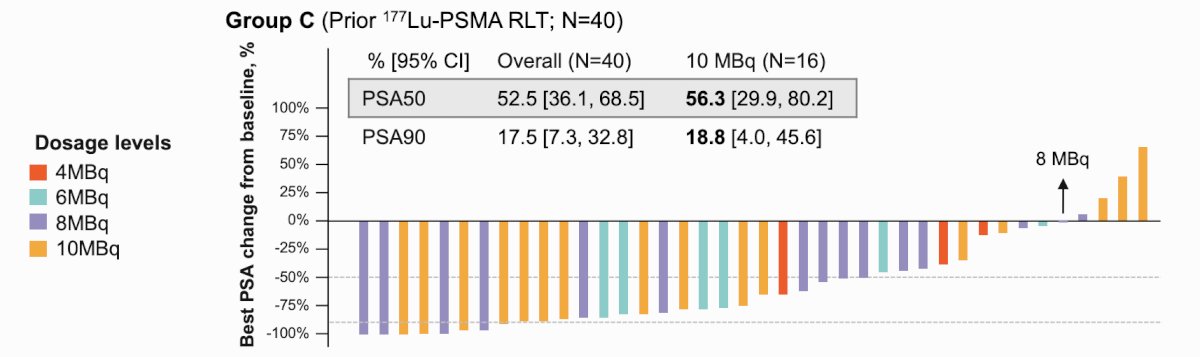
For Group C patients, the PSA50 rate was 56.3% (95% CI 29.9, 80.2) and PSA90 rate was 18.8% (95% CI 4.0, 45.6):
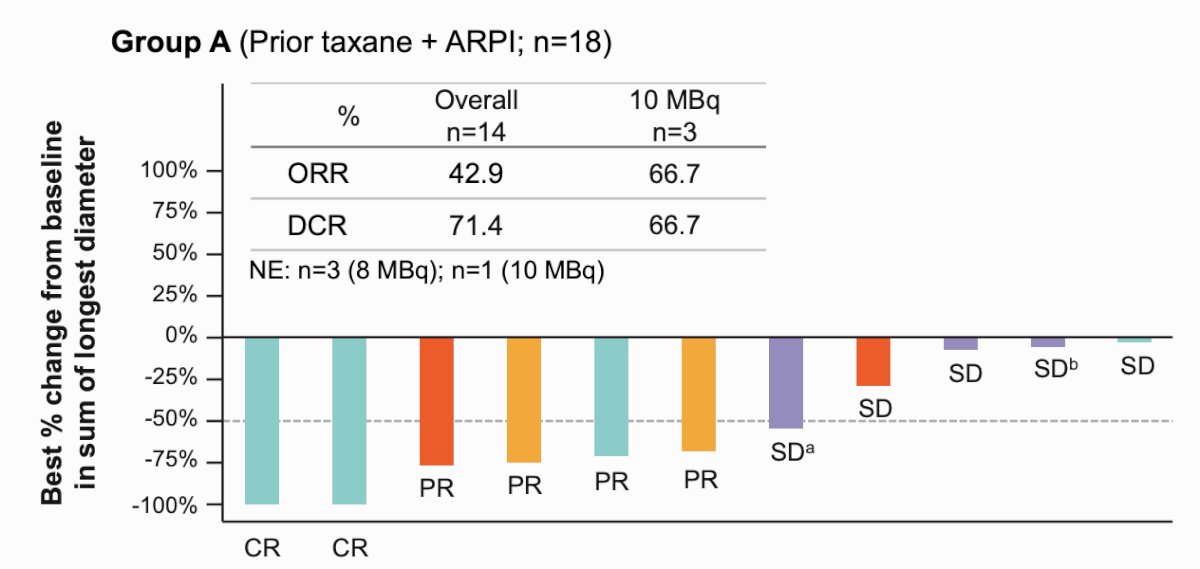
Radiographic target lesion responses were seen across treatment naïve and pre-treated mCRPC groups. In Group A, the objective response rate was 42.9%, and the disease control rate was 71.4%:
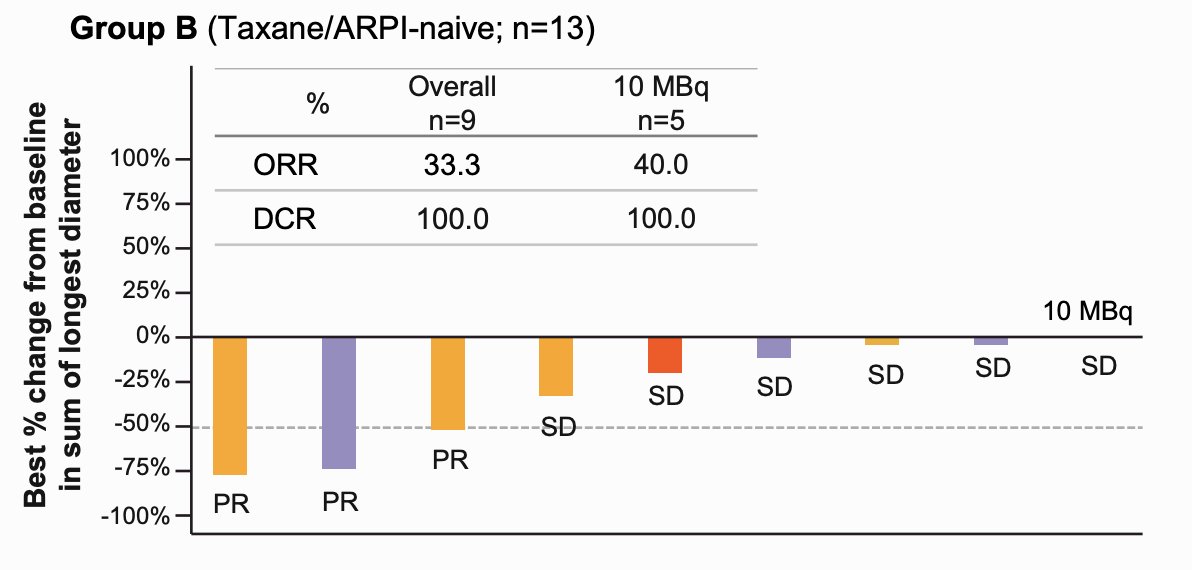
In Group B, the objective response rate was 33.3%, and the disease control rate was 100%:
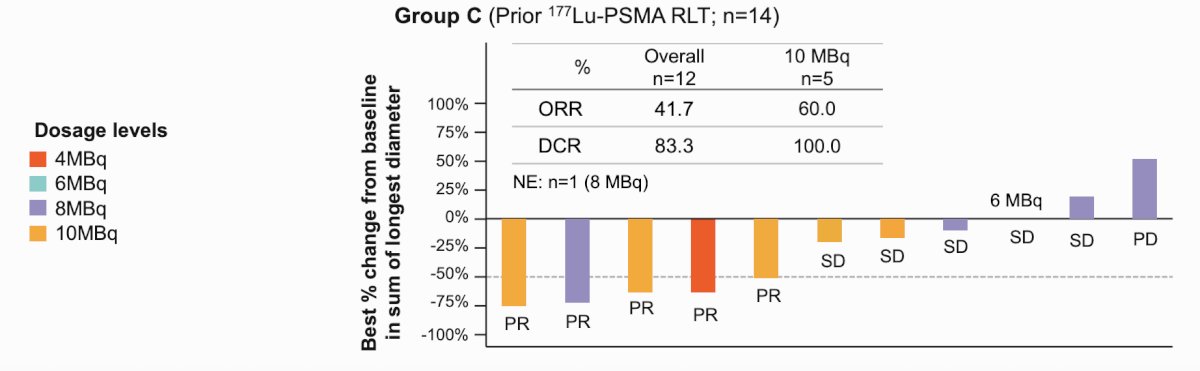
In Group C, the objective response rate was 41.7% and the disease control rate was 83.3%:
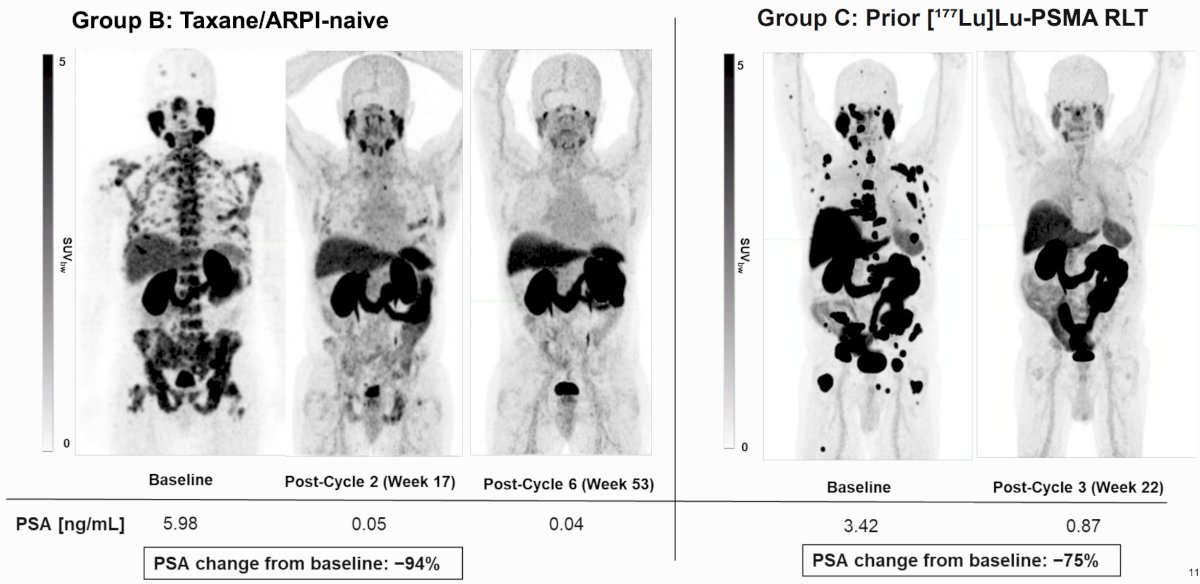
The following figure shows PSMA PET/CT and biochemical responses following 225Ac-PSMA-617 treatment in Group B and Group C patients:
The recommended phase 2 dosage for all 3 groups was 10 MBq.
Dr. Emmett concluded her presentation discussing AcTION with the following take-home points:
AcTION is the first prospective Phase 1 study of 225Ac-PSMA-617 in PSMA-positive mCRPC, and includes patients with and without prior 177Lu-PSMA-617 radioligand therapy
- 225Ac-PSMA-617 showed a manageable safety profile up to 10MBq. There were no dose-limiting toxicities, and a maximum tolerated dose was not reached
- Grade 1/2 dry mouth was the most common adverse event, with rare dosage discontinuations
- Promising PSA and radiographic responses were observed across treatment groups, irrespective of prior 177Lu-PSMA-617 radioligand therapy exposure with the most favorable activity at 10 MBq
- The recommended phase 2 dose in all three groups is 10MBq Q8W, administered up to 6 cycles
- The AcTION data suggest that earlier treatment of mCRPC patients with 225Ac-PSMA-617 has greater anti-tumor activity and improved tolerability
- 225Ac-PSMA-617 is currently being investigated in two phase 3 trials: AcTFirst and PSMAcTION
Presented by: Louise Emmett, MD, MBChB, FRACP, FAANMS, Professor, Director of Theranostics and Nuclear Medicine, St. Vincent’s Hospital Sydney, University of New South Wales, Sydney, Australia
Written by: Zachary Klaassen, MD, MSc – Urologic Oncologist, Associate Professor of Urology, Georgia Cancer Center, Wellstar MCG Health, @zklaassen_md on Twitter during the American Society of Clinical Oncology Genitourinary (ASCO) Annual Meeting held in Chicago, IL between May 29th and June 1st, 2026
Reference: