

(UroToday.com) The 2026 American Society of Clinical Oncology Genitourinary (ASCO) Annual Meeting held in Chicago, IL, was host to the Prostate, Testicular, and Penile Cancer - Rapid Oral Abstracts Session. Dr. Yao Zhu presented abstract 5015: Phase 2 study of YL201, an anti-B7H3 antibody-drug conjugate, in heavily pretreated metastatic castration resistant prostate cancer (mCRPC).
Dr. Zhu began by highlighting the limited treatment options available for patients with mCRPC progressing on ARPIs, with or without prior taxane-based chemotherapy, particularly among those with aggressive visceral metastases. He noted that B7-H3, an immunoregulatory protein within the B7 family, has recently emerged as a promising therapeutic target in prostate cancer.
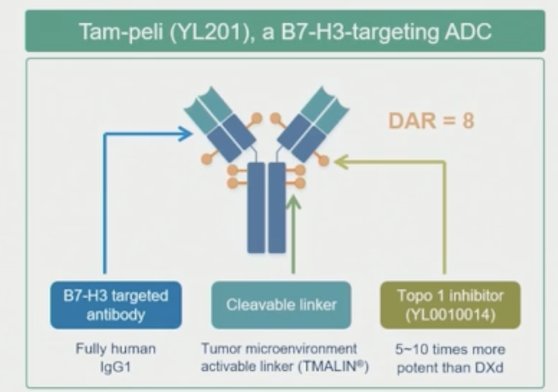
Tambotatug pelitecan (tam-peli, YL201) is a novel B7-H3-targeting ADC designed with a dual-cleavage mechanism, allowing payload release both intracellularly and extracellularly within the tumor microenvironment to enhance the bystander effect.1 Dr. Zhu emphasized that this strategy may be particularly relevant in overcoming the intratumoral heterogeneity commonly observed in mCRPC.
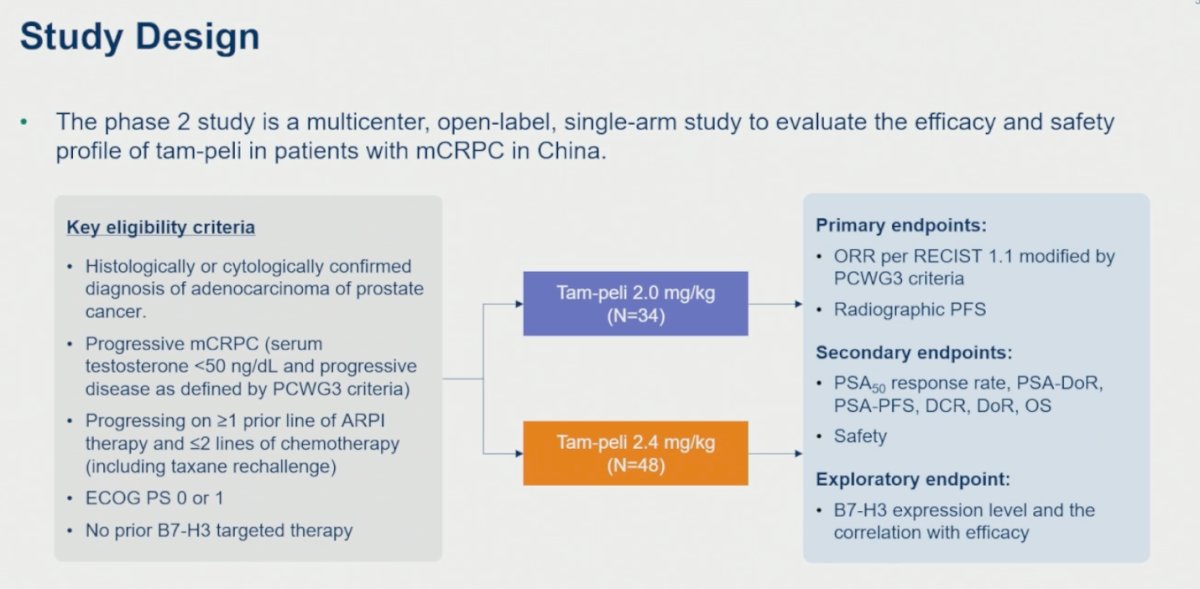
The phase 2 YL201-CN-201-01 trial is a multicenter, open-label, single-arm study evaluating the efficacy and safety of tam-peli in patients with mCRPC in China. Eligible patients had histologically or cytologically confirmed prostate adenocarcinoma, progressive mCRPC per PCWG3 criteria with serum testosterone <50 ng/dL, prior progression on at least one ARPI, and up to two prior lines of chemotherapy, including taxane rechallenge. Additional eligibility criteria included ECOG performance status 0–1 and no prior B7-H3-targeted therapy.
Patients received tam-peli at either 2.0 mg/kg (n=34) or 2.4 mg/kg (n=48). The co-primary endpoints were objective response rate per RECIST 1.1 modified by PCWG3 criteria and radiographic progression-free survival. Secondary endpoints included PSA50 response rate, PSA duration of response, PSA-PFS, disease control rate, duration of response, overall survival, and safety. Exploratory analyses evaluated B7-H3 expression levels and their correlation with efficacy outcomes. The study design is shown below:
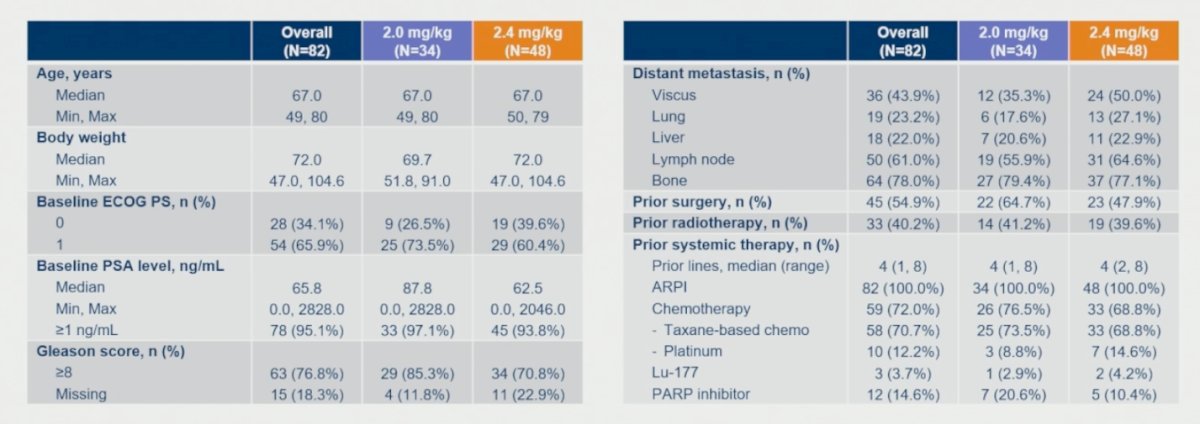
As of the March 15, 2026, data cutoff, 82 patients had been enrolled, including 34 treated at 2.0 mg/kg and 48 treated at 2.4 mg/kg. Baseline characteristics reflected an advanced and refractory population, with a median age of 67 years, a median PSA of 65.8 ng/mL, and a Gleason score ≥8 in 76.8% of patients. Most patients had ECOG PS 1 (65.9%).
Patients were heavily pretreated, with a median of 4 prior lines of systemic therapy. All patients had previously received an ARPI, while 72.0% had received prior chemotherapy, including taxane-based chemotherapy in 70.7% and platinum-based chemotherapy in 12.2%. Prior exposure to PARP inhibitors and Lu-177 was reported in 14.6% and 3.7% of patients, respectively. Metastatic disease burden was substantial, with bone metastases present in 78.0%, lymph node metastases in 61.0%, visceral metastases in 43.9%, including lung metastases in 23.2% and liver metastases in 22.0% of patients.
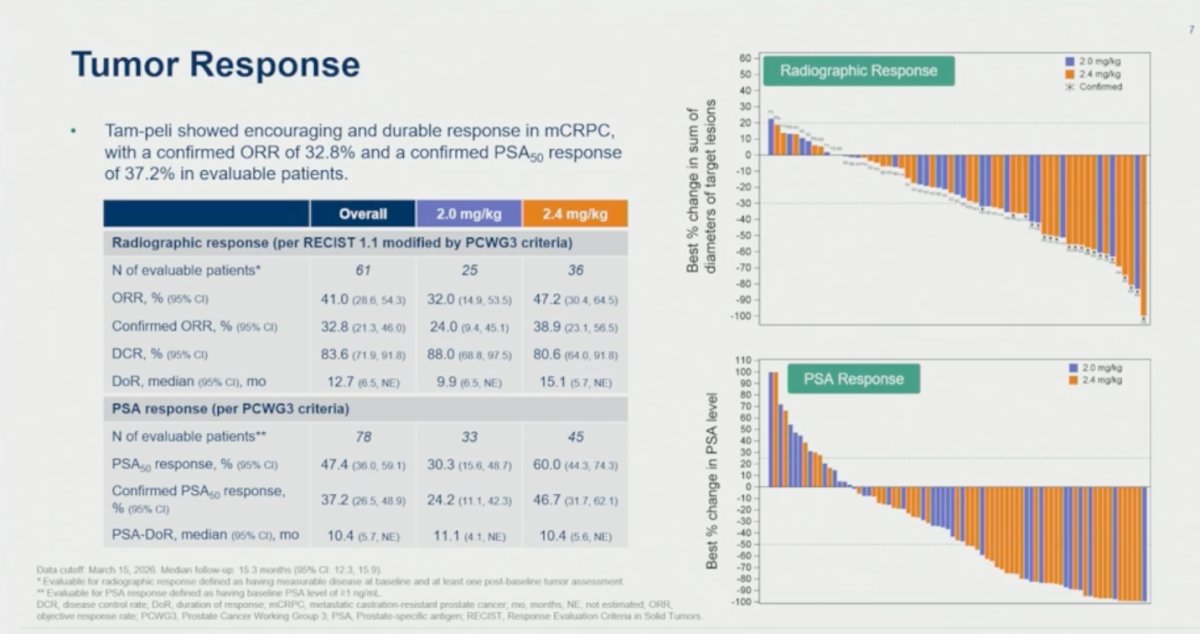
Moreover, tam-peli demonstrated encouraging radiographic and PSA responses across both dose levels. Among 61 evaluable patients, the overall response rate per RECIST 1.1 modified by PCWG3 criteria was 41.0%, with a confirmed ORR of 32.8%. Responses appeared deeper at the 2.4 mg/kg dose level, where confirmed ORR reached 38.9%, compared with 24.0% at 2.0 mg/kg. Disease control rates exceeded 80% across both cohorts, and responses were durable, with a median duration of response of 12.7 months overall and 15.1 months at the 2.4 mg/kg dose level.
PSA responses were similarly encouraging. Among 78 evaluable patients, PSA50 responses were observed in 47.4% overall, including confirmed PSA50 responses in 37.2% of patients. Again, higher activity was observed at 2.4 mg/kg, with confirmed PSA50 responses reaching 46.7%, compared with 24.2% at 2.0 mg/kg. Median PSA duration of response exceeded 10 months across cohorts. Waterfall plots demonstrated substantial tumor shrinkage, and PSA declines in a large proportion of patients below:
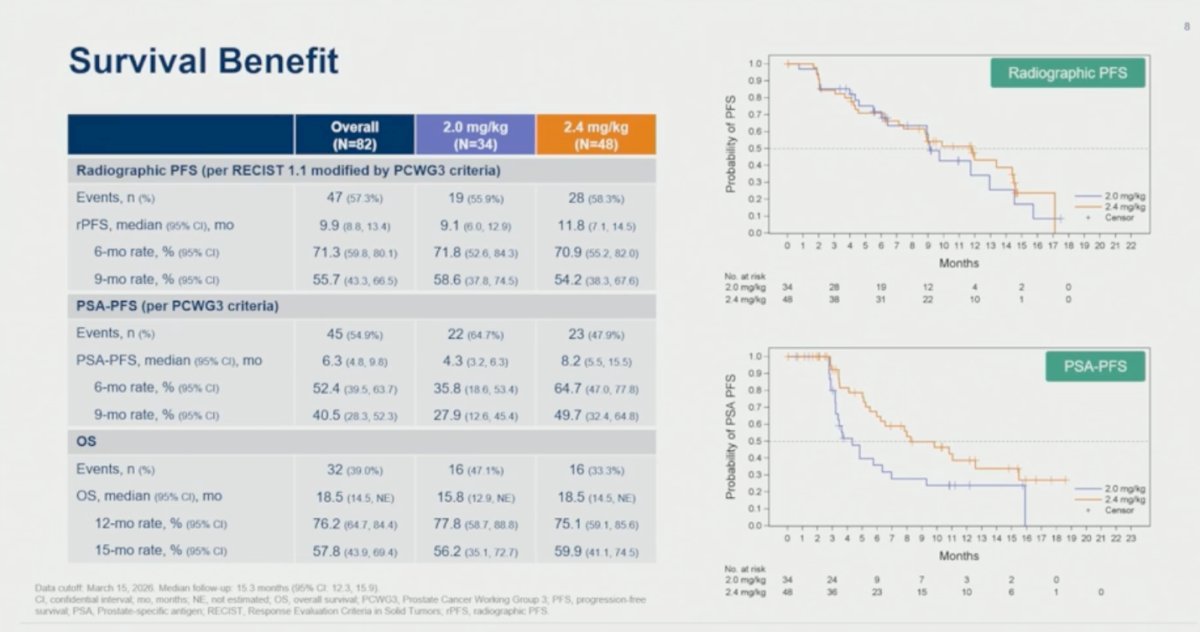
Dr. Zhu highlighted that they observed higher rPFS, PSA-PFS, and OS with the 2.4 mg/kg dose, as illustrated in the table and the Kaplan Meier curves below.
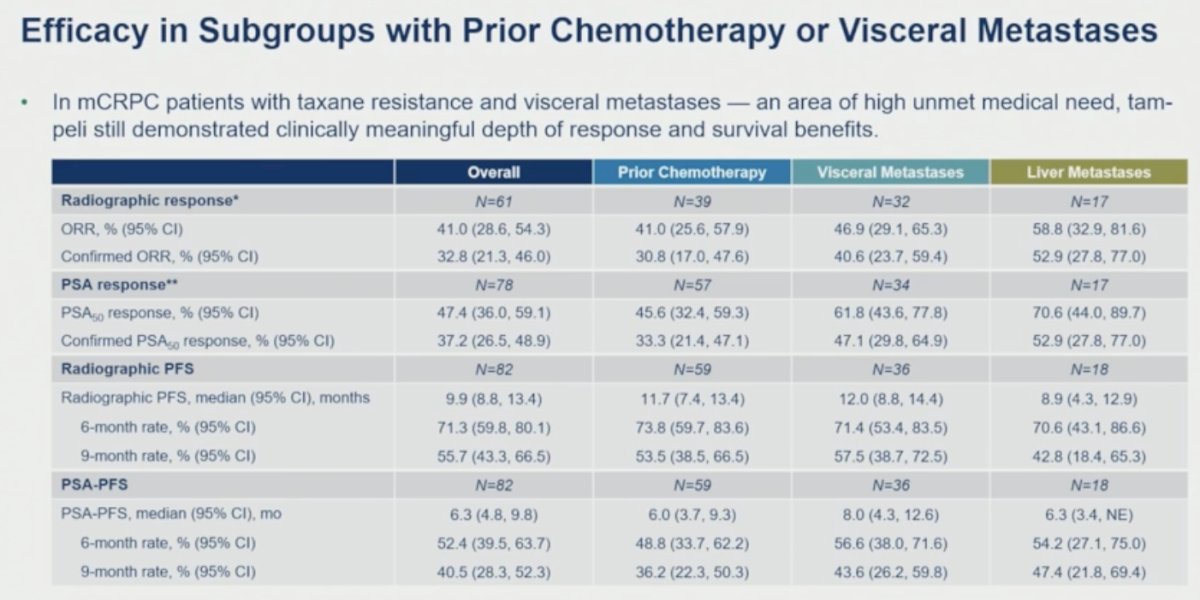
Importantly, tam-peli maintained clinically meaningful activity in key high-risk subgroups, including patients with prior taxane exposure and those with visceral metastases. Among patients with visceral disease, the confirmed ORR was 40.6%, while patients with liver metastases achieved a confirmed ORR of 52.9%, highlighting substantial antitumor activity in a population with significant unmet need.
PSA responses were similarly maintained across these subgroups. In patients with visceral metastases, confirmed PSA50 responses were observed in 47.1%, increasing to 52.9% among those with liver metastases. Median radiographic PFS remained favorable at 12.0 months in patients with visceral metastases and 8.9 months in those with liver metastases, supporting durable clinical benefit even in aggressive disease subsets.
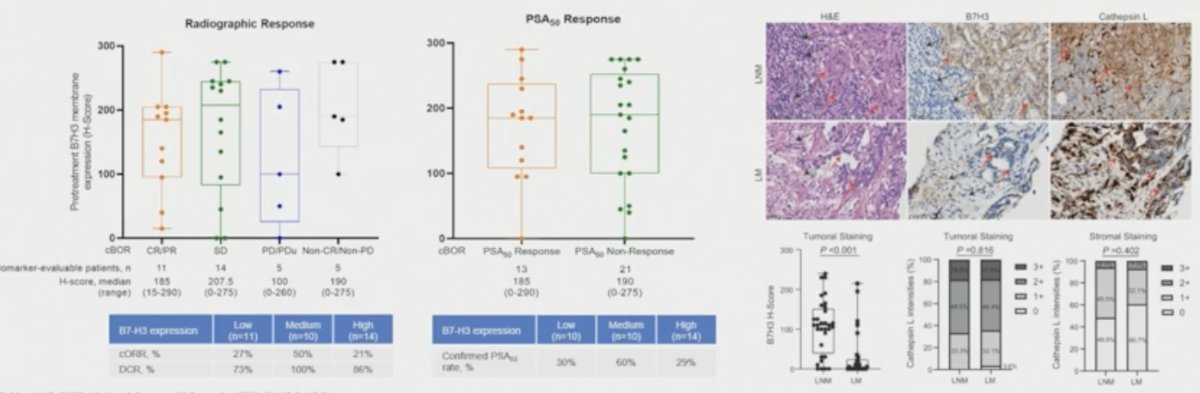
Exploratory biomarker analyses evaluated B7-H3 expression and its association with treatment outcomes. No significant association was observed between baseline B7-H3 expression levels and efficacy outcomes. Interestingly, although B7-H3 expression appeared downregulated in liver metastatic lesions, Cathepsin L, a key enzyme involved in tam-peli cleavage within the tumor microenvironment, maintained robust and comparable expression across both tumor and stromal compartments. Dr. Zhu noted that these findings support a potent bystander effect with tam-peli, potentially representing a mechanistic advantage over ADCs that rely exclusively on intracellular internalization, particularly in aggressive visceral disease such as liver metastases.
Dr. Zhu concluded his presentation with the following take-home points:
- Tambotatug pelitecan (tam-peli, YL201) is a novel B7-H3-targeting ADC designed with a dual-cleavage mechanism that functions both intracellularly and extracellularly within the tumor microenvironment, potentially enhancing bystander killing effects in heterogeneous mCRPC tumors.
- Tam-peli demonstrated encouraging clinical activity in mCRPC, including in patients with prior taxane exposure and visceral metastases, populations with significant unmet clinical need.
- Confirmed ORR was 32.8%
- Confirmed PSA50 response rate was 37.2%
- Median radiographic PFS was 9.9 months
- The 15-month OS rate was 57.8%
- Clinical activity was maintained in patients with visceral metastases, including liver metastases, supporting potential efficacy in biologically aggressive disease subsets.
- Exploratory biomarker analyses demonstrated no significant association between baseline B7-H3 expression levels and efficacy outcomes.
- Despite lower B7-H3 expression observed in liver metastases, preserved Cathepsin L expression within the tumor microenvironment may support extracellular payload cleavage and a potent bystander effect, potentially differentiating tam-peli from ADCs that rely primarily on intracellular internalization.
- Tam-peli demonstrated a manageable safety profile, with predominantly hematologic toxicities and no reported interstitial lung disease, supporting continued clinical development within the evolving B7-H3 ADC landscape.
- These findings support further investigation of tam-peli as a potential therapeutic option for patients with mCRPC.
Presented by: Yao Zhu, MD, Department of Urology, Fudan University Shanghai Cancer Center, Shanghai, China
Written by: Julian Chavarriaga, MD, Clinical Assistant Professor, Urologic Oncologist, Department of Urology at Penn State Health @chavarriagaj on X during the American Society of Clinical Oncology Genitourinary (ASCO) Annual Meeting held in Chicago, IL between May 29th and June 1st, 2026
References:
- Ma Y, Yang Y, Huang Y, Fang W, Xue J, Meng X, Fan Y, Fu S, Wu L, Zheng Y, Liu J, Liu Z, Zhuang W, Rosen S, Qu S, Li B, Li M, Zhao Y, Yang S, Ji Y, Sommerhalder D, Luo S, Yang K, Li J, Lv D, Zhang P, Zhao Y, Hong S, Zhang Y, Zhao S, Chin S, Zhang X, Lian W, Cai J, Xue T, Zhang L, Zhao H. A B7H3-targeting antibody-drug conjugate in advanced solid tumors: a phase 1/1b trial. Nat Med. 2025 Jun;31(6):1949-1957. doi: 10.1038/s41591-025-03600-2. Epub 2025 Mar 13. PMID: 40082695; PMCID: PMC12176648.