

(UroToday.com) The 2026 American Society of Clinical Oncology (ASCO) Annual Meeting was host to a prostate, testicular, and penile cancers poster session. Dr. Hyotae Kim presented an analysis from the PRECISION (PARPi Response Evaluation for Clinical Impact and Scientific Innovation in Oncology) registry of genomic and clinical predictors of overall survival and PSA response in patients with metastatic prostate cancer receiving PARP inhibitors. Given the expanding use of PARPi therapy in biomarker-selected patients, the investigators sought to better characterize the association between homologous recombination repair (HRR) alterations, clinical outcomes, and treatment response in a real-world setting.
The PRECISION Registry is a multi-center database that includes patients treated across five academic institutions: Yale University, Dana-Farber Cancer Institute, the University of Washington, the University of British Columbia, and Thomas Jefferson University. This analysis included 327 patients with mCRPC treated with PARPi therapy. The primary endpoints were overall survival (OS), defined as time from PARPi initiation to death or last follow-up, and PSA response, defined as a confirmed ≥50% decline from baseline PSA.
The study cohort had a median age ranging from 65 to 71 years across participating institutions. Metastatic disease most commonly involves the bone and lymph nodes, with a smaller proportion of patients harboring visceral metastases. HRR alterations were identified in 43.4% of patients, while BRCA alterations were present in 48.7% of the overall cohort. Among HRR genes, BRCA2 represented the most frequently altered gene (34.3%), followed by ATM (11.9%), BRCA1 (6.4%), CDK12 (3.8%), PALB2 (1.7%), RAD51B (0.8%), and CHEK2 (0.3%).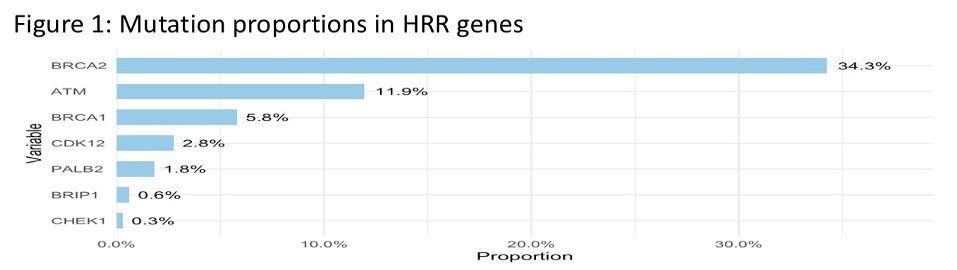
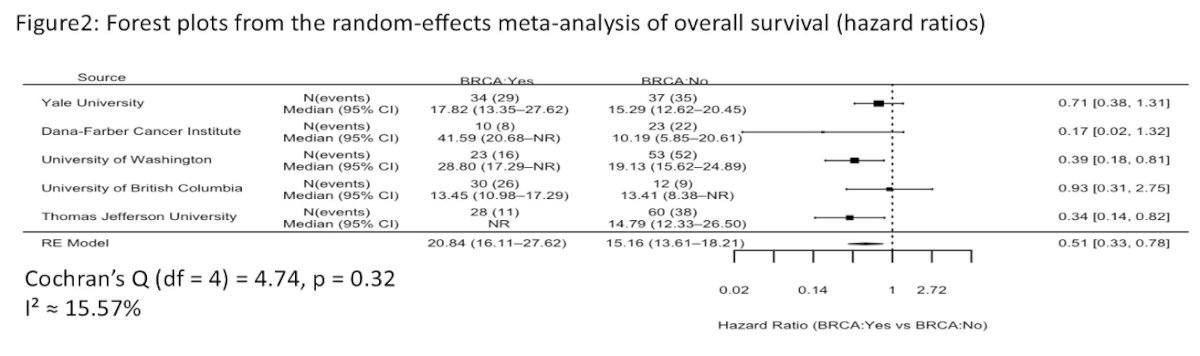
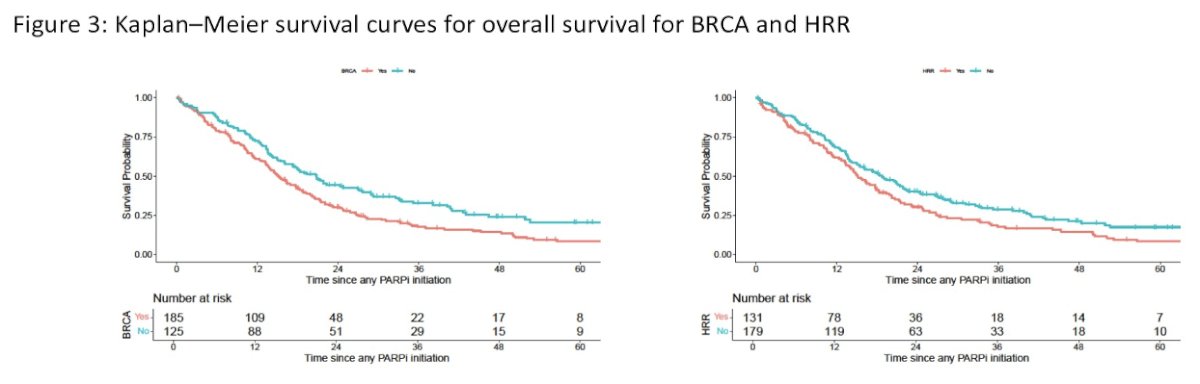
The investigators first evaluated OS according to BRCA status. Across participating institutions, patients harboring BRCA alterations experienced significantly improved survival following PARPi therapy compared to those without BRCA alterations. Meta-analysis demonstrated a pooled hazard ratio (HR) for death of 0.51 (95% CI: 0.33–0.78), with low between-study heterogeneity (I²=15.6%). Kaplan-Meier analyses similarly demonstrated prolonged survival among patients with BRCA alterations.
A similar pattern was observed when evaluating broader HRR alterations. Patients with HRR-altered tumors experienced significantly improved OS compared to HRR-negative patients, with a pooled HR of 0.56 (95% CI: 0.40–0.80). No significant heterogeneity was observed across institutions (I²=0%), supporting the consistency of this finding across participating centers.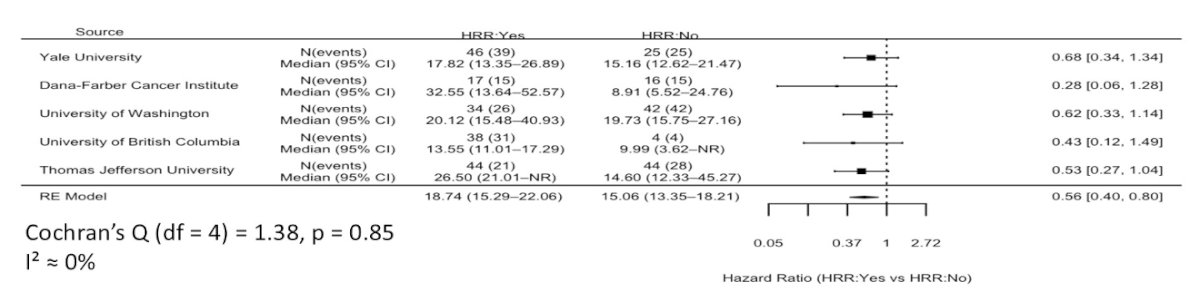
The investigators next assessed PSA response following PARPi treatment. Patients harboring BRCA alterations were significantly more likely to achieve a confirmed PSA decline of at least 50%, with a pooled odds ratio (OR) of 3.58 (95% CI: 1.83–6.99). Similarly, HRR alterations were associated with improved PSA responses, with a pooled OR of 2.02 (95% CI: 1.02–3.97). In both analyses, there was minimal heterogeneity across institutions, suggesting reproducibility of these findings in multiple real-world practice settings.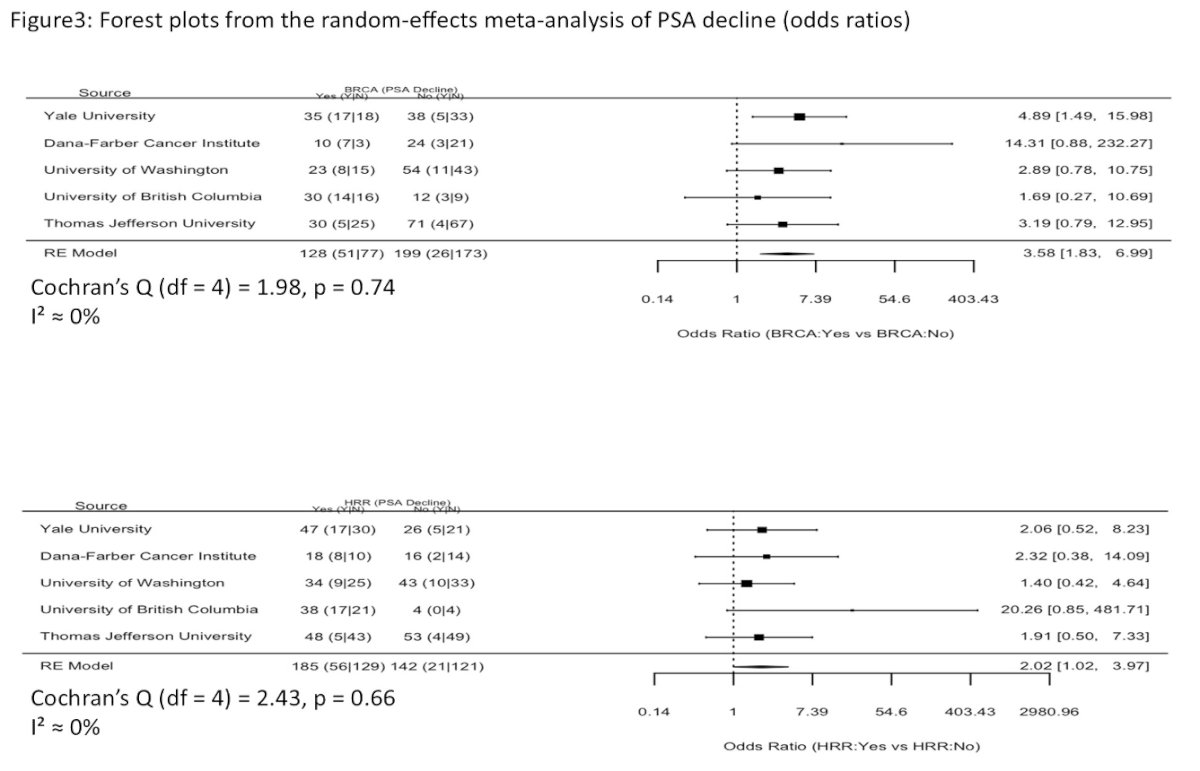
The investigators concluded that in this multi-institutional real-world cohort of patients with mCRPC receiving PARPi therapy, both BRCA and broader HRR alterations were associated with improved clinical outcomes. Specifically, BRCA alterations were associated with improved OS (HR 0.51, 95% CI: 0.33–0.78) and increased odds of PSA response (OR 3.58, 95% CI: 1.83–6.99), while HRR alterations were associated with improved OS (HR 0.56, 95% CI: 0.40–0.80) and PSA response (OR 2.02, 95% CI: 1.02–3.97). These findings support the prognostic and predictive value of BRCA and HRR alterations in patients with mCRPC receiving PARPi therapy in routine clinical practice.
Presented by: Hyotae Kim, Postdoctoral Associate, Department of Biostatistics and Bioinformatics, Duke University, Durham, NC, USA
Written by: Rashid K. Sayyid, MD, MSc, Assistant Professor, Urologic Oncologist, Department of Urology at The University of Arizona and Banner University Medical Center, Tucson, AZ – @rksayyid on X during the American Society of Clinical Oncology Genitourinary (ASCO) Annual Meeting held in Chicago, IL between May 29th and June 1st, 2026