

(UroToday.com) The 2026 American Society of Clinical Oncology (ASCO) Annual Meeting was host to a prostate, testicular, and penile cancers poster session. Dr. Antonion Faieta presented a large real-world analysis evaluating overall survival (OS) outcomes and prognostic factors among patients treated with lutetium (Lu177) vipivotide tetraxetan for advanced prostate cancer.
Following FDA approval in March 2022,1 Lu177 vipivotide tetraxetan has rapidly become an established treatment option for patients with metastatic castration-resistant prostate cancer (mCRPC) with disease progression on an androgen receptor pathway inhibition and taxane chemotherapy. While the phase III VISION trial demonstrated significant survival benefit with this PSMA-targeted radioligand therapy, real-world outcomes and prognostic factors associated with treatment benefit remain less well characterized. This study sought to evaluate survival outcomes and identify clinical and laboratory factors associated with OS in the largest reported real-world cohort of patients treated with Lu177 vipivotide tetraxetan to date.
Dr. Faieta and colleagues performed a retrospective cohort study using the Epic Cosmos database, including patients with prostate cancer who initiated Lu177 vipivotide tetraxetan between March 2022 (date of FDA approval) and December 20, 2025, with at least one month of follow-up prior to analysis. Overall survival was measured from treatment initiation until death or last follow-up. Kaplan-Meier methods were used for survival analyses, while univariable Cox proportional hazards models adjusted for false discovery rate (FDR) were used to evaluate associations between OS and baseline clinical variables.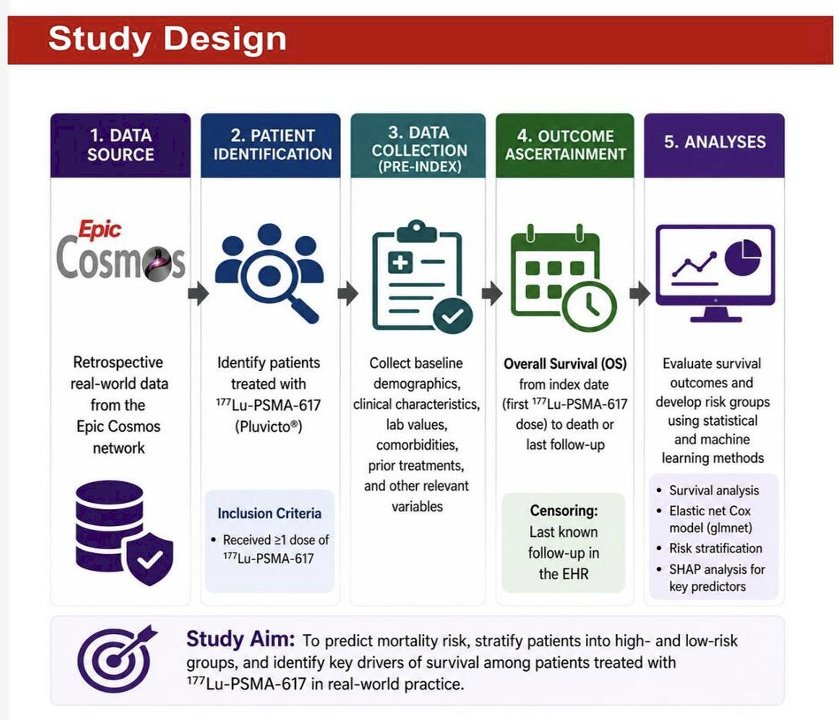
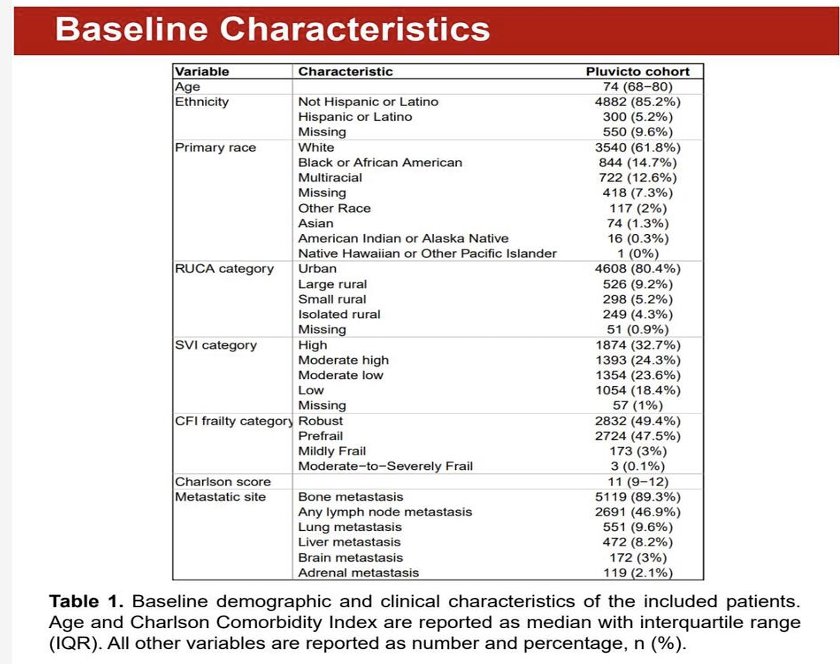
A total of 6,464 patients were included, with a median age of 74 years (IQR 38–100). The cohort was predominantly White (75.2%) and Black/African American (19.9%).
Kaplan-Meier analyses demonstrated OS rates of 85.4%, 67.2%, 42.8%, and 23.8% at 6, 12, 24, and 36 months, respectively, which the authors noted were comparable to outcomes observed in the phase III VISION trial.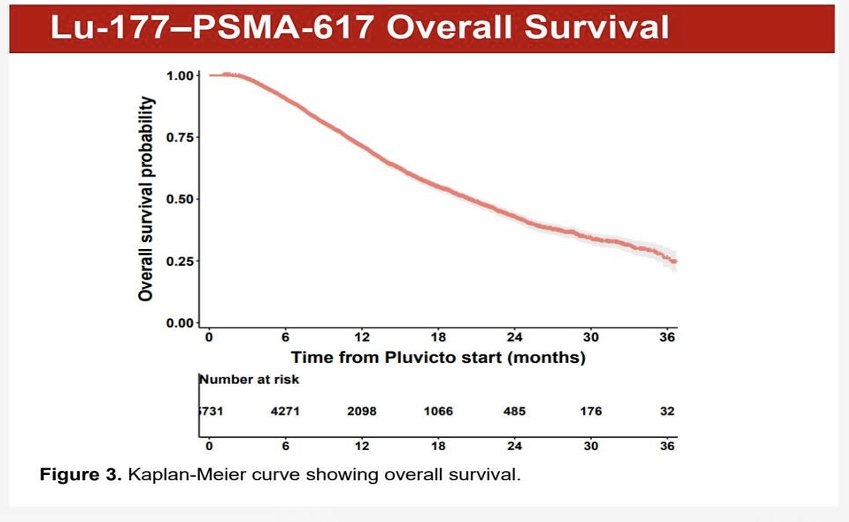
Several baseline clinical characteristics were significantly associated with inferior survival, including:
- Tobacco use (HR 1.22, 95% CI 1.11–1.33; FDR <0.01)
- Increasing Charlson Comorbidity Index scores (HR 1.04, 95% CI 1.02–1.06; FDR <0.01)
Conversely, higher BMI was associated with modestly improved survival outcomes (HR 0.98, 95% CI 0.97–0.99; FDR <0.01).
Markers reflecting nutritional and hematologic reserve demonstrated particularly strong prognostic associations. Improved survival was associated with higher levels of:
- Albumin (HR 0.39, 95% CI 0.35–0.43)
- RBC count (HR 0.53, 95% CI 0.49–0.57)
- Hemoglobin (HR 0.77, 95% CI 0.75–0.79)
- Total protein (HR 0.81, 95% CI 0.74–0.89)
- MCHC (HR 0.88, 95% CI 0.86–0.91)
- All with FDR-adjusted p-values <0.01.
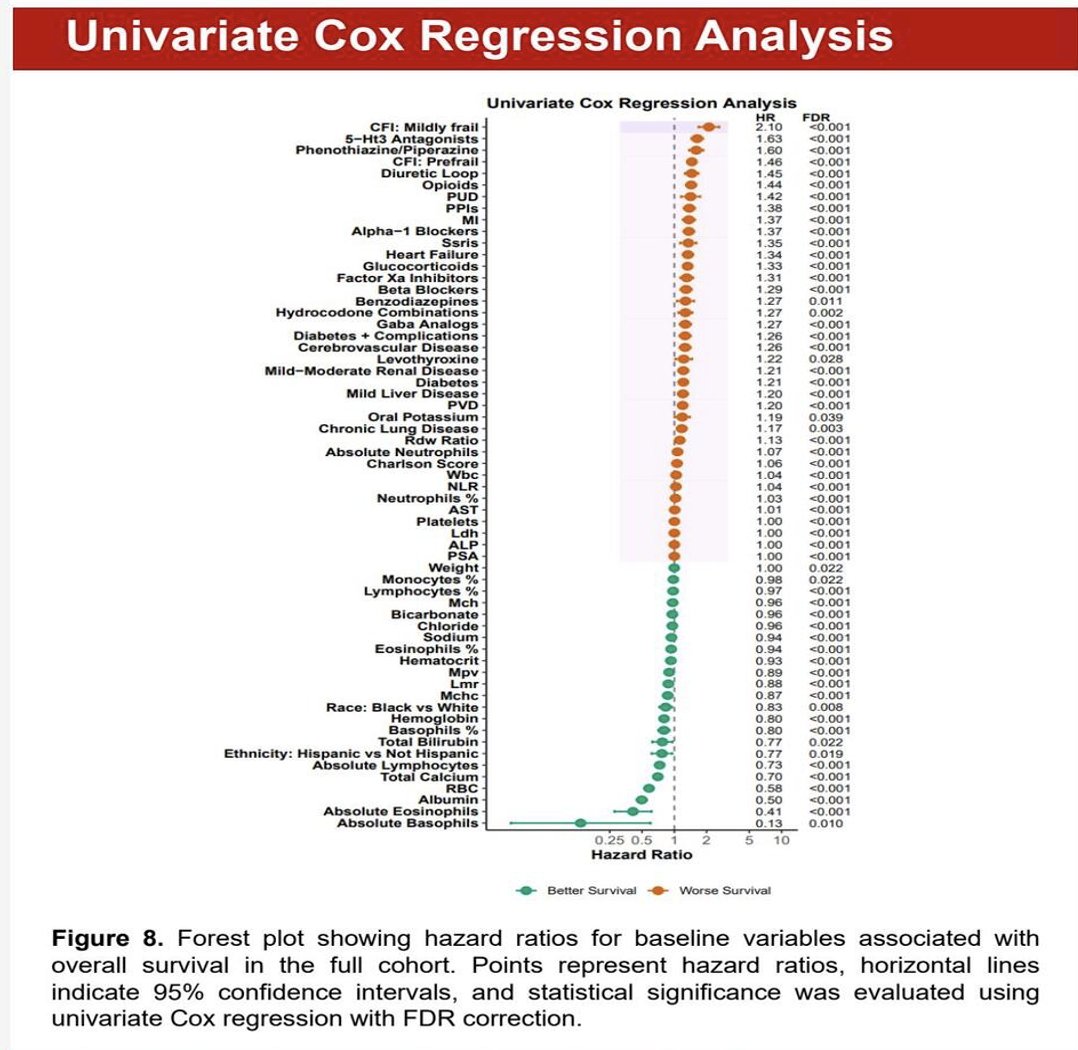
Inflammatory and immune biomarkers also demonstrated important prognostic value. Higher eosinophil and lymphocyte counts were associated with improved survival, with HRs of 0.38 (95% CI 0.25–0.58) and 0.69 (95% CI 0.64–0.76), respectively.
In contrast, markers associated with systemic inflammation correlated with worse outcomes, including elevated basophil-to-lymphocyte ratio (HR 2.10, 95% CI 1.17–3.78; FDR=0.02), RDW (HR 1.16, 95% CI 1.14–1.19), and neutrophil count (HR 1.06, 95% CI 1.04–1.08), all with FDR-adjusted p-values <0.01 unless otherwise specified. Higher electrolyte levels, including sodium, chloride, potassium, and bicarbonate, were also generally associated with lower mortality risk, likely reflecting improved physiologic reserve and homeostasis.
The study investigators concluded that, in this large real-world cohort, overall survival following Lu177 vipivotide tetraxetan was strongly influenced by comorbidity burden, tobacco exposure, and baseline laboratory markers reflecting nutritional status, hematologic reserve, inflammation, and immune function.
These findings are clinically relevant because they suggest that physiologic reserve and systemic inflammatory state may meaningfully influence outcomes with PSMA-targeted radioligand therapy beyond traditional disease-related factors alone. As Lu177 vipivotide tetraxetan continues to move earlier in the treatment paradigm and becomes increasingly utilized in routine practice, these real-world data may help refine patient selection, prognostication, and supportive care strategies for patients undergoing radioligand treatment.
Presented by: Antonion Faieta, MD, Internist, The Ohio State University, Columbus, OH, USA
Written by: Rashid K. Sayyid, MD, MSc, Assistant Professor, Urologic Oncologist, Department of Urology at The University of Arizona and Banner University Medical Center, Tucson, AZ – @rksayyid on X during the American Society of Clinical Oncology Genitourinary (ASCO) Annual Meeting held in Chicago, IL between May 29th and June 1st, 2026
Reference: