

(UroToday.com) The 2026 ASCO annual meeting featured a prostate cancer session and a presentation by Dr. Andrea Juliana Gomes discussing validation of PSA decline among the Latin American subgroup of LIBERTAS, a phase 3 study of apalutamide + continuous versus intermittent ADT in metastatic castration sensitive prostate cancer (mCSPC). Apalutamide in combination with continuous ADT showed rapid and deep PSA decline in participants with mCSPC in the TITAN study,1 and this deep PSA decline was associated with improved overall survival.2
LIBERTAS, a global phase 3 study, is evaluating apalutamide + intermittent ADT as an ADT de-escalation strategy for participants with mCSPC who achieve an undetectable PSA (< 0.2 ng/mL) after 6 months on apalutamide + ADT. In the initial treatment phase of LIBERTAS, 6 months of apalutamide + continuous ADT resulted in deep PSA responses in the majority of participants with mCSPC. At ASCO 2026, Dr. Gomes and colleagues presented an analysis of the Latin American subgroup, evaluating PSA responses following the initial treatment phase.
Participants with mCSPC were eligible if they had ≤3 months of prior ADT, ECOG performance status 0–1, and confirmed metastases by conventional or next-generation imaging. In the initial 6-month treatment phase, all participants received apalutamide 240 mg/day + ADT. In the main treatment phase, participants with < 0.2 ng/mL were randomized 1:1 to apalutamide 240 mg/day + intermittent or continuous ADT:
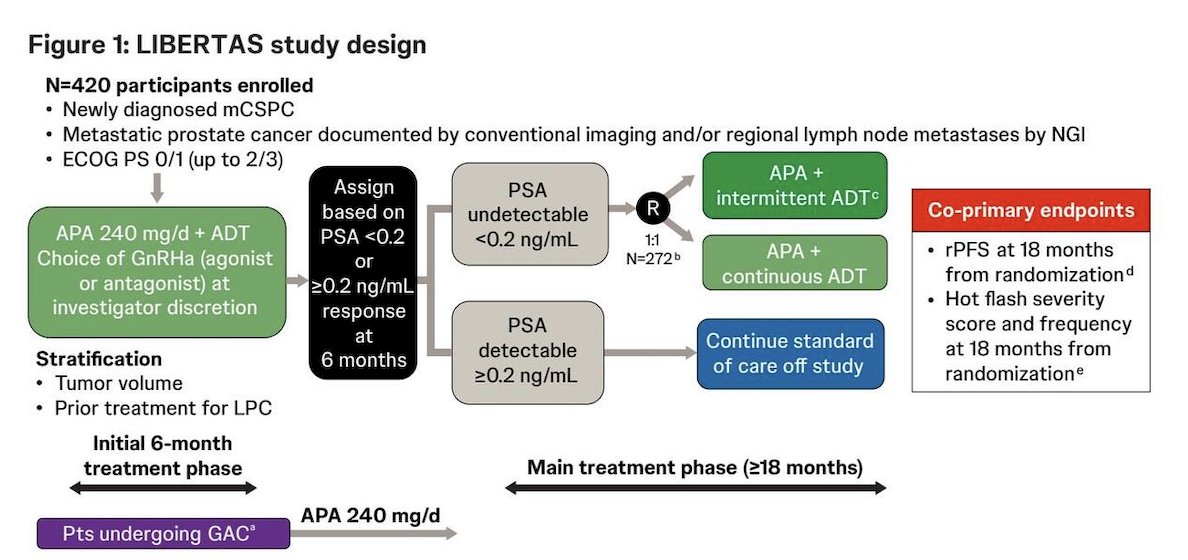
The co-primary endpoints were radiographic progression-free survival, measured by the 18-month event-free survival rate, and reduction of hot flash burden, measured by the 18-month severity-adjusted hot flash score.
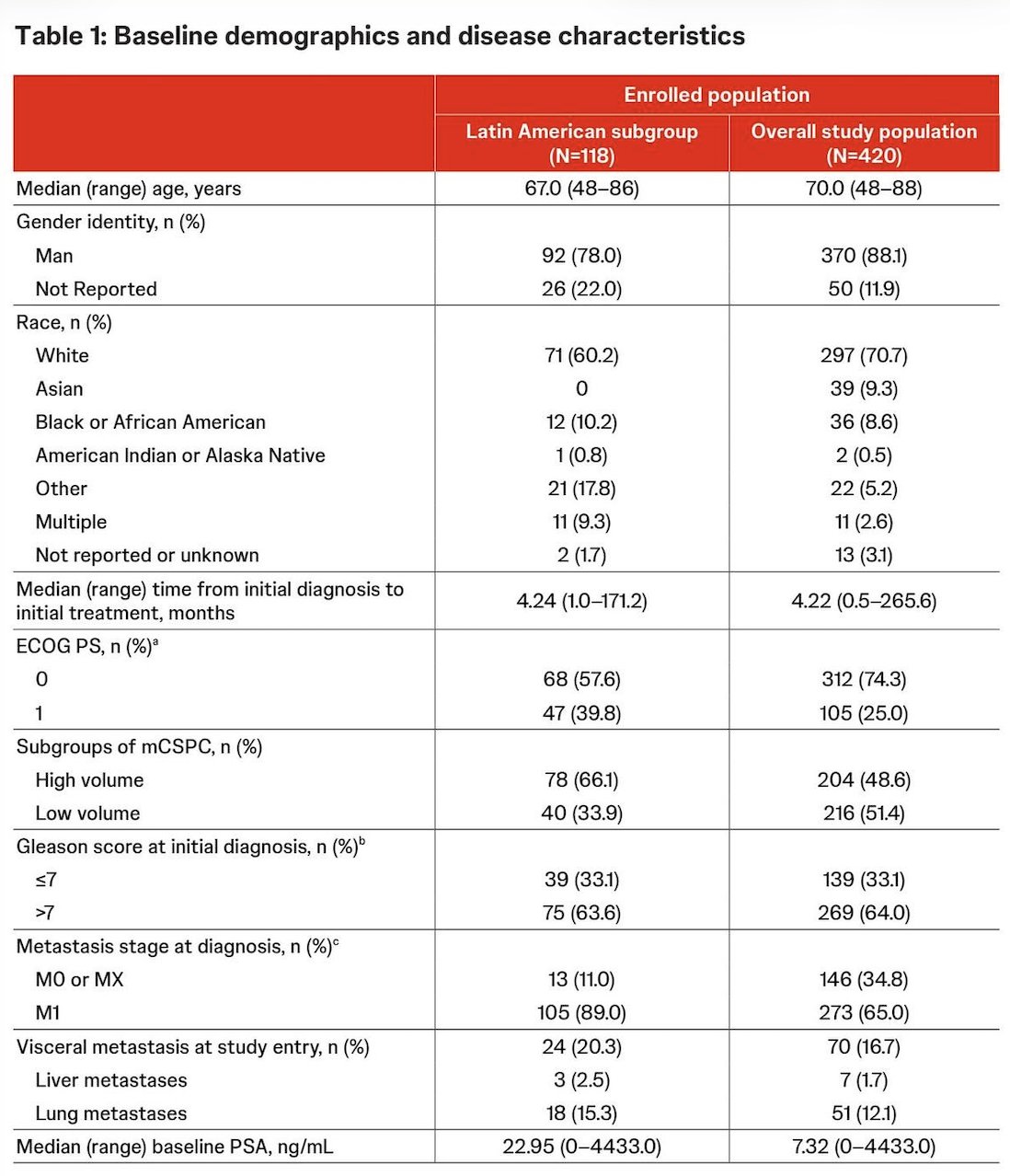
From December 2023 to July 2024, 118 Latin American participants were enrolled (87 participants from 7 sites in Brazil, and 31 participants from 4 sites in Mexico). Racial distribution in Latin American participants was 60.2% White, 10.2% Black, 9.3% multiple, and 17.8% other. Latin American participants were younger (median age 67 years [range: 48–86]) and had more advanced disease (89.0% with M1 disease at diagnosis) compared with the overall study population. Among Latin American participants, 39.8% had an ECOG performance status 1, 66.1% with high volume disease, and a median baseline PSA of 22.95 ng/mL (IQR: 3.18–87.00), compared to a PSA of 7.32 ng/mL in the overall population:
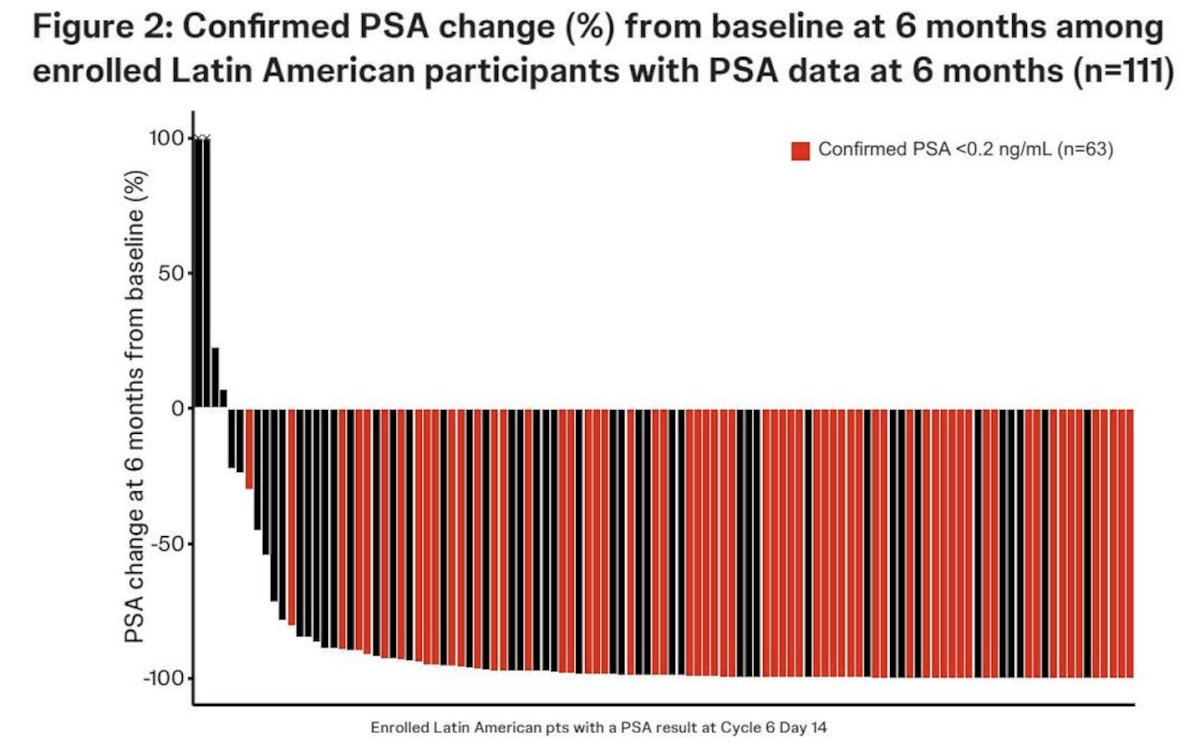
Rapid and deep PSA decline was observed with apalutamide + ADT in the majority of Latin American participants:
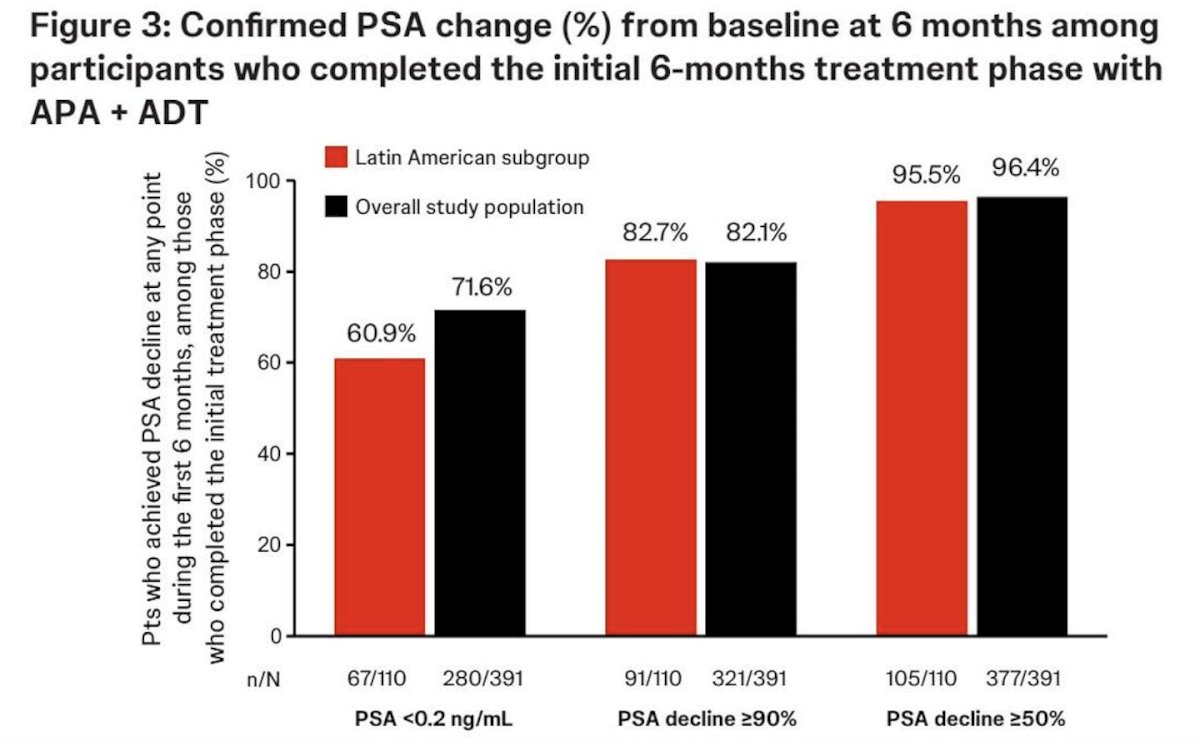
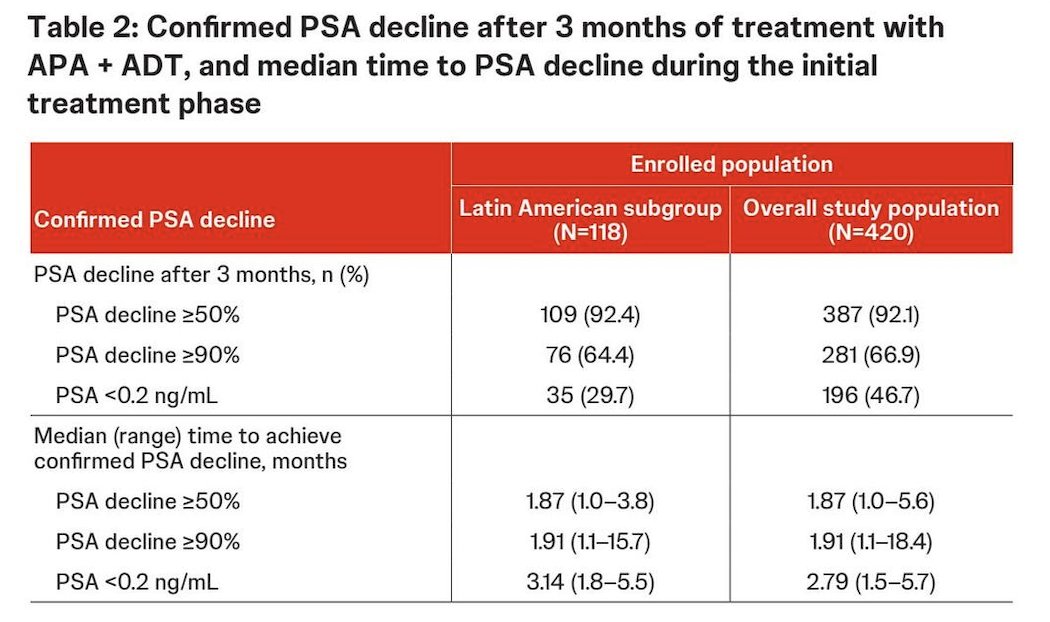
Among 110 participants who completed the 6-month initial treatment phase, 105 (95.5%) achieved a ≥50% PSA decline (PSA50), 91 (82.7%) achieved a ≥90% decline (PSA90), and 67 (60.6%) achieved PSA < 0.2 ng/mL:
By 3 months of treatment, PSA50, PSA90, and the PSA < 0.2 ng/mL rate were achieved by 92.4%, 64.4%, and 29.7%, respectively, in Latin American participants:
A total of 62 (56.9%) Latin American participants were randomized to the main treatment phase.
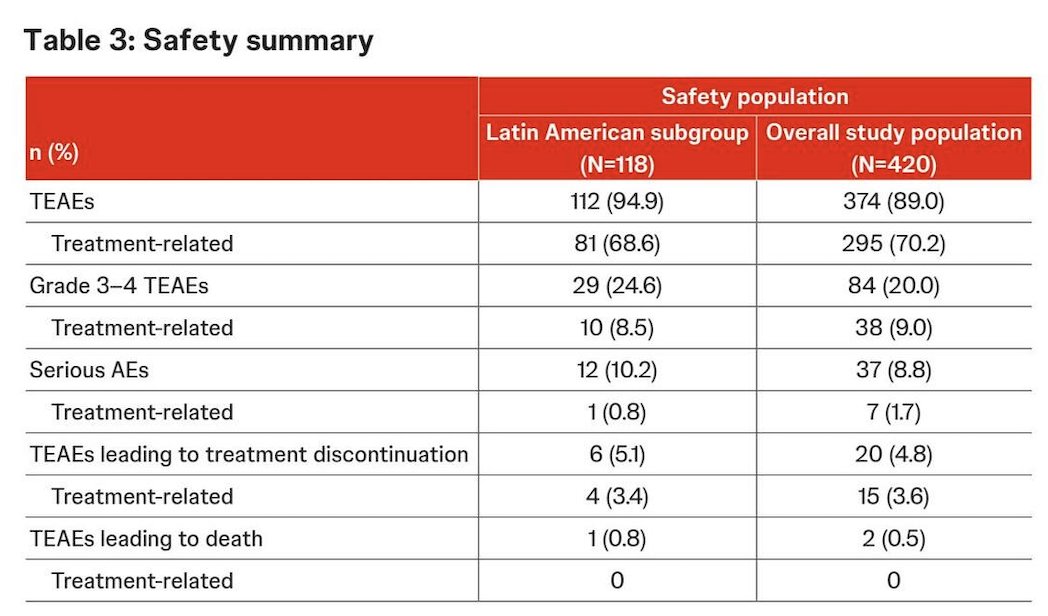
The safety profile in the Latin American subgroup was consistent with the global population, with no new safety signals:
Dr. Gomes concluded her presentation discussing validation of PSA decline among the Latin American subgroup of LIBERTAS, a phase 3 study of apalutamide + continuous versus intermittent ADT in mCSPC, with the following take-home points:
- Latin American participants in LIBERTAS were younger on average and had more advanced disease compared with the overall study population, demonstrating consistent deep PSA response regardless of differences in demographics and baseline clinical characteristics
- Apalutamide + ADT resulted in 96% of patients reaching PSA50 at 6 months, with 83% PSA90, and 61% PSA < 0.2 ng/mL in this Latin American cohort
- The safety profile of apalutamide was consistent with prior experience
- The LIBERTAS study remains on track for the primary readout
Presented by: Andrea Juliana Gomes, Liga Norte Riograndense Contra O Cancer, Natal, Brazil
Written by: Zachary Klaassen, MD, MSc – Urologic Oncologist, Associate Professor of Urology, Georgia Cancer Center, Wellstar MCG Health, @zklaassen_md on Twitter during the American Society of Clinical Oncology Genitourinary (ASCO) Annual Meeting held in Chicago, IL between May 29th and June 1st, 2026
References:
- Chi KN, Agarwal N, Bjartell A, et al. Apalutamide for metastatic, castration-sensitive prostate cancer. N Engl J Med 2019 Jul 4;381(1):13-24.
- Chowdhury S, Bjartell A, Agarwal N, et al. Deep, rapid, and durable prostate-specific antigen decline with apalutamide plus androgen deprivation therapy is associated with longer survival and improved clinical outcomes in TITAN patients with metastatic castration-sensitive prostate cancer. Ann Oncol. 2023 May;34(5):477-485.