

(UroToday.com) The 2026 ASCO annual meeting featured a prostate cancer trials in progress session and a presentation by Dr. Oliver Sartor discussing AcTFirst, a phase 3 trial of 225Ac-PSMA-617 + androgen receptor pathway inhibitor (ARPI) versus standard of care in adults with PSMA-positive metastatic castration resistant prostate cancer (mCRPC). In the VISION1 and PSMAfore2 trials, β-emitting radioligand therapy with 177Lu-PSMA-617 shows superior efficacy and tolerable safety compared with standard of care in patients with PSMA-positive mCRPC. However, not all patients respond to 177Lu-PSMA-617 treatment. 225Ac-PSMA-617, an α-emitting agent, may offer an alternative treatment option to standard of care in mCRPC because its higher linear energy transfer increases the likelihood of higher cytotoxicity in tumor cells. Compared with β-emitters, α-emitters deliver higher linear energy transfer with a shorter tissue range, resulting in increased double-stranded DNA damage and potentially greater tumor cytotoxicity while limiting off-target effects.
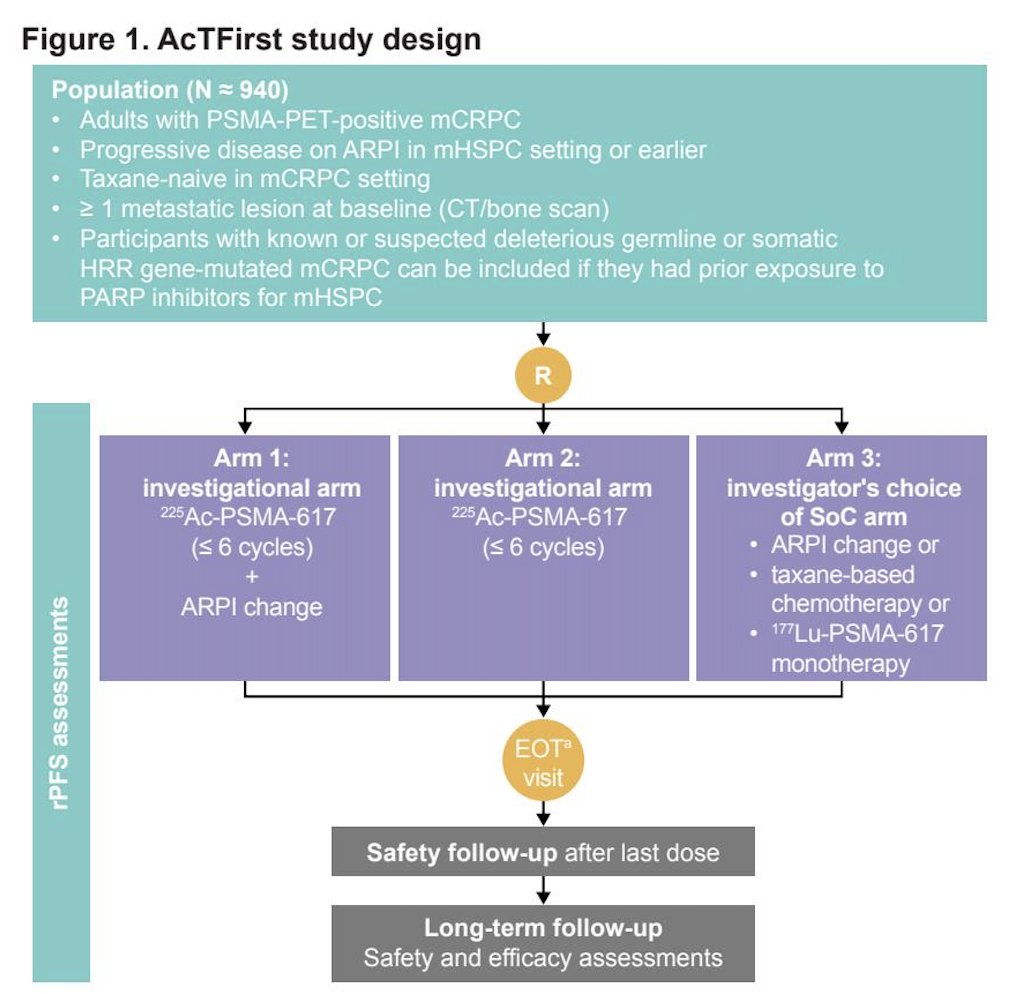
AcTFirst (NCT06855277) is a phase 3, open-label, multicenter, randomized study to evaluate the efficacy and safety of 225Ac-PSMA-617 + ARPI in patients with PSMA-positive mCRPC. Eligible participants are adults with PSMA positron emission tomography-positive mCRPC and progressive disease on androgen deprivation therapy plus one ARPI as their last treatment in the metastatic hormone-sensitive prostate cancer (mHSPC) or earlier setting. ARPI treatment received in the mHSPC setting can be continued until cycle 1. Key exclusion criteria include previous treatment with radioligand therapy or systemic anti-cancer therapy for mCRPC. Participants with homologous recombination repair gene-mutated mCRPC who had prior exposure to PARP inhibitors for HSPC can be included. Participants with inadequate bone marrow, hepatic, or renal function are excluded. Participants will be randomized to three treatment arms:- A combination of 225Ac-PSMA-617 (up to six cycles) + ARPI change (enzalutamide or abiraterone)
- 225Ac-PSMA-617 monotherapy (up to six cycles)
- Investigator’s choice of standard of care (ARPI change, taxane chemotherapy or 177Lu- PSMA-617)
Efficacy will be assessed using a hierarchical group sequential testing strategy for the primary and key secondary objectives:
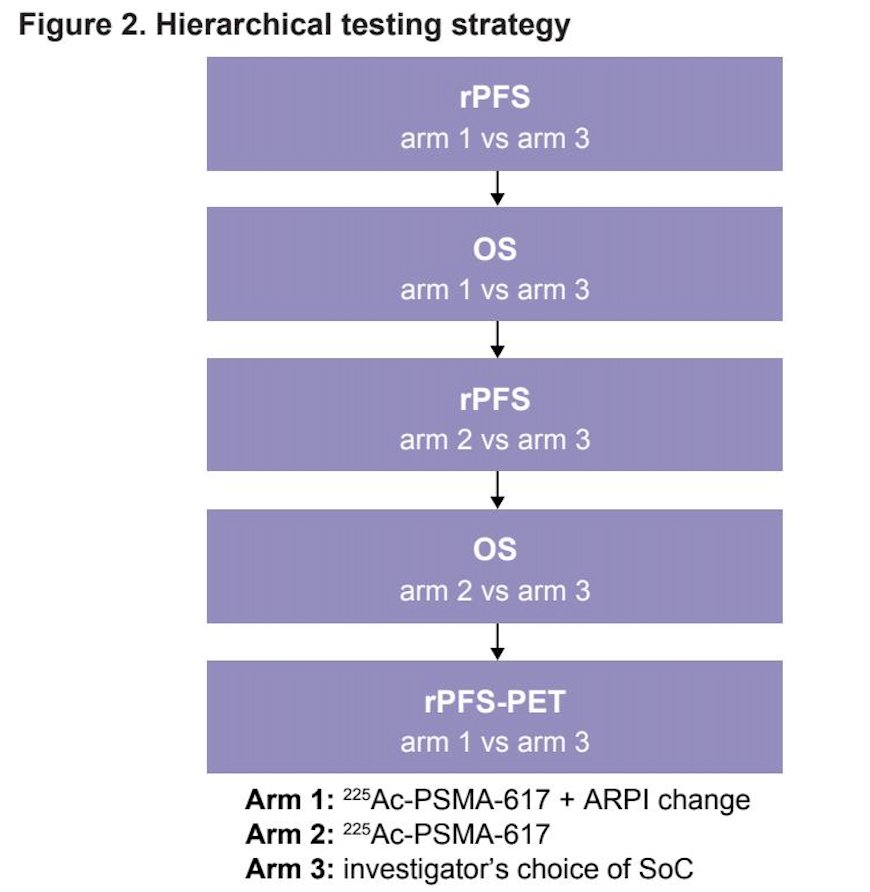
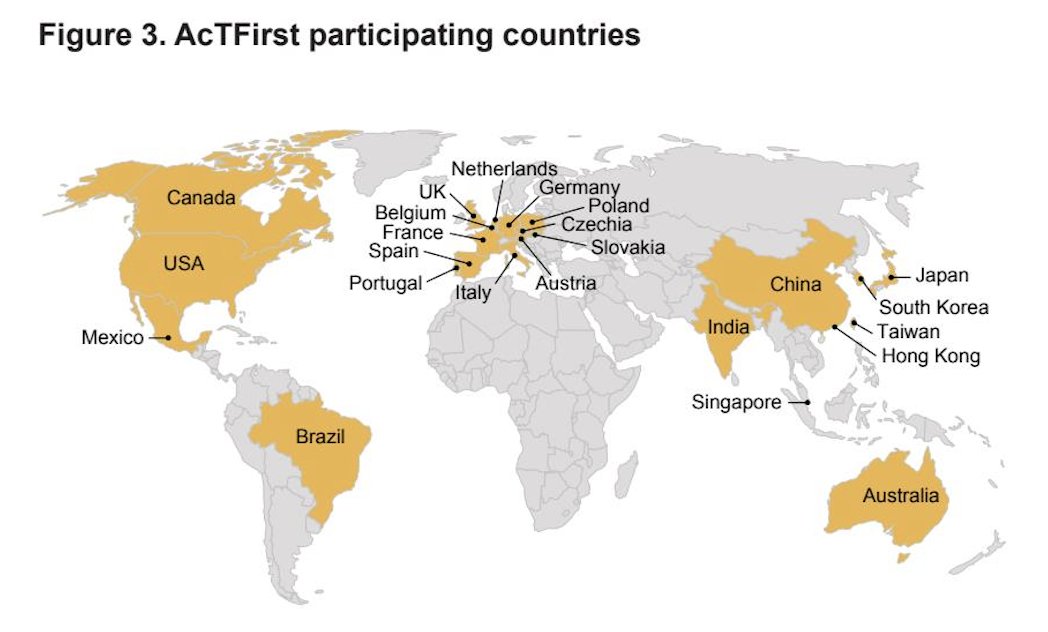
The primary endpoint is radiographic progression free survival by conventional imaging for the combination and standard of care arms. Key secondary endpoints are overall survival for the combination and standard of care arms, radiographic progression free survival by conventional imaging for the monotherapy and standard of care arms, overall survival for the monotherapy and standard of care arms, and radiographic progression free survival by PSMA PET/CT imaging for the combination and standard of care arms. Other outcomes of interest include safety, health-related quality of life and other patient reported outcomes. As of May 2026, patient enrollment is ongoing in the following countries:
Presented by: Oliver Sartor, MD, LCMC Health, New Orleans, LA
Written by: Zachary Klaassen, MD, MSc – Urologic Oncologist, Associate Professor of Urology, Georgia Cancer Center, Wellstar MCG Health, @zklaassen_md on Twitter during the American Society of Clinical Oncology Genitourinary (ASCO) Annual Meeting held in Chicago, IL between May 29th and June 1st, 2026
References:
- Sartor O, de Bono J, Chi KN et al. Lutetium-177-PSMA-617 for Metastatic Castration-Resistant Prostate Cancer. N Engl J Med. 2021 Sep 16;385(12):1091-1103.
- Morris MJ, Castellano D, Herrmann K, et al. 177Lu-PSMA-617 versus a change of androgen receptor pathway inhibitor therapy for taxane-naïve patients with progressive metastatic castration-resistant prostate cancer (PSMAfore): A phase 3, randomized, controlled trial. Lancet 2024 Sep 28;404(10459):1227-1239.