

(UroToday.com) The 2026 American Society of Clinical Oncology Genitourinary (ASCO) Annual Meeting held in Chicago, IL, was host to the Prostate, Testicular, and Penile Cancer - Oral Abstracts. Mr. Sebastian R. Medina presented Abstract 5002: Al-Inferred Spatial Gene Expression from H&E Predicts Docetaxel Benefit in Metastatic Hormone-Sensitive Prostate Cancer (CHAARTED / E3805).
Mr. Medina began by noting that the benefit derived from docetaxel in metastatic hormone-sensitive prostate cancer (mHSPC) is heterogeneous across patients. He emphasized that while docetaxel improves overall survival in selected patients with mHSPC, currently used clinical stratification factors, including disease volume and timing of metastatic presentation, only partially identify which patients are most likely to benefit from treatment intensification. He further highlighted that existing prognostic and predictive tools frequently rely on genomic assays, which remain limited by cost, tissue destruction, prolonged turnaround time, and limited global accessibility. Although emerging technologies such as spatial transcriptomics may represent a promising alternative to conventional genomic assays, these platforms are currently expensive and not readily scalable for widespread clinical implementation.
The investigators argued that routine H&E slides contain rich morphologic and spatial tumor information that may capture underlying biological behavior and treatment sensitivity. They proposed that spatial gene expression could potentially be inferred directly from H&E images using paired spatial transcriptomic data as supervision, creating a more scalable and cost-effective alternative to conventional genomic assays. Mr. Medina explained that the primary objective of the study was to determine whether a virtual spatial transcriptomic biomarker derived from routine H&E slides could identify patients with metastatic hormone-sensitive prostate cancer who derive an overall survival benefit from docetaxel. To achieve this, the investigators sought to predict spatial gene expression directly from routine H&E pathology slides, distill these predicted expression patterns into a 26-gene prostate cancer biomarker, and subsequently evaluate whether this biomarker could identify patients most likely to benefit from docetaxel within a subcohort of the CHAARTED trial.1
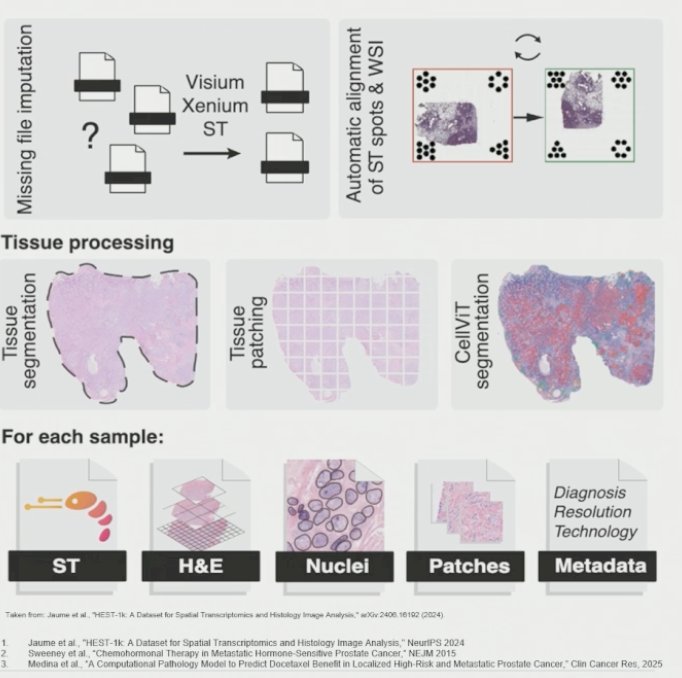
For model development and validation, the investigators leveraged two independent cohorts. The first was the HEST1K prostate spatial transcriptomic cohort, which included 49 paired prostate cancer samples with spatial transcriptomics and automatically aligned H&E whole-slide images generated across multiple ST platforms, including Visium, Visium HD, Xenium, and legacy spatial transcriptomic technologies. In total, the broader HEST1K dataset comprised 1,276 paired spatial transcriptomic samples spanning multiple organs and cancer types.
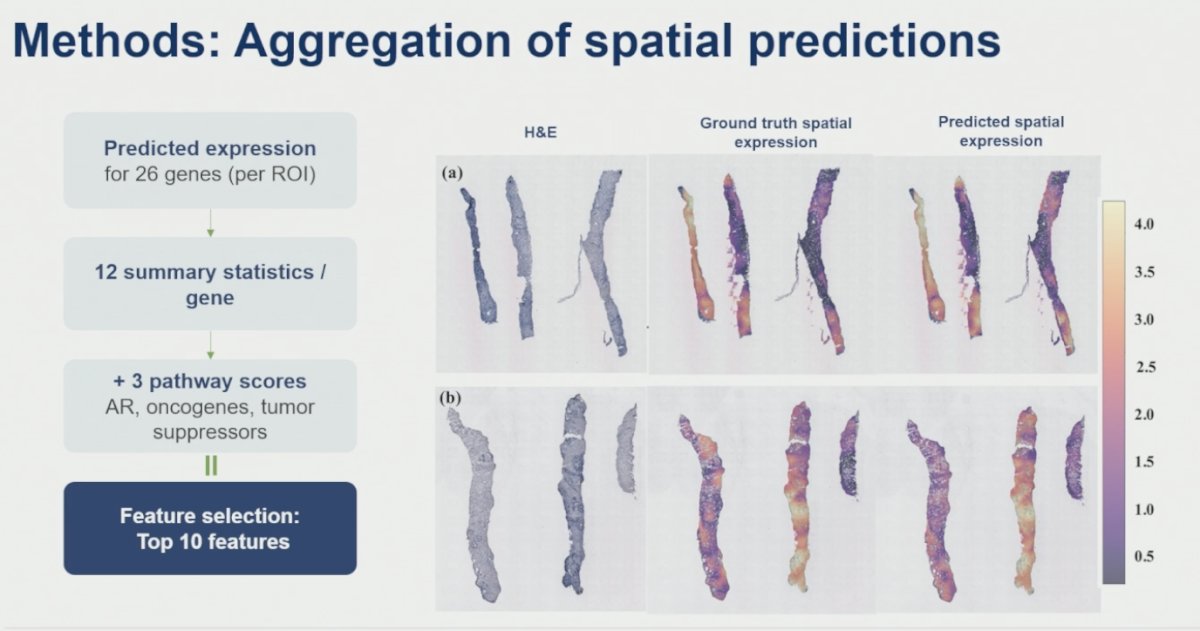
The second cohort consisted of a subset of patients from the phase III CHAARTED/E3805 trial with available digitized H&E diagnostic biopsy specimens that passed quality control assessment. Mr. Medina noted that CHAARTED originally randomized 789 patients with metastatic hormone-sensitive prostate cancer to ADT alone or ADT plus docetaxel and stratified patients according to disease volume and ECOG performance status.1 The study workflow incorporated tissue segmentation, tissue patching, cellular segmentation, and automated alignment of spatial transcriptomic spots with whole-slide H&E images to generate virtual spatial transcriptomic predictions directly from routine pathology slides as illustrated below.
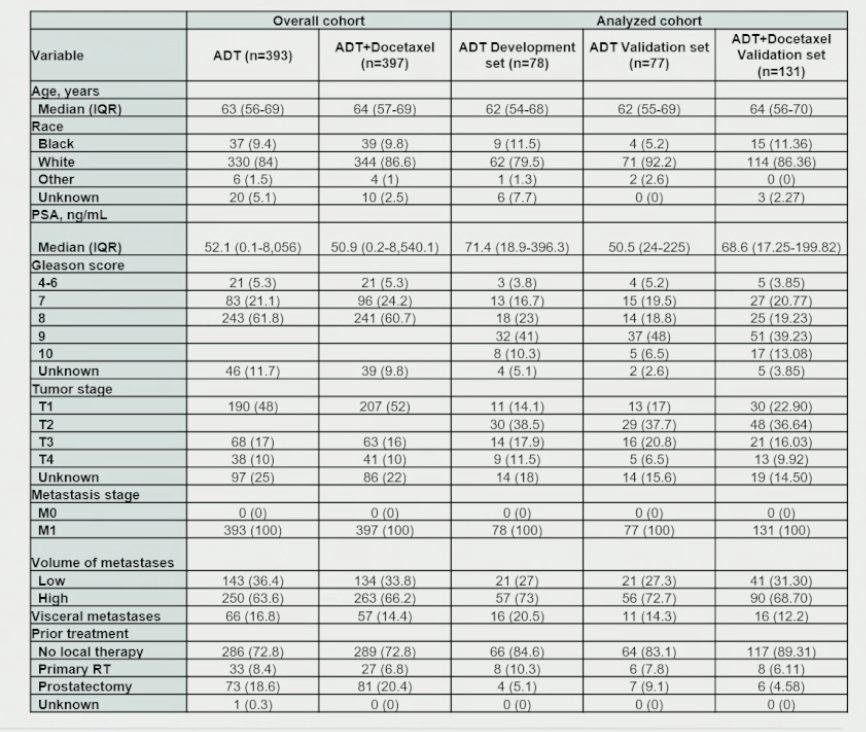
Mr. Medina subsequently reviewed the clinical characteristics of the CHAARTED study cohort included in the analysis and emphasized that there were no major differences between the overall trial population and the biomarker-evaluable cohort. He noted that the analyzed population was derived from patients with available digitized diagnostic H&E biopsy slides that successfully passed quality control procedures. Key exclusion criteria included unavailable digitized biopsy slides (n=190), slide-related issues such as artifact, insufficient tissue, processing errors, or failure of quality control assessment (n=313), as well as failure of biomarker score generation (n=3). Overall, the analyzed cohort remained clinically representative of the broader CHAARTED study population. The full list of baseline characteristics are shown in the table below:
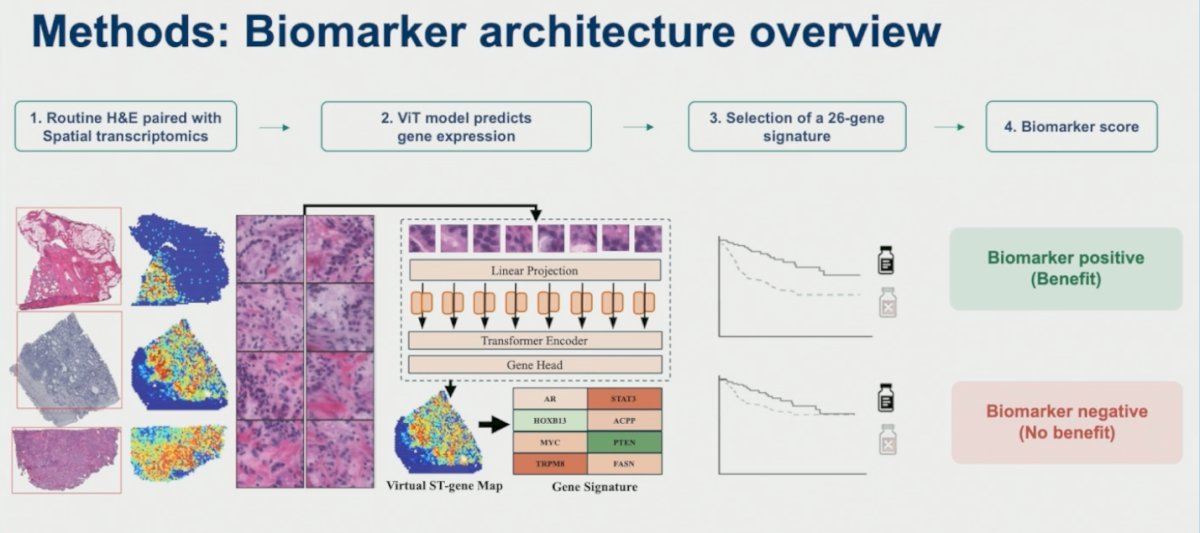
Mr. Medina subsequently reviewed the biomarker architecture workflow used to generate the virtual spatial transcriptomic classifier from routine pathology slides. The process consisted of four sequential steps. First, routine H&E whole-slide images were paired with spatial transcriptomic data to train the model. Second, a vision transformer (ViT) model was used to predict spatial gene expression directly from H&E image patches, generating virtual spatial transcriptomic maps across tumor regions. Third, the investigators selected and distilled these predictions into a validated 26-gene prostate cancer signature associated with treatment response and prognosis. Finally, the resulting biomarker score was used to classify patients as biomarker-positive, indicating potential benefit from docetaxel, or biomarker-negative, suggesting limited benefit from treatment intensification.
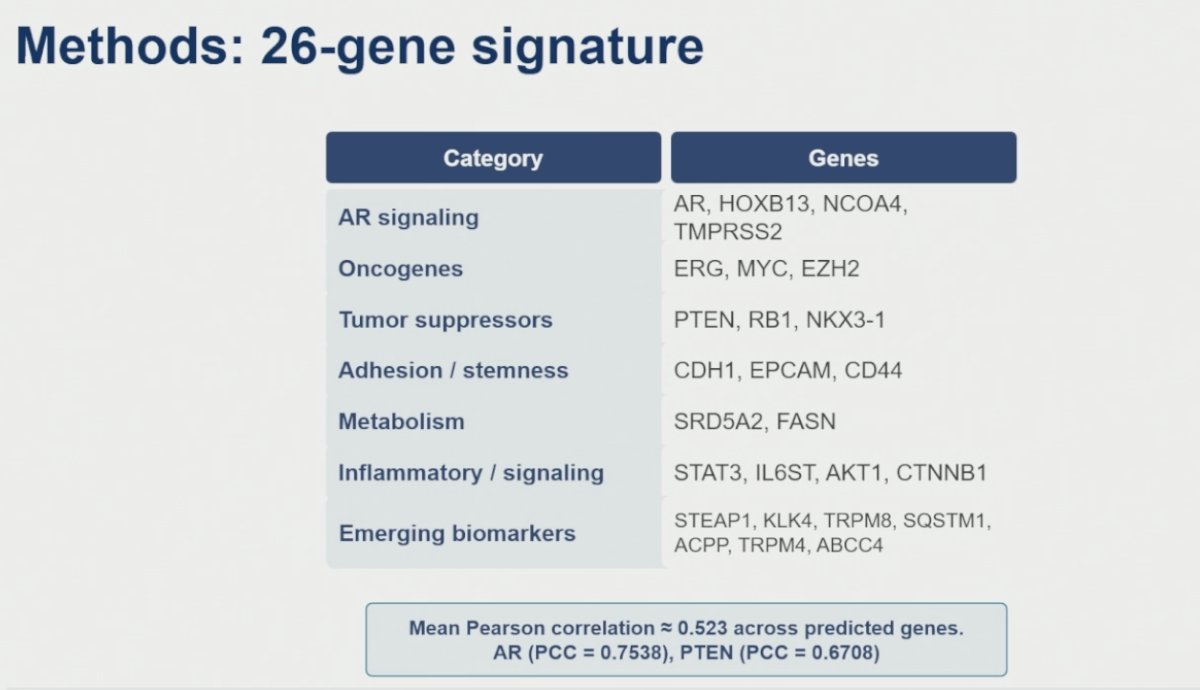
The final 26-gene signature incorporated multiple biologically relevant pathways implicated in prostate cancer progression, including androgen receptor signaling, oncogenic pathways, tumor suppressor genes, cellular adhesion and stemness, metabolism, inflammatory signaling, and emerging prostate cancer biomarkers. Representative genes included AR, HOXB13, TMPRSS2, ERG, MYC, EZH2, PTEN, RB1, CD44, FASN, STAT3, AKT1, STEAP1, KLK4, and TRPM8, among others. Mr. Medina highlighted that the model demonstrated a mean Pearson correlation coefficient of approximately 0.523 across predicted genes, supporting the ability of the virtual spatial transcriptomic platform to infer gene expression directly from routine H&E images. Notably, performance for several clinically relevant genes was particularly strong, including AR with a Pearson correlation coefficient of 0.7538 and PTEN with a coefficient of 0.6708
After establishing the predictive performance of the 26-gene panel, the investigators developed an aggregation strategy to integrate spatial gene expression predictions across tumor regions. For each region of interest, predicted expression values for the 26 genes were generated, followed by calculation of 12 summary statistics per gene and incorporation of three biologically relevant pathway scores related to androgen receptor signaling, oncogenic pathways, and tumor suppressor biology. These aggregated features were then refined through feature selection to identify the top 10 most informative biomarker features. Mr. Medina highlighted that the right side of the slide illustrates representative examples comparing the original H&E image, the ground truth spatial transcriptomic expression maps, and the model-predicted spatial expression maps, demonstrating close spatial concordance between observed and predicted gene expression patterns across tumor regions.
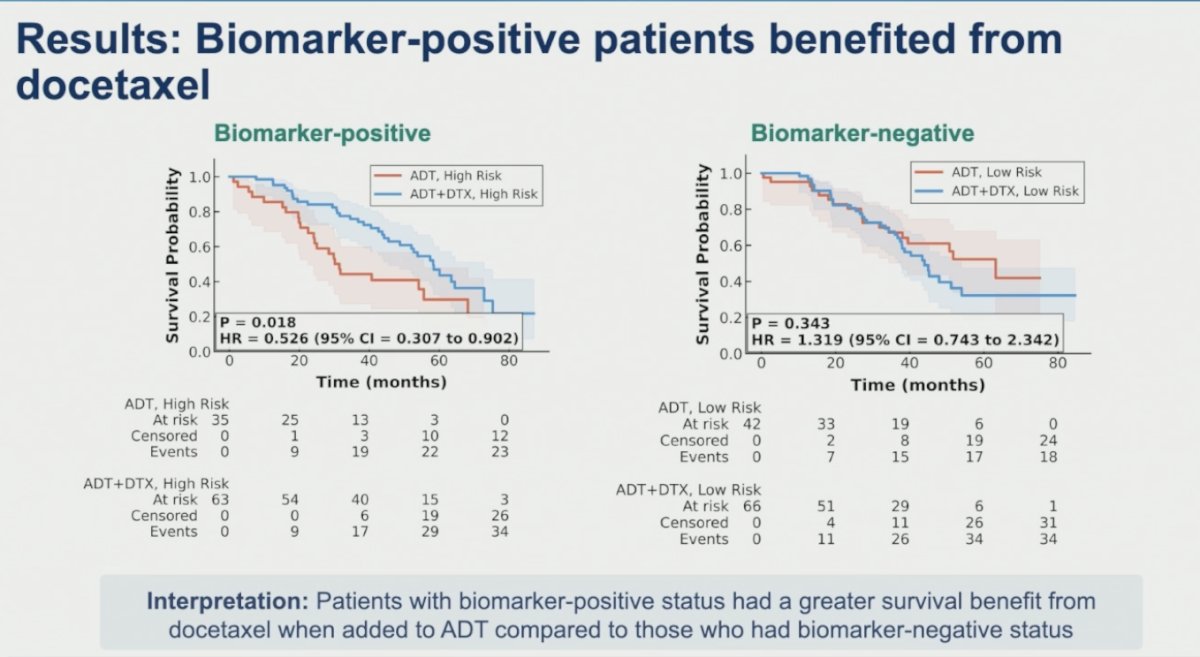
Among biomarker-positive patients, the addition of docetaxel to ADT was associated with a significant improvement in overall survival compared with ADT alone (HR 0.526, 95% CI 0.307-0.902; p=0.018). In contrast, among biomarker-negative patients, no significant overall survival benefit was observed with the addition of docetaxel (HR 1.319, 95% CI 0.743-2.342; p=0.343). Mr. Medina emphasized that these findings suggest the virtual spatial transcriptomic biomarker may help identify patients with metastatic hormone-sensitive prostate cancer who are most likely to derive survival benefit from docetaxel intensification.
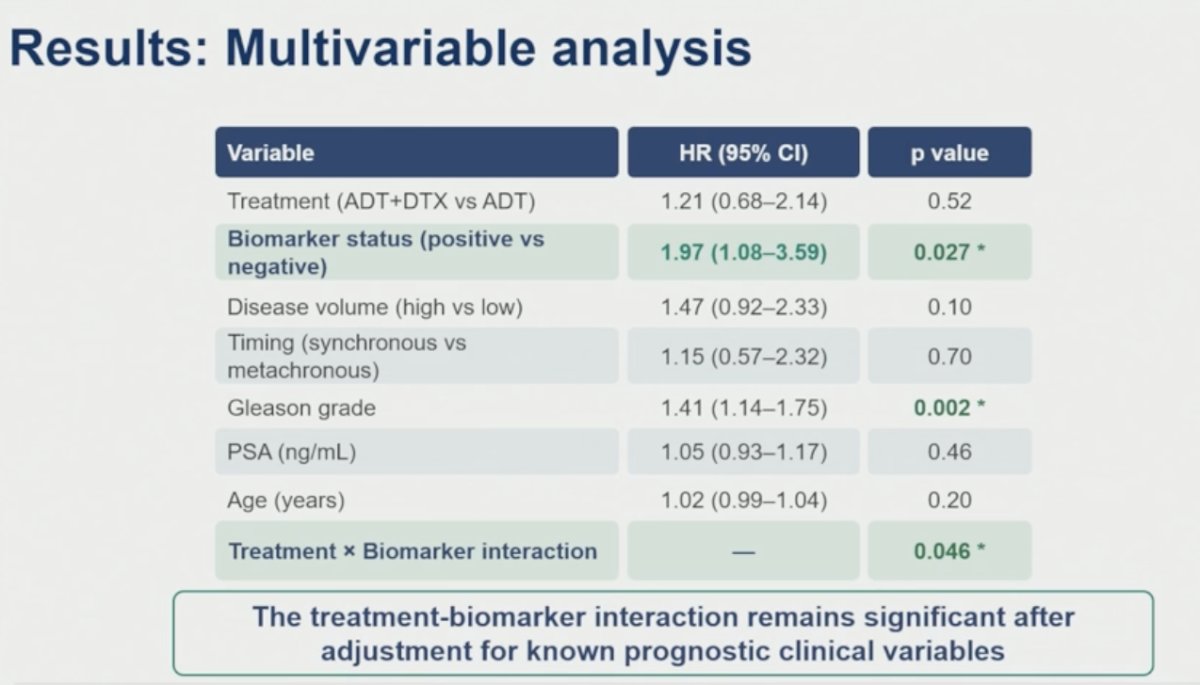
On multivariable analysis, biomarker-positive status remained independently associated with improved outcomes, with a hazard ratio of 1.97 (95% CI 1.08-3.59; p=0.027). Importantly, the interaction between treatment and biomarker status also remained statistically significant after adjustment for known prognostic clinical variables, including disease volume, timing of metastases, Gleason grade, PSA, and age (interaction p=0.046). Mr. Medina emphasized that these findings support the independent predictive value of the biomarker for identifying patients most likely to benefit from docetaxel intensification.
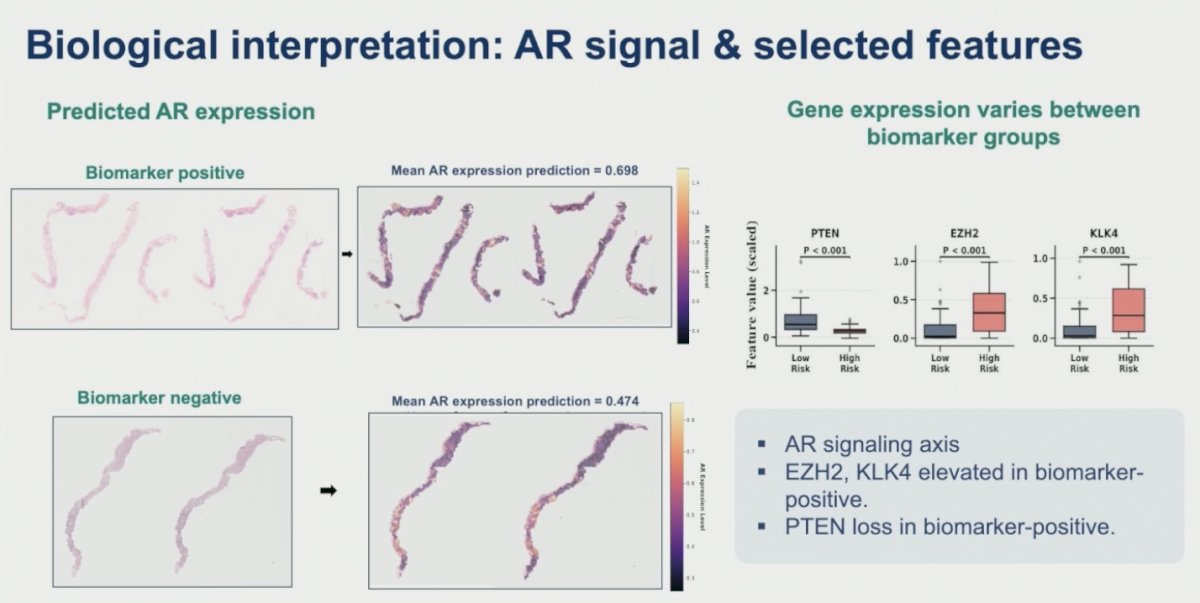
The investigators explored the biological underpinnings of the biomarker by evaluating androgen receptor signaling and selected molecular features associated with aggressive prostate cancer biology. They demonstrated that biomarker-positive tumors exhibited higher predicted AR expression compared with biomarker-negative tumors, supporting enrichment for an active androgen receptor signaling axis within the biomarker-positive group. Additionally, several established and emerging genes associated with aggressive prostate cancer biology, including EZH2 and KLK4, were significantly elevated in biomarker-positive tumors, while PTEN loss was also more frequently observed in this subgroup. Mr. Medina emphasized that these findings further support the biological relevance of the virtual spatial transcriptomic classifier and its association with aggressive, treatment-responsive prostate cancer phenotypes.
Lastly, Mr. Medina acknowledged several important limitations of the study, including the retrospective nature of the biomarker analysis despite the use of prospectively collected clinical trial data. He noted that the spatial transcriptomic training cohort remained relatively modest, consisting of only 49 HEST1K prostate cancer cases, and that the performance of spatial gene expression prediction, while encouraging, remained imperfect. Additionally, only approximately 36% of CHAARTED participants had analyzable diagnostic biopsy slides available for biomarker analysis, raising the possibility of selection bias. Mr. Medina also emphasized that CHAARTED predates the modern standard-of-care era, incorporating ADT plus ARPI intensification. Therefore the generalizability of these findings to current clinical practice will require additional prospective validation.
Mr. Medina concluded his presentation with the following key takeaway messages:
- Spatial gene expression can be inferred directly from routine H&E pathology slides, supporting the feasibility of generating biologically relevant spatial transcriptomic information without conventional genomic testing.
- The virtual spatial transcriptomic biomarker identified patients with biomarker-positive disease who derived an overall survival benefit from the addition of docetaxel to ADT.
- In contrast, patients with biomarker-negative disease demonstrated no clear survival benefit from docetaxel intensification, suggesting the potential ability of this approach to spare selected patients from unnecessary treatment-related toxicity.
Presented by: Sebastian R. Medina, MSc at Wallace H. Coulter Department of Biomedical Engineering at Georgia Tech and Emory University, Atlanta, GA
Written by: Julian Chavarriaga, MD, Clinical Assistant Professor, Urologic Oncologist, Department of Urology at Penn State Health @chavarriagaj on X during the American Society of Clinical Oncology Genitourinary (ASCO) Annual Meeting held in Chicago, IL between May 29th and June 1st, 2026
References:- Sweeney CJ, Chen YH, Carducci M, Liu G, Jarrard DF, Eisenberger M, Wong YN, Hahn N, Kohli M, Cooney MM, Dreicer R, Vogelzang NJ, Picus J, Shevrin D, Hussain M, Garcia JA, DiPaola RS. Chemohormonal Therapy in Metastatic Hormone-Sensitive Prostate Cancer. N Engl J Med. 2015 Aug 20;373(8):737-46. doi: 10.1056/NEJMoa1503747. Epub 2015 Aug 5. PMID: 26244877; PMCID: PMC4562797.