

(UroToday.com) The 2026 American Society of Clinical Oncology Genitourinary (ASCO) Annual Meeting held in Chicago, IL between Fri, May 29 – Tues, Jun 2, 2026, was host to Prostate, Testicular, and Penile Cancer – Posters Session. Dr. Neeraj Agarwal presented Abstract TPS5146: Phase I/II study to evaluate AZD9750, a novel androgen receptor proteolysis-targeting chimera, alone and in combination with other anticancer agents in patients with metastatic prostate cancer (ANDROMEDA).
Dr. Agarwal highlighted that despite the significant advances achieved with androgen receptor pathway inhibitors (ARPIs) in metastatic prostate cancer, acquired resistance remains inevitable and is frequently driven by reactivation of androgen receptor signaling through AR amplifications or ligand-binding domain mutations. As such, novel therapeutic approaches capable of directly degrading the androgen receptor may represent an important strategy to overcome resistance in metastatic castration-resistant prostate cancer (mCRPC).
AZD9750 is a novel oral proteolysis-targeting chimera (PROTAC) designed to potently degrade wild-type, amplified, and mutant forms of the androgen receptor. Preclinical studies have demonstrated encouraging antitumor activity both as monotherapy and in combination with the PARP1-selective inhibitor saruparib (AZD5305).
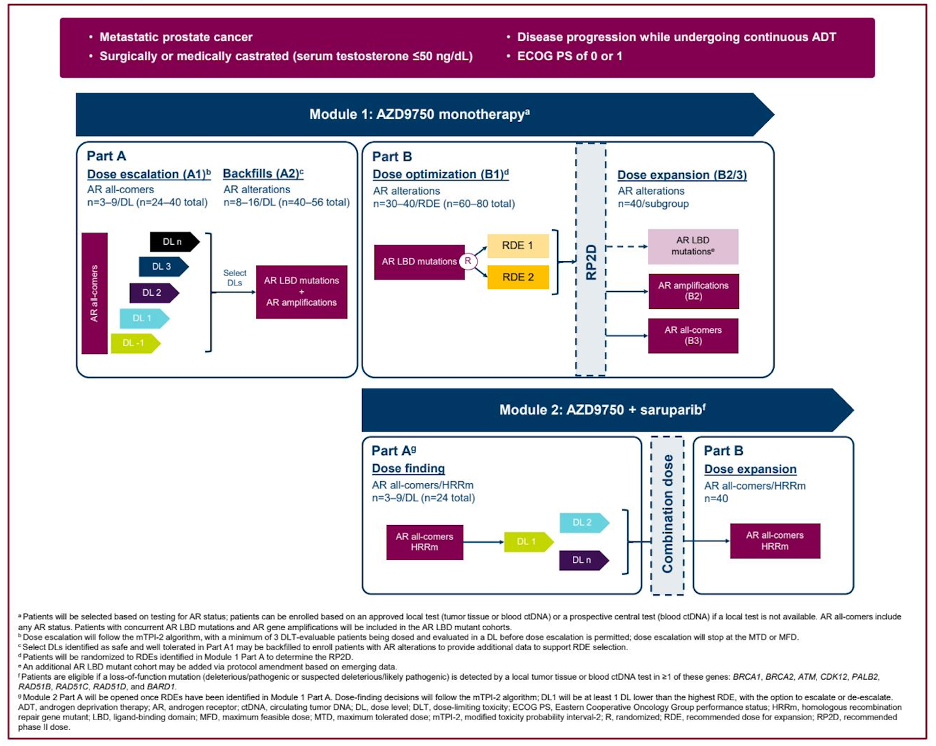
The ANDROMEDA trial (NCT07336446) is a first-in-human, phase I/II, open-label, multicenter study evaluating the safety, tolerability, pharmacokinetics, pharmacodynamics, and preliminary efficacy of AZD9750 both as monotherapy and in combination with saruparib in patients with mCRPC.
Dr. Agarwal explained that the study utilizes a modular design consisting of:
- Module 1: AZD9750 monotherapy
- Module 2: AZD9750 combined with saruparib
Each module is further divided into:
- Part A: dose escalation (monotherapy) or dose finding (combination therapy)
- Part B: dose optimization and expansion
Eligible patients must be ≥18 years old with histologically or cytologically confirmed prostate adenocarcinoma, documented metastatic disease, castrate testosterone levels (≤50 ng/dL), evidence of disease progression, and ECOG performance status 0–1. Most patients are required to have received prior ARPI therapy and prior taxane-based chemotherapy. An important exception includes patients enrolled in Module 1 Part B3, where prior taxane exposure is not required. A complete list of inclusion and exclusion criteria is presented below: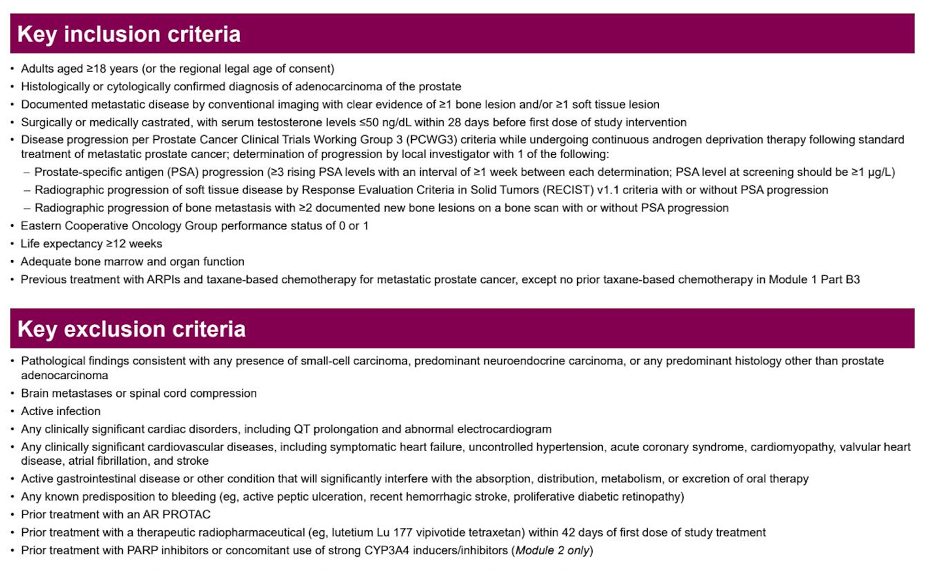
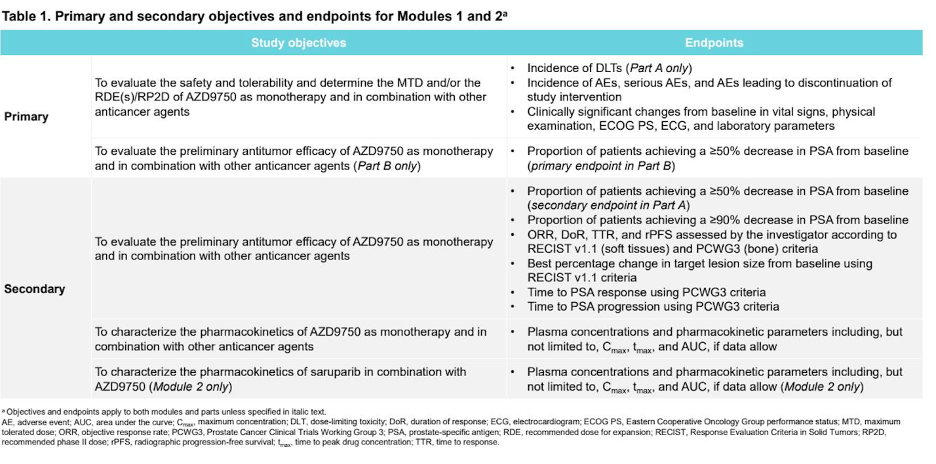
Primary endpoints include:
- Dose-limiting toxicities during Part A
- Incidence of adverse events and treatment discontinuations due to adverse events
- Preliminary antitumor activity, including PSA declines ≥50% during Part B
Secondary endpoints include:
- PSA declines ≥50% and ≥90%
- Objective response rate
- Progression-free survival by RECIST v1.1 and PCWG3 criteria
- Changes in target lesion size
- Time to PSA response
- Time to PSA progression
- Pharmacokinetic assessments across both study parts
A detailed summary of objectives and endpoints is shown in the table below:
The study is currently recruiting patients for the monotherapy dose-escalation portion of the trial. Study sites are located in Australia, Canada, China, Japan, the Netherlands, Spain, the United Kingdom, and the United States. Dr Agarwal noted that the primary completion date (final data collection for all primary outcome measures) is estimated to be January 4, 2029.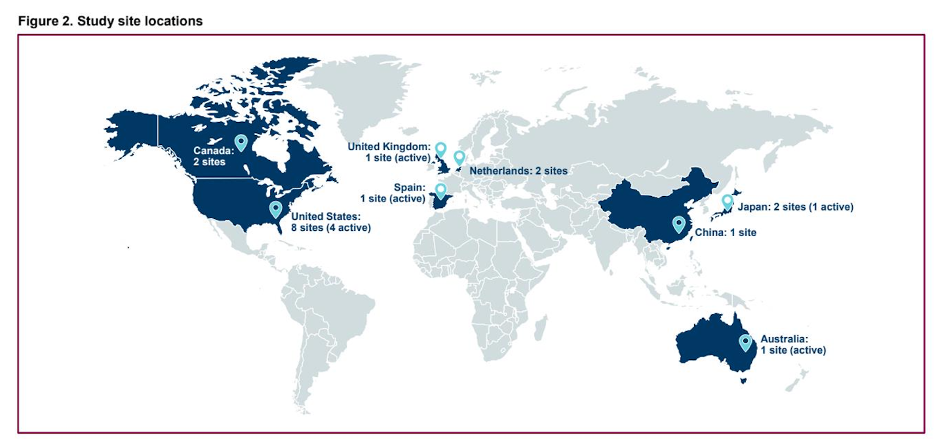
Presented by: Neeraj Agarwal, MD, FASCO, Professor, Presidential Endowed Chair of Cancer Research, Director, GU Program and the Center of Investigational Therapeutics (CIT), Huntsman Cancer Institute, University of Utah, Salt Lake City, UT
Written by: Julian Chavarriaga, MD, Clinical Assistant Professor, Urologic Oncologist, Department of Urology at Penn State Health @chavarriagaj on X during the American Society of Clinical Oncology Genitourinary (ASCO) Annual Meeting held in Chicago, IL between May 29th and June 1st, 2026