

(UroToday.com) The 2026 ASCO annual meeting featured a bladder cancer session and a presentation by Dr. Earle Burgess discussing the impact of FGFR3 pathway activation in patients with muscle invasive bladder cancer treated with neoadjuvant chemotherapy. Activation of FGFR3 pathway signaling drives a subset of urothelial bladder cancers and classically results from pathogenic gene mutations or fusions.1 Recently, an RNA expression signature representing activation of FGFR3 pathway independent from FGFR3 mutations or fusions has been identified.2 The prognostic value of FGFR3 pathway activation in muscle invasive bladder cancer patients treated with neoadjuvant cisplatin-based chemotherapy has not been defined. Dr. Burgess and colleagues recently reported at ASCO GU 2026 that high tumor mutational burden (TMB) is associated with improved clinical outcomes in muscle invasive bladder cancer,3 and at ASCO 2026, they assessed the clinical outcomes associated with FGFR3 pathway activation in this cohort.
As previously described3 the investigators performed genomic analysis on diagnostic TURBT specimens using the Tempus xT/xR platforms in a cohort of 91 patients with muscle invasive bladder cancer treated with cisplatin-based neoadjuvant chemotherapy prior to radical cystectomy. RNA expression analysis was performed by the WFBCCC bioinformatics core in 61 patients with available RNA sequencing data. Identification of FGFR-PRS status was performed as previously reported.2 Correlation of FGFR3 gene variants and FGFR-PRS status with clinical outcomes, and TMB was performed using logistic regression, Cox proportional hazards models, and Kaplan-Meier techniques.
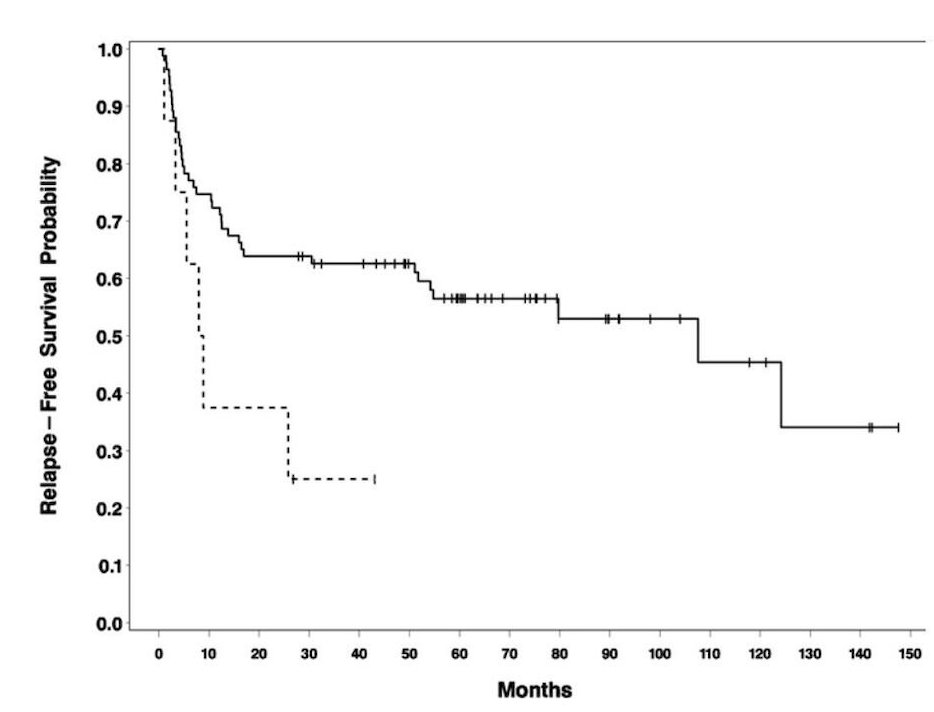
FGFR3 mutations were found in 8 (8.8%) patients and included p.R248C (n = 2), p.S249C (n = 5), and p.G370C (n = 1). One (1.1%) patient had FGFR3-TACC3 fusions. FGFR-PRS(+) was detected in 33 (54.1%) patients, of which 28 (84.8%) were FGFR3 wild type without mutations or fusions. Pathological complete response occurred in 12.5% and 33.7% with and without FGFR3 mutations (OR 0.281, p = 0.428), respectively. Pathological complete response was similar regardless of FGFR-PRS status (OR 1.372, p = 0.602). All patients with FGFR3 mutations/fusions had TMB < 10 compared to 13 (46.4%) FGFR-PRS(-) patients. Six (75%) patients with FGFR3 mutations (OR 3.188, p = 0.064), and 10 (30.3%) with FGFR3-PRS(+) (OR 1.087, p > 0.999) relapsed. Patients with FGFR3 mutations had inferior recurrence free survival (HR 2.47, p = 0.036), but those with FGFR-PRS(+) did not (HR 1.37, p = 0.451):
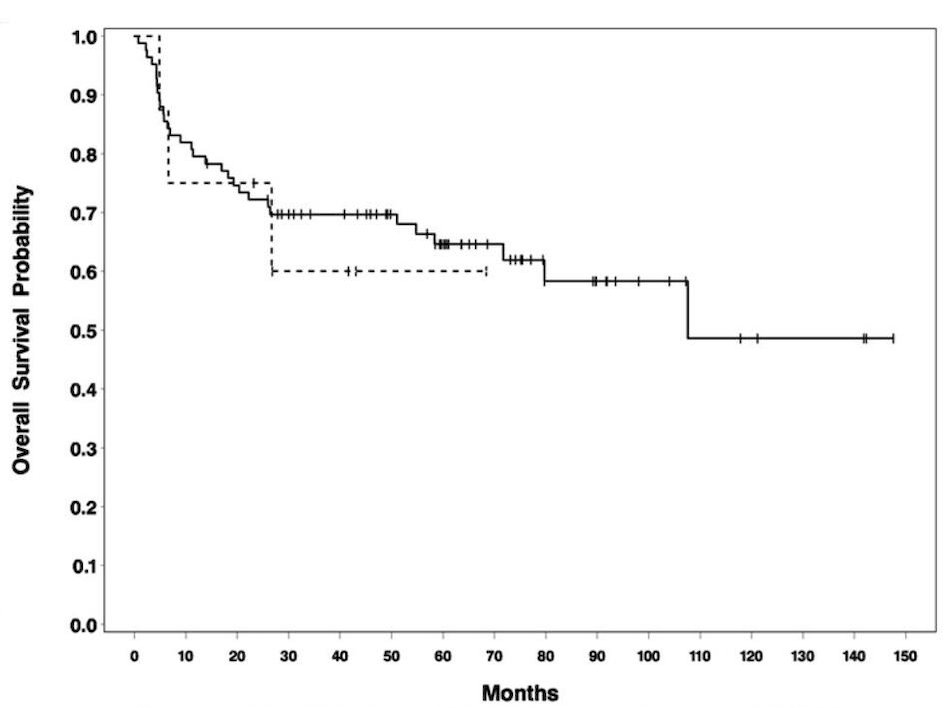
Neither FGFR3 mutations (HR 1.213, p = 0.751) nor FGFR-PRS(+) (HR 1.45, p = 0.429) was associated with overall survival in this cohort:
Dr. Burgess concluded his presentation discussing the impact of FGFR3 pathway activation in patients with muscle invasive bladder cancer treated with neoadjuvant chemotherapy with the following take home points:
- Muscle invasive bladder cancer patients with FGFR3 mutations showed numerically lower pathological complete response and higher relapse rates after neoadjuvant chemotherapy
- The presence of FGFR3 mutations was associated with inferior recurrence free survival but not overall survival, which may be due to therapeutic use of FGFR inhibition in the metastatic setting
- The presence of the FGFR-PRS signature was not associated with prognostic outcome in this cohort
- These findings suggest investigation of peri-operative FGFR inhibition in FGFR3 mutant tumors is warranted
- Efforts to define the prognostic value of FGFR3 mutations in contemporary peri-operative regimens are underway
Presented by: Earle F. Burgess, MD, Atrium Health Wake Forest Baptist Comprehensive Cancer Center, Charlotte, NC
Written by: Zachary Klaassen, MD, MSc – Urologic Oncologist, Associate Professor of Urology, Georgia Cancer Center, Wellstar MCG Health, @zklaassen_md on Twitter during the American Society of Clinical Oncology Genitourinary (ASCO) Annual Meeting held in Chicago, IL between May 29th and June 1st, 2026
References:
- Li R, Linscott J, Catto JWF, et al. FGFR Inhibition in Urothelial Carcinoma. Eur Urol. 2025 Feb;87(2):110-122.
- Eisner JR, de Jong FC, Shibata Y, et al. Characterization of FGFR Alterations and Activation in Patients with High-Risk Non-Muscle-Invasive Bladder Cancer. Clin Can Res. 2024 Dec 2;30(23):5374-5384.
- Burgess et al. Impact of tumor mutational burden on clinical outcomes in muscle-invasive bladder cancer patients treated with neoadjuvant chemotherapy. GU ASCO 2026, abstract 814.