

(UroToday.com) The 2026 American Society of Clinical Oncology (ASCO) Annual Meeting was host to a kidney and bladder cancers poster session. Dr. Suzanne Merrill presented a study of real-world patterns and clinical outcomes among US patients with non-muscle invasive bladder cancer (NMIBC) during the BCG shortage.
Approximately 80,000 patients are diagnosed with bladder cancer annually in the United States, with nearly 70% presenting with NMIBC. Management remains risk-adapted, and treatment for high-risk NMIBC typically includes transurethral resection of bladder tumor (TURBT) followed by intravesical adjuvant therapy, classically BCG. However, persistent BCG shortages, particularly since 2017, have significantly challenged delivery of guideline-recommended care. This study evaluated contemporary real-world patient characteristics, treatment utilization patterns, and clinical outcomes among patients with NMIBC during the BCG shortage period.
The study investigators analyzed demographic, clinical, and treatment data from N-Power Medicine’s Real-World Analytical Dataset, which is largely derived from Midwestern US practices. Adult patients diagnosed with NMIBC between January 2017 and June 2022 were included and followed through 2022. High-risk status was defined using the AUA definition criteria.
Kaplan-Meier analyses were used to estimate:
- BCG maintenance duration
- Real-world modified progression-free survival (rwmPFS)
- Real-world cystectomy-free survival (rwCFS)
- Overall survival (rwOS)
- Recurrence-free survival (RFS)
Logistic and Cox regression analyses were performed to identify predictors of BCG maintenance initiation and discontinuation among patients with high-risk NMIBC, including:
- Demographics
- Diagnosis year
- Smoking status
- Charlson comorbidity index (CCI)
- Physician specialty
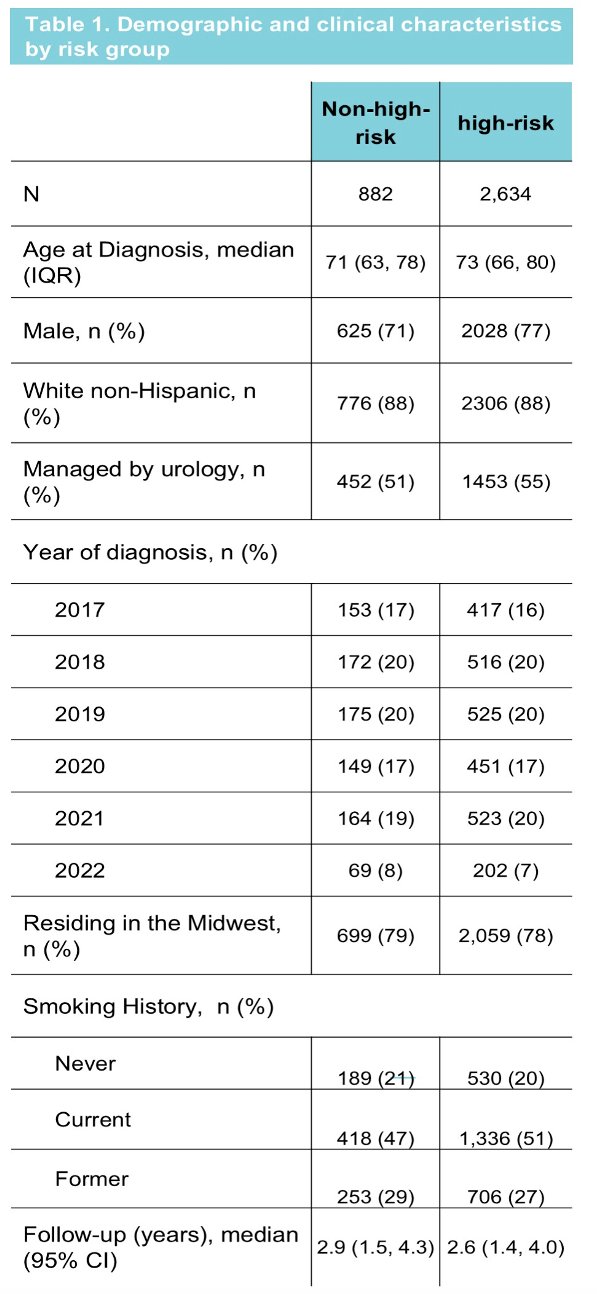
Among 3,516 patients with NMIBC, the baseline patient characteristics were as follows:
- Median age at diagnosis: 72 years
- 2,634 patients (75%) had high-risk NMIBC
- 88% were non-Hispanic White
- 75% were male
Over a median follow-up of 2.7 years:
- 29% of patients with high-risk NMIBC received BCG induction therapy
- Only 12% received BCG maintenance therapy
- Median maintenance duration was 7.7 months (95% CI 6.8–9.2)
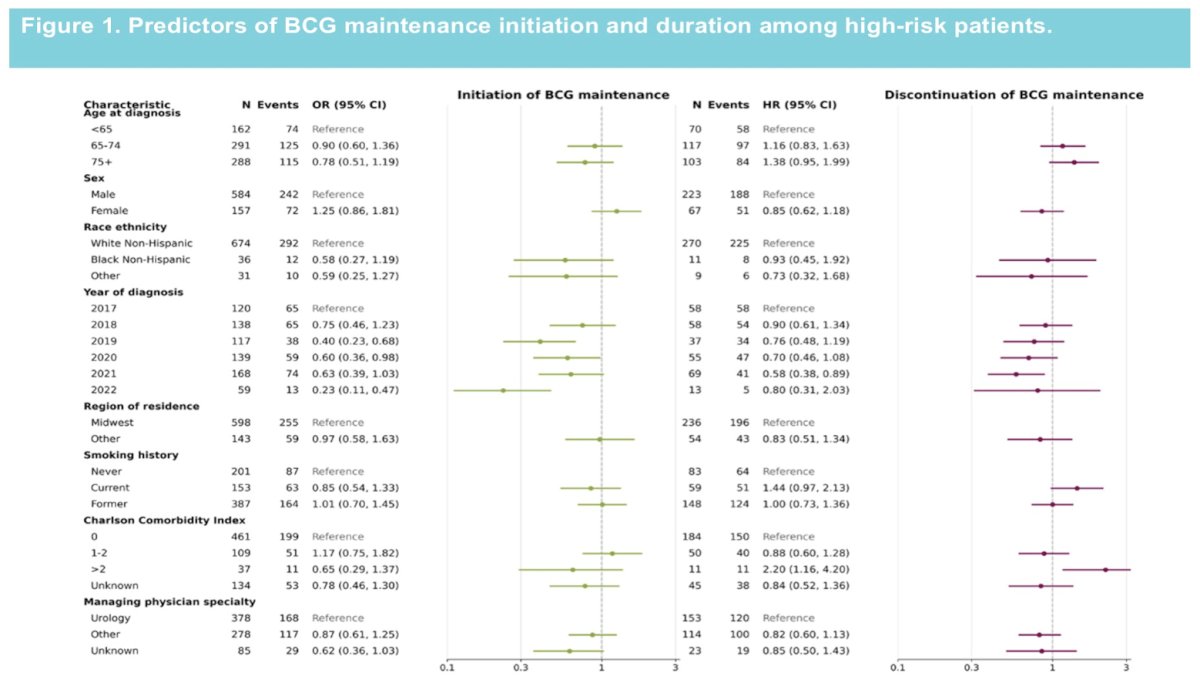
Among high-risk patients who received BCG induction, those diagnosed during the height of the shortage were less likely to initiate maintenance therapy:
- 2019 versus 2017: OR= 0.4 (95% CI 0.2–0.7)
- 2020 versus 2017= OR 0.6 (95% CI 0.4–1.0)
Patients with greater comorbidity burden were also more likely to discontinue maintenance therapy:
- CCI >2 versus 0: HR= 2.2 (95% CI 1.2–4.2)
Most patients (95%) receiving BCG did not receive additional intravesical therapy afterwards.
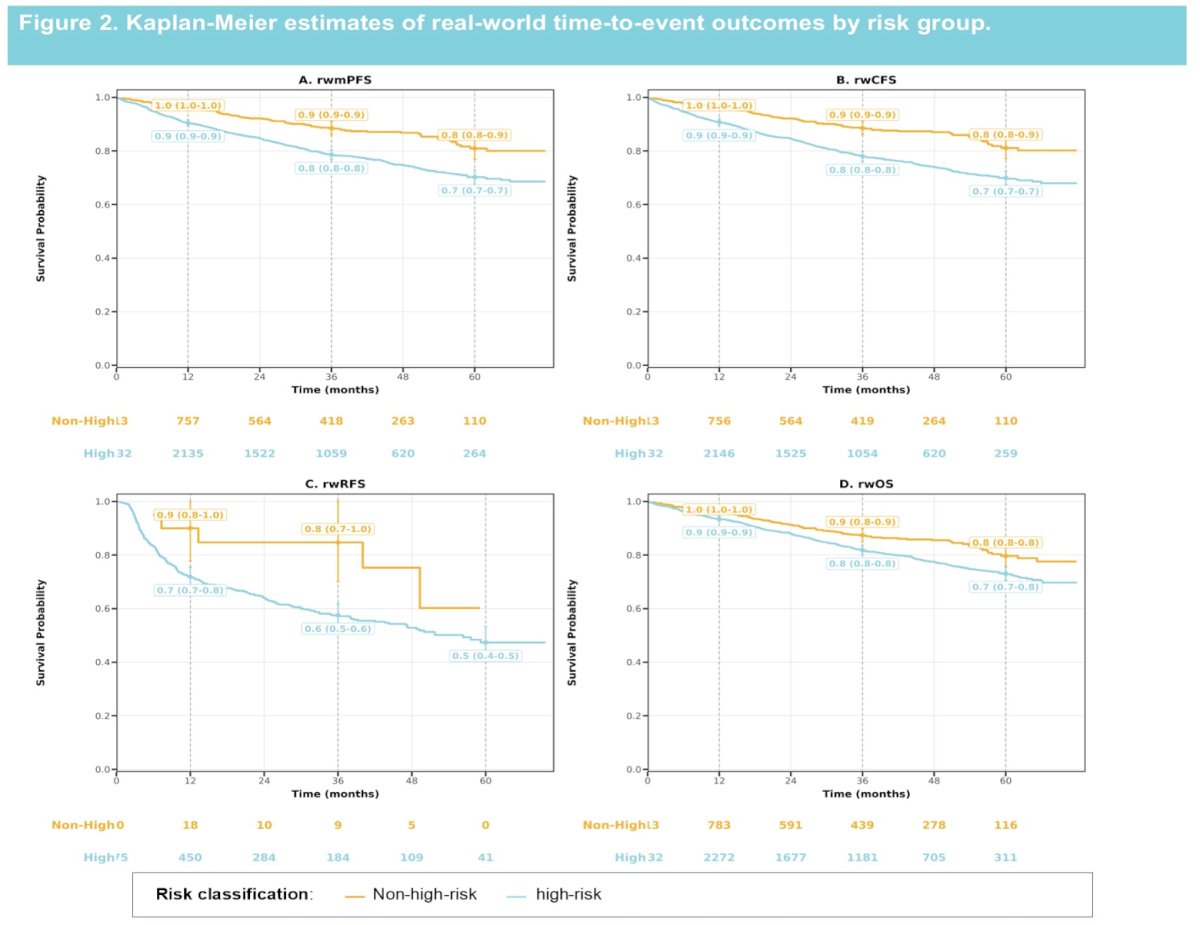
Clinical outcomes were consistently less favorable among patients with high-risk NMIBC compared with lower-risk disease. At 60 months:
- rwmPFS:
- Non-high-risk: 81% (95% CI 77–85)
- High-risk: 70% (95% CI 68–73)
- rwCFS:
- Non-high-risk: 81% (95% CI 77–85)
- High-risk: 70% (95% CI 67–73)
- rwOS:
- High-risk: 47% (95% CI 42–53)
At earlier time points, high-risk patients similarly demonstrated inferior outcomes. At 36 months:
- rwmPFS:
- Non-high-risk: 89%
- High-risk: 79%
- rwCFS:
- Non-high-risk: 89%
- High-risk: 78%
- rwOS:
- High-risk: 57%
Dr. Merrill concluded that both BCG induction and maintenance utilization were low among patients with high-risk NMIBC during the BCG shortage period. These real-world outcomes highlight substantial unmet needs in high-risk NMIBC and reinforce the importance of developing alternative treatment strategies for patients unable to receive adequate BCG therapy.
Presented by: Suzanne B. Merrill, MD, FACS, Urologist, Colorado Urology, Denver, CO, USA
Written by: Rashid K. Sayyid, MD, MSc, Assistant Professor, Urologic Oncologist, Department of Urology at The University of Arizona and Banner University Medical Center, Tucson, AZ – @rksayyid on X during the American Society of Clinical Oncology Genitourinary (ASCO) Annual Meeting held in Chicago, IL between May 29th and June 1st, 2026