

(UroToday.com) The 2026 American Society of Clinical Oncology (ASCO) Annual Meeting was host to a kidney and bladder cancers poster session. Dr. Niklas Klumper presented an exploratory analysis from the JAVELIN Bladder 100 trial evaluating outcomes with 1st line platinum-based chemotherapy and avelumab 1st line maintenance stratified by NECTIN4 and HER2 RNA expression.
NECTIN4 and HER2 are important therapeutic targets and potential biomarkers in urothelial carcinoma. RNA expression of both markers is heterogeneous across urothelial tumors, with the highest expression generally observed in luminal molecular subtypes. Given the emergence of HER2- and NECTIN4-directed therapies in advanced urothelial carcinoma, evaluating expression patterns in this setting may help identify biologic subgroups associated with differential treatment sensitivity and future therapeutic sequencing strategies. This study aimed to evaluate whether tumor NECTIN4 and HER2 RNA expression were associated with response to 1L platinum-based chemotherapy and overall survival outcomes with avelumab maintenance.
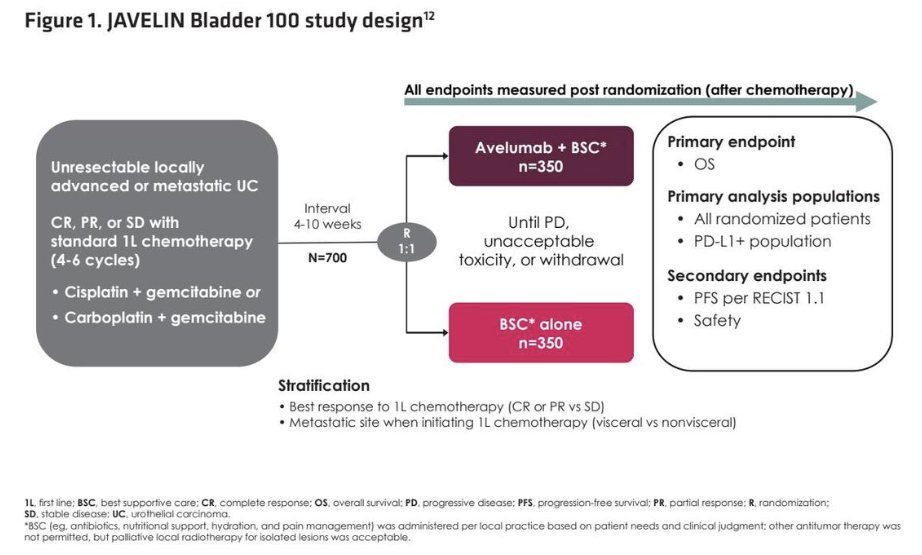
JAVELIN Bladder 100 (NCT02603432) was a phase III trial in which patients with unresectable locally advanced or metastatic urothelial carcinoma without progression after 4–6 cycles of 1st line platinum-based chemotherapy were randomized 1:1 to receive avelumab plus best supportive care (BSC) or BSC alone.1 Biomarker analyses were performed using existing whole transcriptome RNA sequencing profiles, with transcript levels quantified using Personalis ACE technology.
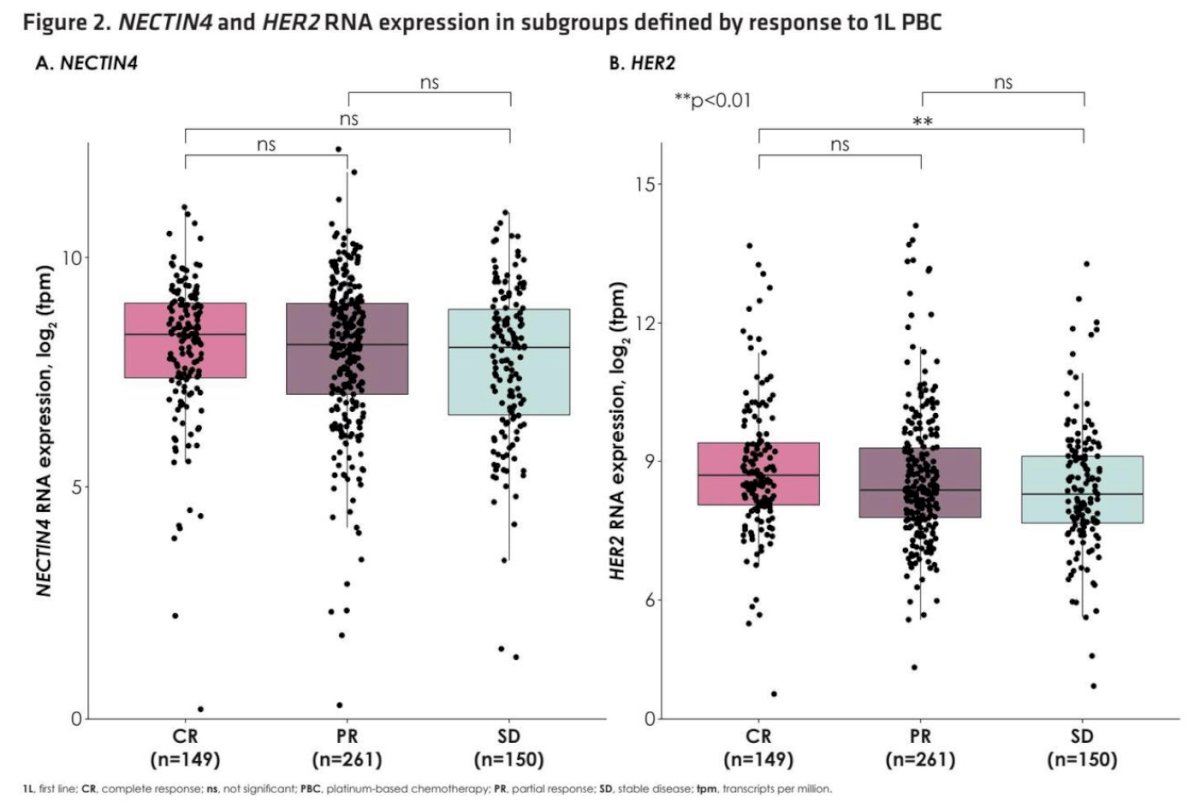
NECTIN4 and HER2 RNA expression were evaluated as continuous variables in subgroups defined by response to 1st line platinum-based chemotherapy and as dichotomized variables using median and lower quartile splits for stratified survival analyses.
Among biomarker-assessable patients (n=560), responses were as follows:
- Complete response: 149 (26.6%)
- Partial response: 261 (46.6%)
- Stable disease: 150 (26.8%)
No significant differences in tumor NECTIN4 RNA expression were observed according to response category. In contrast, slightly higher HER2 RNA expression was observed in patients achieving a CR compared to those with SD.
Using median expression splits, patients were categorized into four subgroups:
- High NECTIN4/high HER2: 201 patients (35.9%)
- Low NECTIN4/low HER2: 202 patients (36.1%)
- High NECTIN4/low HER2: 78 patients (13.9%)
- Low NECTIN4/high HER2: 79 patients (14.1%)
Non-luminal molecular subtype prevalence was 20.4%, 87.1%, 55.1%, and 50.6%, respectively.
Overall survival analyses demonstrated benefit with avelumab maintenance across subgroups defined by combined NECTIN4 and HER2 expression. In patients with high NECTIN4/high HER2 expression:
- Median OS with avelumab + BSC: 23.0 months (95% CI 17.8–30.9)
- Median OS with BSC alone: 14.3 months (95% CI 10.8–21.3)
- HR: 0.73 (95% CI 0.52–1.02)
In patients with low NECTIN4/low HER2 expression:
- Median OS with avelumab + BSC: 29.8 months (95% CI 20.1–46.9)
- Median OS with BSC alone: 18.8 months (95% CI 13.9–29.4)
- HR: 0.78 (95% CI 0.55–1.11)
In patients with high NECTIN4/low HER2 expression:
- Median OS with avelumab + BSC: 18.4 months (95% CI 13.0–NE)
- Median OS with BSC alone: 17.4 months (95% CI 14.0–NE)
- HR: 0.84 (95% CI 0.47–1.50)
In patients with low NECTIN4/high HER2 expression:
- Median OS with avelumab + BSC: 31.1 months (95% CI 20.6–NE)
- Median OS with BSC alone: 15.8 months (95% CI 9.3–41.9)
- HR: 0.66 (95% CI 0.38–1.15)
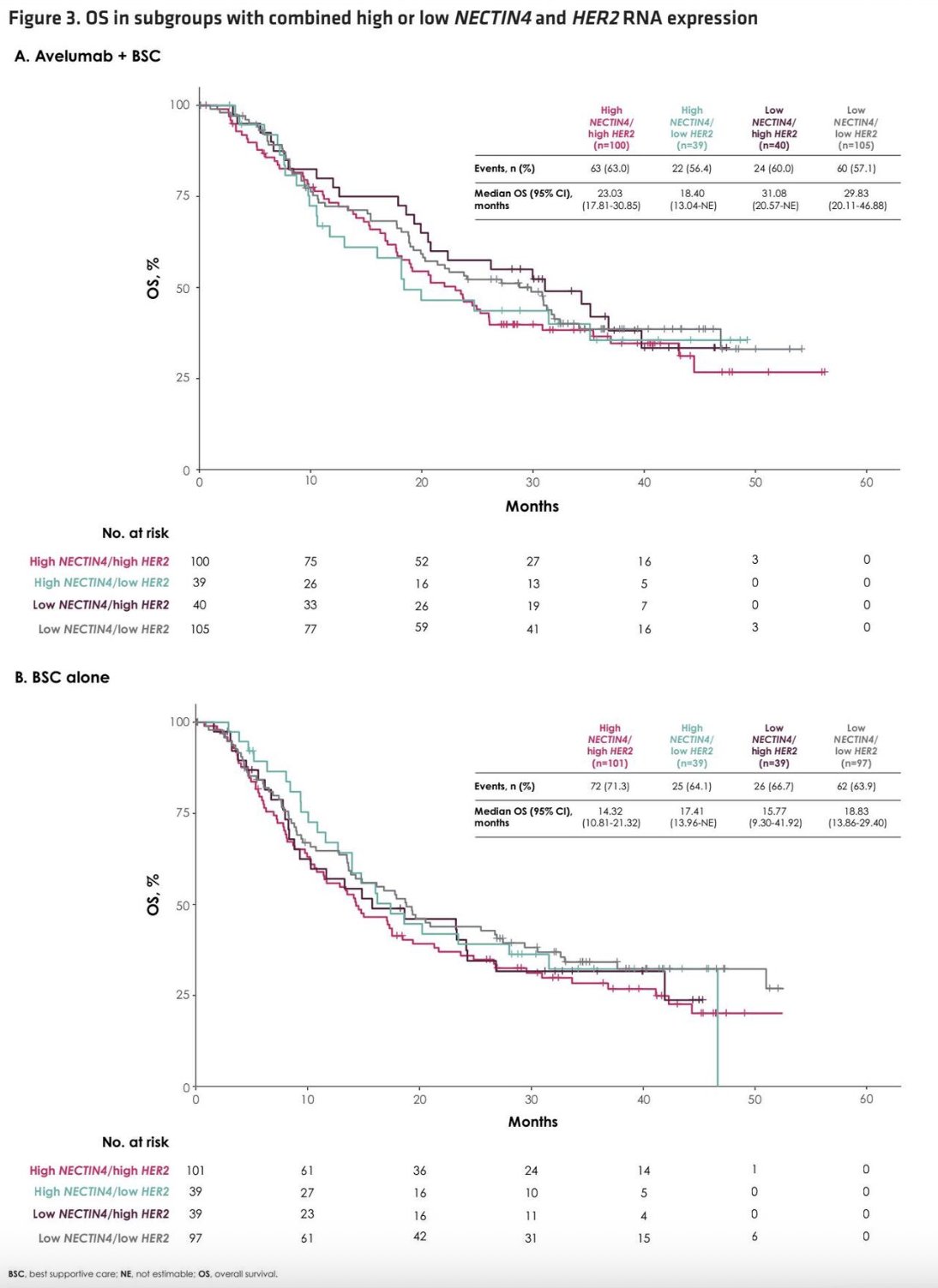
Overall survival improvements with avelumab maintenance versus BSC alone were also observed across subgroups defined by high or low NECTIN4 or HER2 RNA expression individually.
The investigators concluded that exploratory analyses from JAVELIN Bladder 100 demonstrated pronounced overall survival benefit with avelumab first-line maintenance among patients with low NECTIN4 tumors, regardless of HER2 RNA expression status. These findings further support the activity of avelumab maintenance across molecular subgroups and suggest that NECTIN4 and HER2 RNA expression may contribute to future biomarker-driven therapeutic strategies in advanced urothelial carcinoma. The authors emphasized that these findings remain hypothesis-generating in nature.
Presented by: Niklas Klumper, MD, Department of Urology and Pediatric Urology & Institute of Experimental Oncology, University Hospital Bonn, Bonn, Germany
Written by: Rashid K. Sayyid, MD, MSc, Assistant Professor, Urologic Oncologist, Department of Urology at The University of Arizona and Banner University Medical Center, Tucson, AZ – @rksayyid on X during the American Society of Clinical Oncology Genitourinary (ASCO) Annual Meeting held in Chicago, IL between May 29th and June 1st, 2026
Reference:
- Powles T, Park SH, Voog E, et al. Avelumab Maintenance Therapy for Advanced or Metastatic Urothelial Carcinoma. N Engl J Med 2020 Sept 24;383(13):1218-1230.