

(UroToday.com) The 2025 American Society of Clinical Oncology (ASCO) Annual Meeting held in Chicago, IL, was host to a prostate, testicular, and penile cancers poster session. Dr. Valentina Marulanda Corzo presented the results of a study evaluating baseline and follow-up PSMA PET parameters associated with treatment outcomes in metastatic castrate-resistant prostate cancer (mCRPC) patients treated with PSMA-targeted actinium-225 (225Ac) therapy.
Prostate-specific membrane antigen (PSMA) is a therapeutic target in mCRPC, allowing the development of both beta- and alpha-emitting radioligand therapies. Among these, 225Ac-J591, an alpha-emitting radionuclide conjugated to an anti-PSMA antibody, offers the potential for highly targeted cytotoxicity due to the short path length and high linear energy transfer (LET) of alpha particles.
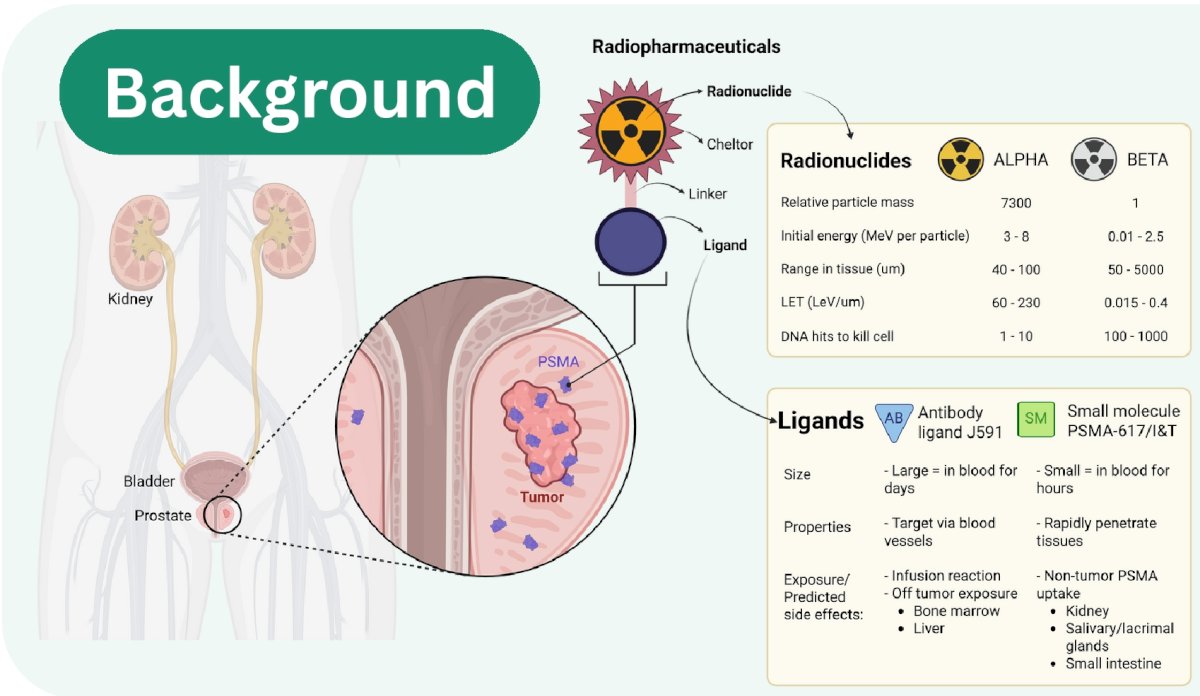
While 177Lu-based PSMA radioligands have demonstrated proven clinical efficacy,1,2 the role of PSMA PET imaging biomarkers for predicting outcomes following alpha therapy remains unclear. This study evaluated the baseline and post-treatment (12 weeks) PSMA PET-derived parameters—specifically SUVmax, SUVmean, and total tumor volume (TTV)—for their association with biochemical response (PSA50), overall survival (OS), and treatment-related adverse events in men with mCRPC treated with 225Ac-J591.

This pooled analysis included 117 patients from several phase I dose-escalation trials of 225Ac-J591 as:3-6
- Monotherapy: NCT03276572, NCT04506567 (n = 87)
- Combination therapy:
- With 177Lu-PSMA-I&T: NCT04886986 (n = 18)
- With pembrolizumab and androgen receptor pathway inhibitors (ARPIs): NCT04946370 (n = 12)
All patients underwent 68Ga-PSMA-11 PET imaging, analyzed via MIM Encore software. Baseline and 12-week follow-up PET metrics were recorded. The endpoints were as follows:
- Primary: PSA50 response, overall survival
- Secondary: Hematologic and non-hematologic adverse events
The associations between PSMA PET parameters and the odds of a PSA50 response were assessed using logistic regression analyses, whereas Cox regression modeling was used to evaluate for associations with OS. The Kruskal-Wallis and Wilcoxon rank-sum tests were used for toxicity correlations.
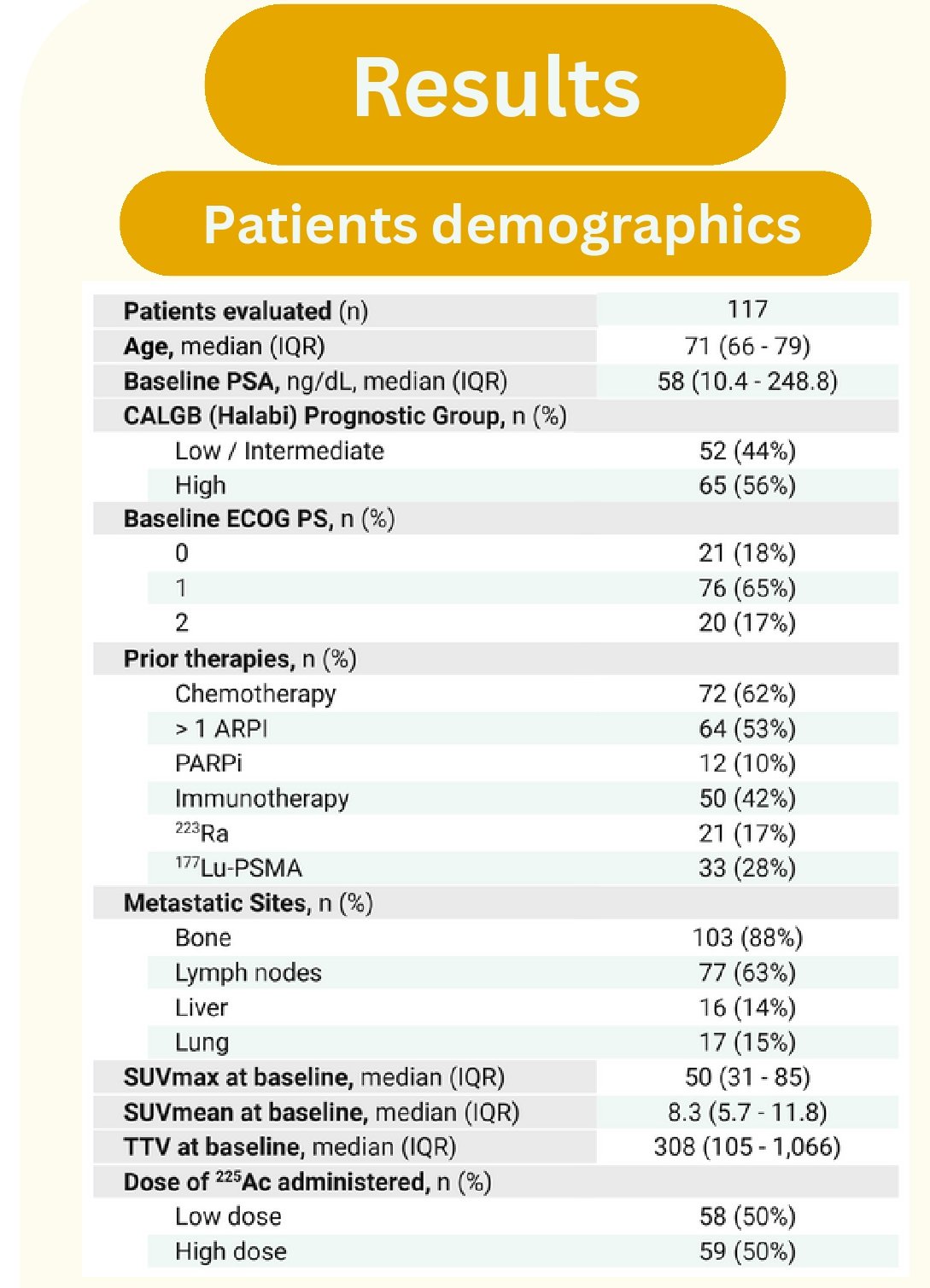
The median patient age was 71 years, and the median baseline PSA was 58 ng/ml. Prior therapies received were as follows:
- Chemotherapy: 62%
- ≥1 ARPI: 53%
- Immunotherapy: 42%
- 177Lu-PSMA: 28%
- Radium-223: 17%
The sites of metastases were as follows:
- Bone: 88%
- Lymph nodes: 63%
- Visceral: 29%
The baseline PSMA PET parameters (medians) were as follows:
- SUVmax: 50 (range: 31–85)
- SUVmean: 8.3 (range: 5.7–11.8)
- TTV: 308 mL (range: 105–1066)
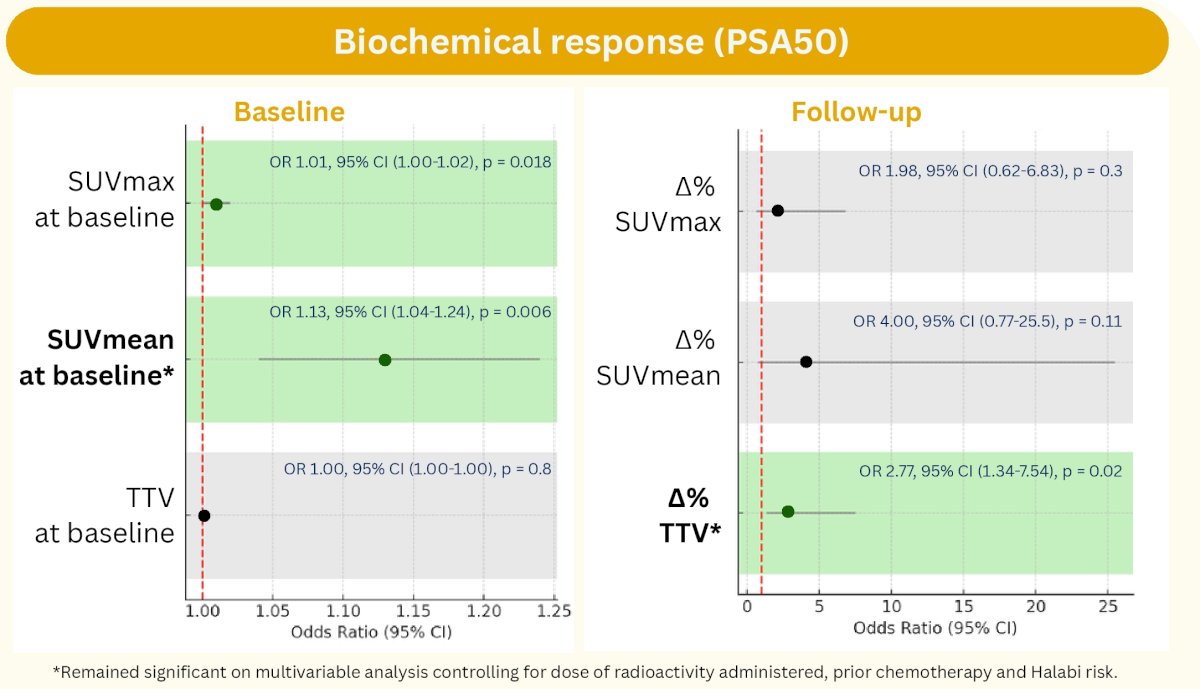
Baseline SUVmean (OR: 1.13, p=0.006) and SUVmax (OR: 1.01, p=0.018) were associated with higher odds of a PSA50 response, although only SUVmean remained significant on multivariable analysis (OR: 1.11, p=0.023).
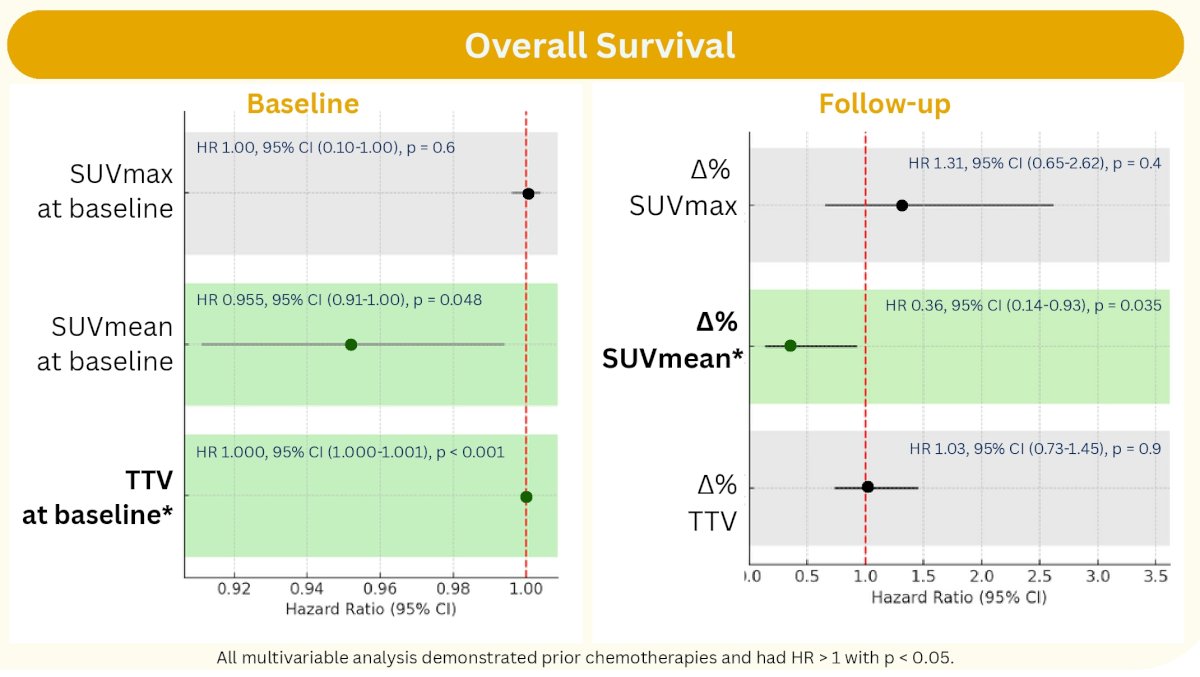
For OS, TTV was a significant predictor on multivariable analysis (HR: 1.00, p = 0.007), along with prior chemotherapy (HR: 1.45, p<0.001), and CALGB high risk group (HR: 1.84, p=0.014).
On multivariable analysis adjusted for injected radioactivity, prior chemotherapy, and CALGB risk, TTV reduction was significantly associated with a PSA50 response (OR: 1.31, 95% CI: 1.1–1.7, p=0.015), but changes in SUVmean or SUVmax were not.
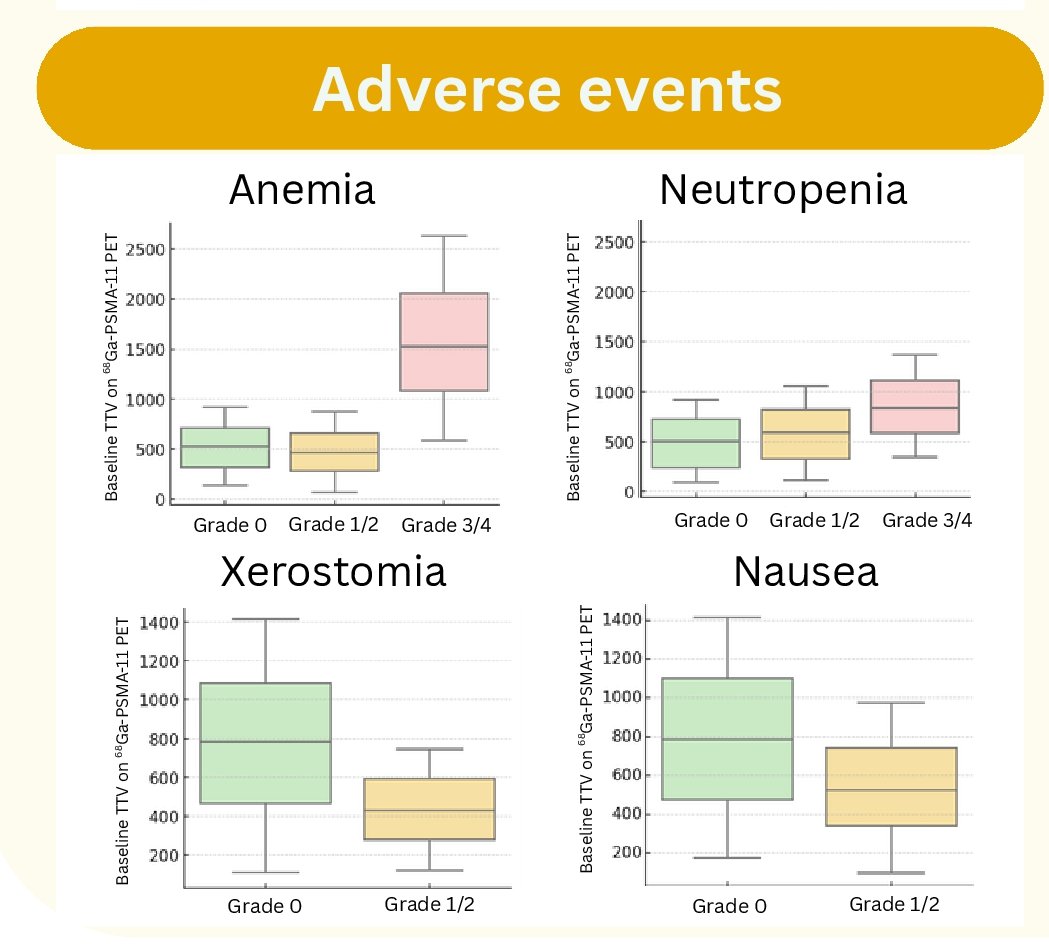
Patients with higher baseline TTV were more likely to have higher grade myelosuppression, but less nausea and xerostomia.
Dr. Corzo concluded as follows:
- Baseline PSMA PET parameters, including SUVmean, SUVmax, and TTV, are associated with the odds of a PSA50 response and survival in patients receiving the antibody-delivered alpha emitter 225Ac.
- Higher TTV, yielding more radionuclide delivery to tumor (most commonly bone) is associated with higher grade myelosuppression. However, the tumor antigen sink effect may decrease exposure to other PSMA+ organs leading to less xerostomia and nausea.
Presented by: Valentina Marulanda Corzo, MD, Postdoctoral Research Fellow in Radiology, Division of Molecular Imaging and Therapeutics, Weill Cornell Medicine, New York, NY
Written by: Rashid K. Sayyid, MD, MSc – Robotic Urologic Oncology Fellow at The University of Southern California, @rksayyid on Twitter during the American Society of Clinical Oncology (ASCO) 2025 Annual Meeting, Chicago, IL, Fri, May 30 – Tues, Jun 3, 2025.
References:- Hofman MS, Emmett L, Sandhu S, et al. [(177)Lu]Lu-PSMA-617 versus cabazitaxel in patients with metastatic castration-resistant prostate cancer (TheraP): A randomized, open-label, phase 2 trial. Lancet. 2021; 397(10276): 797-804.
- Sartor O, de Bono J, Chi KN et al. Lutetium-177-PSMA-617 for Metastatic Castration-Resistant Prostate Cancer. N Engl J Med. 2021; 385(12):1091-1103.
- Tagawa ST, Milowsky MI, Morris MJ, et al. Prostate-specific membrane antigen–targeting alpha emitter via antibody delivery for metastatic castration-resistant prostate cancer: a phase I dose-escalation study of 225Ac-J591. J Nucl Med. 2019; 60(7):1233-1240.
- Nauseef JT, Sun MP, Thomas C, et al. A phase I/II dose-escalation study of fractionated 225Ac-J591 for progressive metastatic castration-resistant prostate cancer in patients with prior treatment with 177Lu-PSMA. J Clin Oncol. 2023; 41(6_suppl):TPS288.
- Tagawa ST, Sun MSP, Nauseef JT, et al. Phase I dose-escalation results of prostate-specific membrane antigen-targeted radionuclide therapy (PSMA-TRT) with alpha-radiolabeled antibody 225Ac-J591 and beta-radioligand 177Lu-PSMA I&T. J Clin Oncol. 2023; 41: 16_Suppl.
- Sun MP, Nauseef JT, Palmer J, et al. Phase I results of a phase I/II study of pembrolizumab and AR signaling inhibitor (ARSI) with 225Ac-J591. J Clin Oncol. 2023; 41: 6_Suppl.