

(UroToday.com) The 2025 ASCO annual meeting featured a kidney cancer session and a presentation by Dr. Benjamin Maughan discussing real-world quality of life for patients with metastatic RCC treated with systemic therapy in the prospective observational ODYSSEY study. In the past 7 years, four immuno-oncology (IO) based combinations have been approved for mRCC. However, quality of life data on these combinations are limited to trials in which collection and reporting were not standardized, which further limits cross trial comparisons. Real-world quality of life data with multiple treatment regimens are needed to understand how these regimens are tolerated in practice.
ODYSSEY is a multi-site, prospective observational study of 500 US patients with metastatic RCC. Patients must have metastatic RCC (any histology), no prior systemic therapy, and follow up at a PCORnet study site. Exclusion criteria include treatment for cancer except metastatic RCC. The primary objective is to determine patterns of change in quality of life and symptom burden of patients with metastatic RCC. Minimally important differences are 3 points for FKSI-19 total score, 1 point for the FKSI-Disease Related Symptoms (DRS) subscale, and 7 points for FACT-G.
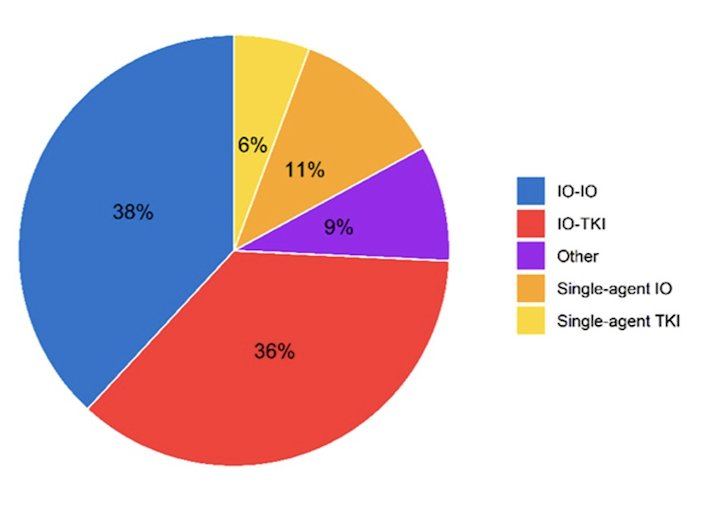
As of January 6, 2025, 392 patients were enrolled, of whom 299 were managed with systemic therapy. Of patients on systemic therapy, 114 were treated with IO-IO, 108 with IO-TKI, 33 with IO alone, 27 with other treatment, and 18 with TKI alone:
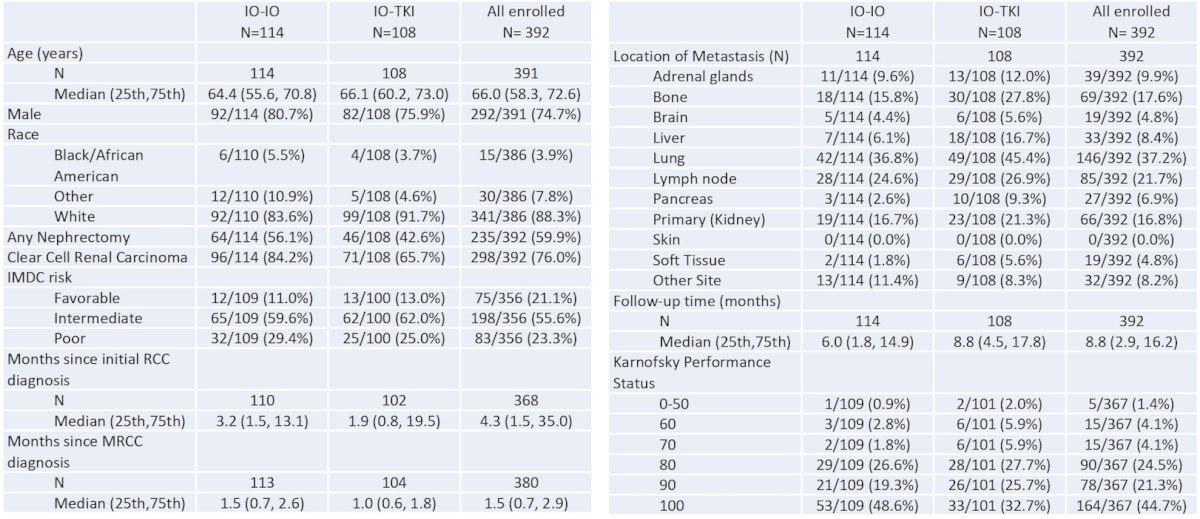
The median follow up for all patients is 8.8 months (IQR 2.9, 16.2). For patients treated with IO-IO combination therapy, the median age was 64 years, 81% were male, 84% were white, 56% had a prior nephrectomy, and 84% had clear cell RCC. For patients treated with IO-TKI combination therapy, the median age was 66 years, 76% were male, 92% were white, 43% had a prior nephrectomy, and 66% had clear cell RCC. IO-IO patients were more likely to have a Karnofsky score of 100, whereas IO-TKI patients had a higher median number of metastatic sites and were more likely to have bone or liver metastasis:
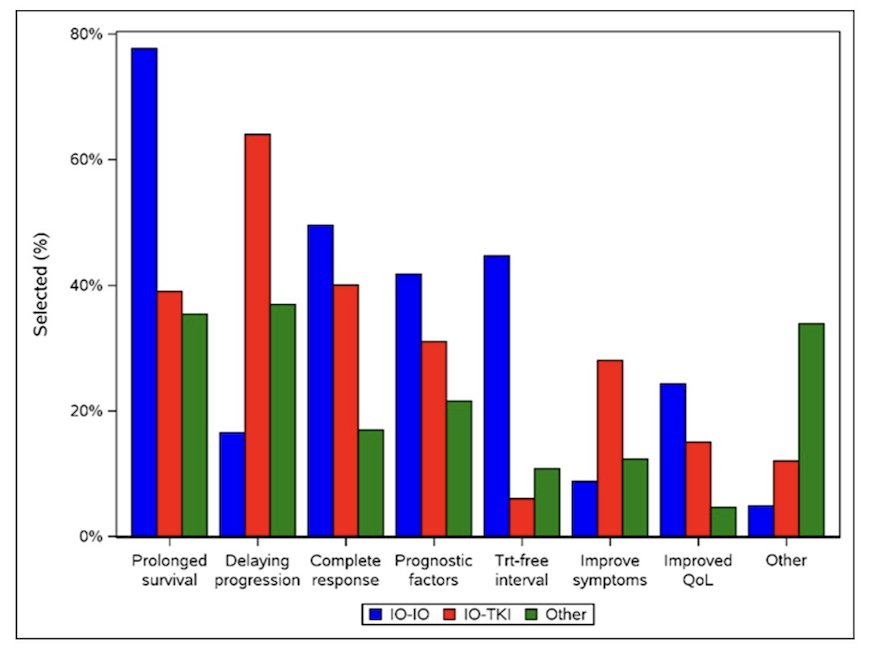
Physician-selected reasons for starting therapies by class were mostly secondary to prolonging survival and delaying progression:
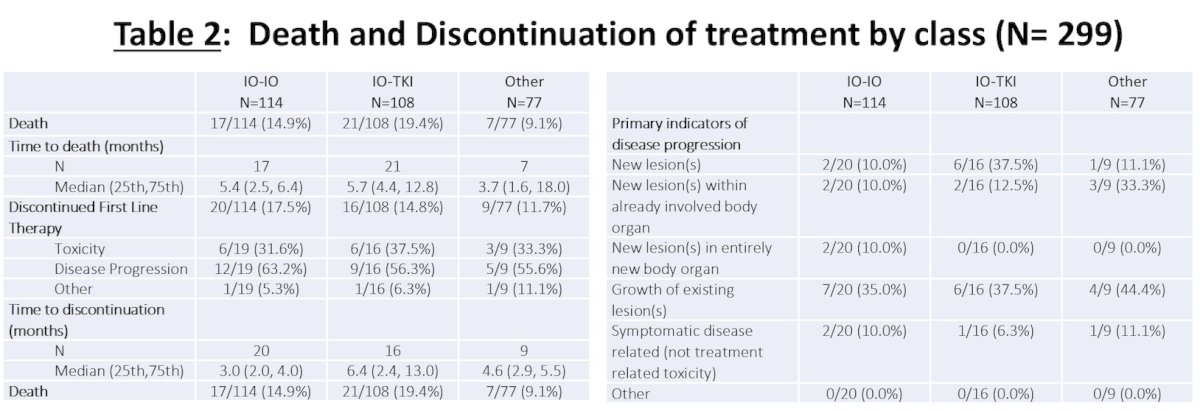
With a median follow-up of 6.0 (IQR 1.8, 14.9) and 8.8 months (IQR 4.5, 17.8) in the IO-IO and IO-TKI cohorts, 17 (15%) and 21 (19%) patients had died with a median time to death of 5.4 (IQR 2.5, 6.4) and 5.7 months (IQR 4.4, 12.8), respectively. Overall, 20 (18%) and 16 (15%) patients on IO-IO and IO-TKI had discontinued therapy at a median of 3.0 (IQR 2.0, 4.0) and 6.4 months (IQR 2.4, 13.0), respectively. Rates of discontinuation for disease progression and toxicity were similar:
Baseline patient reported outcomes for patients on systemic therapy are shown in the table (higher score indicates better quality of life), with randomized clinical trial data for reference:
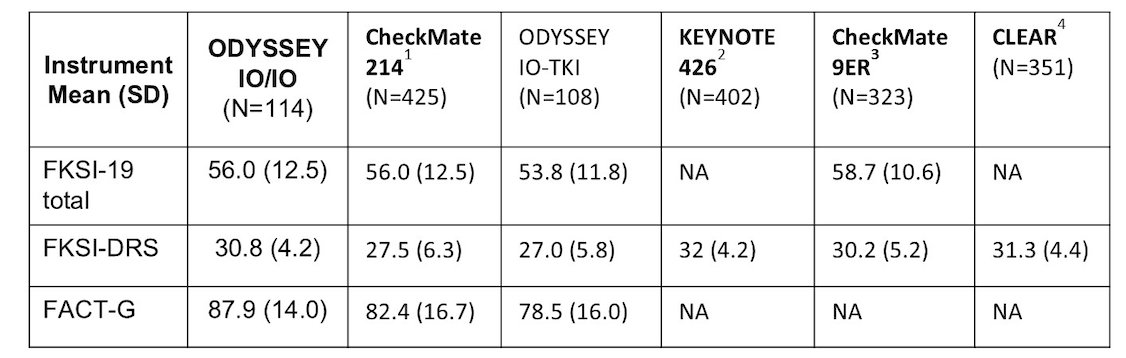
Dr. Maughan concluded his presentation discussing real-world quality of life for patients with metastatic RCC treated with systemic therapy in the prospective observational ODYSSEY study with the following take home points:
- In this prospective multi-center ODYSSEY study, real world patients treated with contemporary systemic therapy have worse baseline quality of life than those enrolled in pivotal clinical trials
- One-third of IO-IO and IO-TKI patients died or discontinued therapy within 6 months of initiation
- This data on real world versus clinical trial differences in baseline quality of life may partially explain the limitations of current IO combination regimens in practice and support the development of alternative treatment approaches
Presented by: Benjamin L. Maughan, MD, PharmD, Huntsman Cancer Institute at the University of Utah, Salt Lake City, UT
Written by: Zachary Klaassen, MD, MSc – Urologic Oncologist, Associate Professor of Urology, Georgia Cancer Center, Wellstar MCG Health, @zklaassen_md on Twitter during the American Society of Clinical Oncology (ASCO) 2025 Annual Meeting, Chicago, IL, Fri, May 30 – Tues, Jun 3, 2025.
Related content: ODYSSEY Study Reveals Real-World Quality of Life in Metastatic Kidney Cancer Patients - Michael Harrison & Benjamin Maughan