

(UroToday.com) The 2023 American Society of Clinical Oncology (ASCO) annual meeting held in Chicago, IL between June 2nd and June 6th was host to a prostate, testicular, and penile cancers poster session. Dr. Charles Ryan presented early results from CASCARA, a phase II trial of quadruplet therapy with cabazitaxel/carboplatin plus abiraterone and ADT in patients with high-volume metastatic castrate-sensitive prostate cancer (mCSPC).
The current treatment paradigm for patients with mCSPC involves either doublet (i.e., ADT + docetaxel or an androgen receptor signaling inhibitor) or triplet therapy (ADT + docetaxel + either darolutamide or abiraterone). However, studies have demonstrated that homologous recombination repair (HRR) gene alterations, which are enriched in mCSPC patients, may portend resistance to docetaxel-based regimens. As such, further treatment regimens in this disease space are warranted. CASCARA (NCT03934840) tested quadruplet therapy with ADT + cabazitaxel/carboplatin + abiraterone in CHAARTED high-volume mCSPC, with the aim of enhancing PSA response and decreasing one-year progression rates.
This was a single arm phase II trial of 61 patients with CHAARTED high-volume mCSPC who received ADT plus cabazitaxel (20 mg/m2 q21d x 6) and carboplatin (AUC=4 q21d x 6) followed by abiraterone (1000 mg, plus prednisone 5 mg). The primary endpoint was freedom from PSA/radiographic progression at 1 year. Other endpoints included PSA50 response, freedom from PSA progression, and safety. Archival biopsies were retrospectively evaluated for HRR (BRCA1/2, ATM, CHEK2, CDK12, BRIP1, RAD51B) mutations at a CLIA-certified lab. Using a Simon two-stage design, it was determined that a sample size of 61 patients was required with a null hypothesis of a 1-year PSA/radiographic progression-free rate of 0.80 against a one-sided alternative of 0.92.

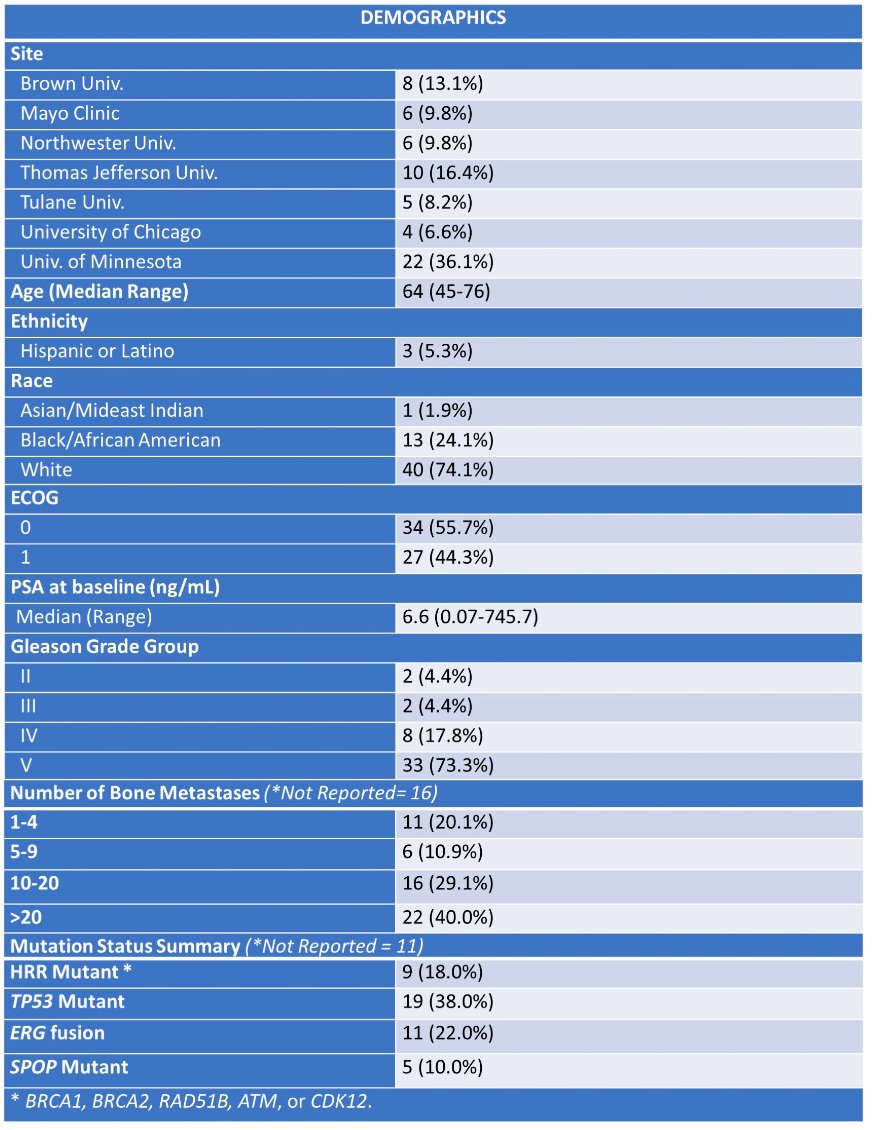
Sixty-one men were enrolled at 7 sites between November 2019 and June 2022. The median age was 64 years (range: 45 – 76), 21%were African American, and 91% had an ECOG performance status of 1. The median baseline PSA was 8.9 ng/ml (range: 0.1 – 1,021) and 91% had Grade Group 4-5 disease. The prevalence of DNA mutations in the 50 evaluable patients was:
- HRR: 18%
- TP53: 38%
- ERG fusions: 22%
- SPOP mutations: 10%
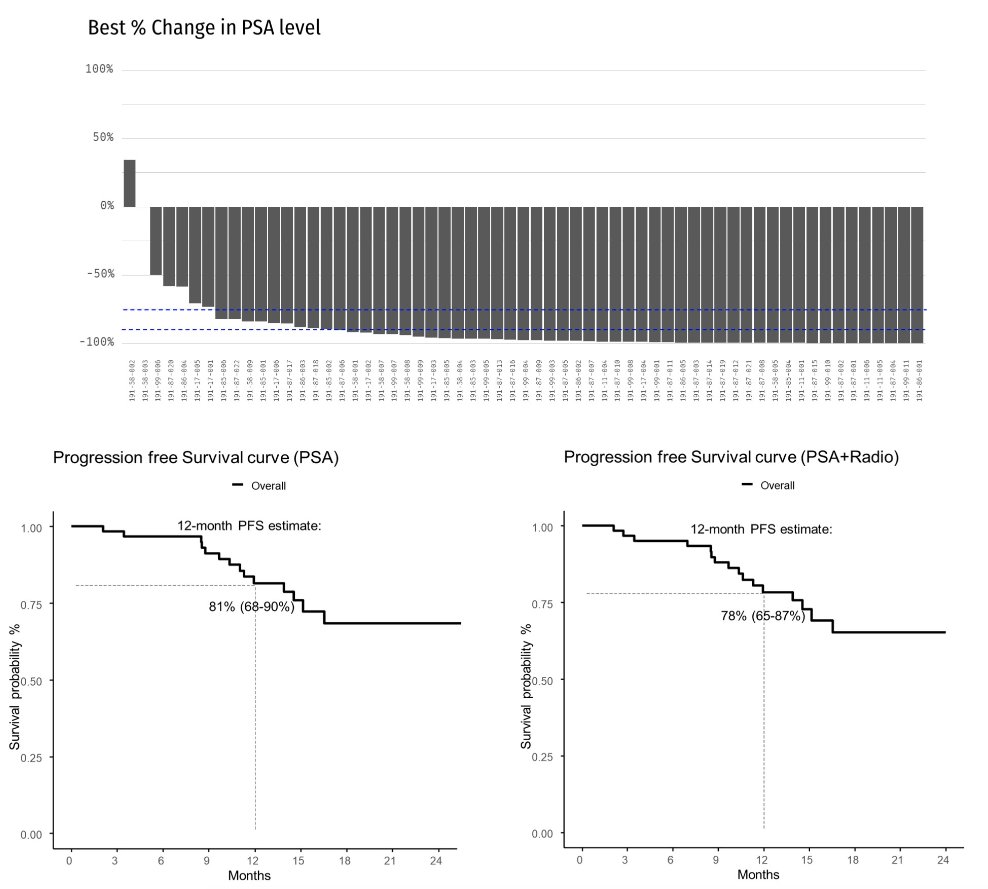
The primary endpoint of freedom from PSA/radiographic progression at one year was observed in 77% of patients (95% CI: 63 – 87%), and freedom from PSA progression at one year was 81% (95% CI: 67 – 90%). The PSA50 rate response was 97%. The outcome of PSA ≤0.2 ng/mL at 7 months post-treatment initiation, a surrogate for survival in other mCSPC studies, was observed in 61% of patients (for reference in CHAARTED-docetaxel arm: 45%). 82% of patients achieved a PSA ≤4 ng/mL by 7 months.
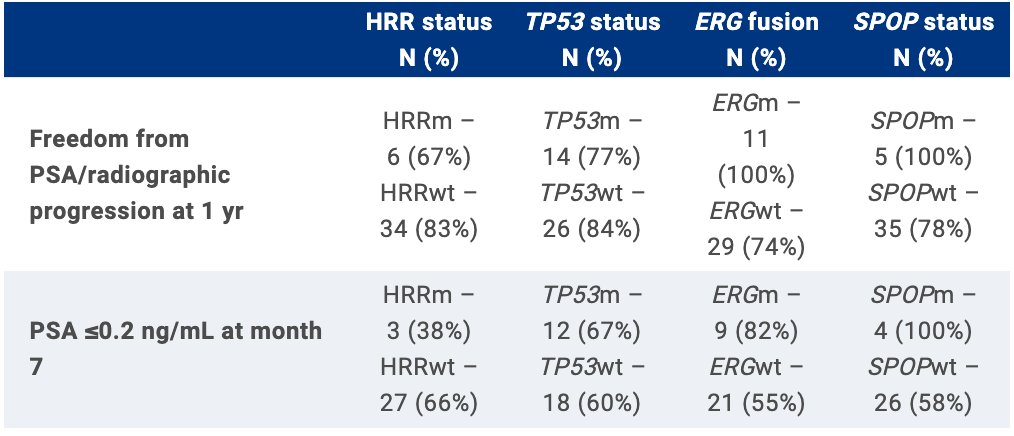
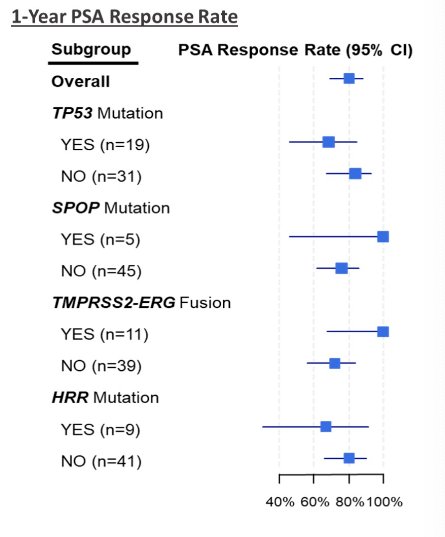
The outcomes by mutational status are summarized below:
Adverse events included:
- Grade 3-4 myelosuppression: 7%
- Grade 3-4 infections: 8%
- Grade 3 gastrointestinal disorders: 10%
- Grade 3 fatigue: 3%
- 4 treatment-related discontinuations
Dr. Ryan and colleagues concluded that quadruplet therapy with ADT + cabazitaxel/carboplatin + abiraterone was well tolerated. At one year, 77% of patients were free of PSA/radiographic progression. 61% of patients achieved a PSA ≤0.2 ng/mL by 7 months post-treatment initiation, which is higher than the historical rate of 45% observed in the CHAARTED-docetaxel arm. Dr. Ryan emphasized that further exploration of this quadruplet strategy in randomized phase III studies is warranted.
Presented by: Charles Ryan, MD, Chief Executive Officer (CEO) of the Prostate Cancer Foundation, Santa Monica, CA
Written by: Rashid Sayyid, MD, MSc – Society of Urologic Oncology (SUO) Clinical Fellow at The University of Toronto, @rksayyid on Twitter during the 2023 American Society of Clinical Oncology (ASCO) Annual Meeting, Chicago, IL, Fri, June 2 – Tues, June 6, 2023.