

(UroToday.com) The 2023 American Society of Clinical Oncology (ASCO) annual meeting held in Chicago, IL between June 2nd and June 6th was host to a kidney and bladder cancers poster session. Dr. Shilpa Gupta presented the rationale and study framework of MAIN-CAV, a phase III randomized trial of maintenance cabozantinib plus avelumab versus avelumab monotherapy in metastatic urothelial carcinoma (mUC) patients without evidence of disease progression on first-line platinum-based chemotherapy.
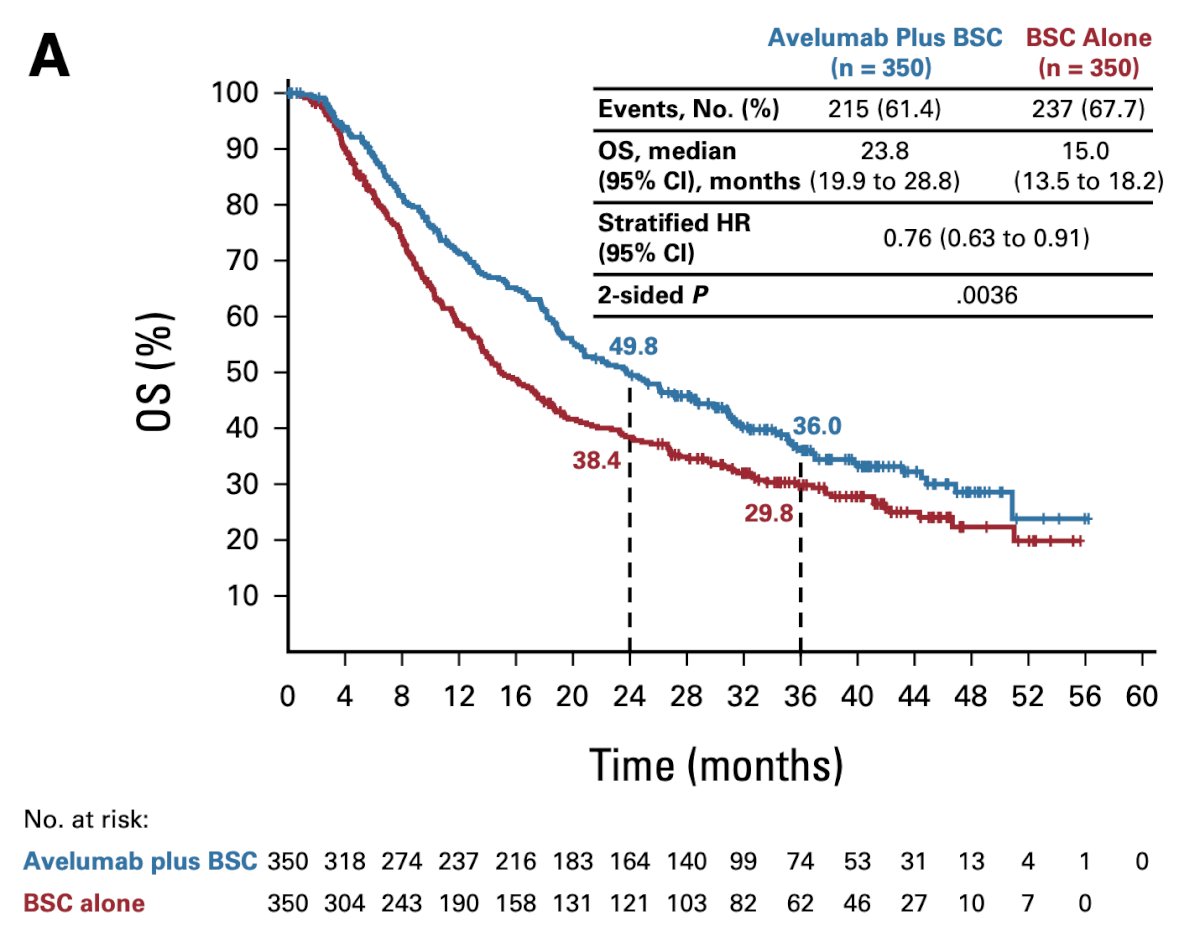
Avelumab maintenance therapy has emerged as the current standard of care approach for metastatic urothelial carcinoma (mUC) patients without progression on first-line platinum-based chemotherapy based on results of the JAVELIN 100 trial. This phase III trial randomized patients with unresectable locally advanced or mUC who did not have disease progression with first-line chemotherapy (four to six cycles of gemcitabine plus cisplatin or carboplatin) to receive best supportive care with or without maintenance avelumab. This trial met its primary endpoint with an improvement in 1-year overall survival (OS) from 58.4% to 71.3% with avelumab maintenance (HR: 0.69, 95% CI: 0.56 – 0.86, p=0.001). Extended follow-up from this trial recently published in The Journal of Clinical Oncology demonstrated that median OS improves from 15 to 23.8 months with avelumab maintenance addition.1
However, Dr. Gupta argued that there is an unmet need to further improve outcomes by combining avelumab with an effective, non-cross-resistant therapeutic agent that has a non-overlapping toxicity profile. One such agent may be cabozantinib, which is an oral tyrosine kinase inhibitor (TKI) of MET, VEGFR, and TAM family receptors, which are involved in tumor growth, angiogenesis and immune cell regulation. Cabozantinib has shown efficacy in combination with PD-1/PD-L1 inhibitors for the treatment of mUC patients. The investigators hypothesized that adding cabozantinib to maintenance avelumab may further improve survival outcomes via a synergistic mechanism of action, with an acceptable safety profile.
MAIN-CAV (NCT05092958) is a phase III randomized, multicenter, international trial for locally advanced/mUC pts (including N3 only disease) without evidence of disease progression after 4-6 cycles of any platinum-based chemotherapy (gem-cis, gem-carbo, MVAC or ddMVAC). This trial will randomize 654 adult patients in a 1:1 fashion, within 3-10 weeks of the last dose of chemotherapy, to either:
- Avelumab alone (800 mg IV every 2 weeks)
- Avelumab + cabozantinib (40 mg orally daily)
Treatment will be continued for up to two years. Key eligibility criteria include:
- ECOG performance status 0-1
- No prior use of immunotherapy, except for BCG
- No central nervous system metastases
- No major surgery within 4 weeks
- No uncontrolled hypertension or cardiovascular disorders
Patients will be stratified based on:
- Best response to 1st line therapy:
- Complete response
- Partial response
- Stable disease
- Presence or absence of visceral metastases
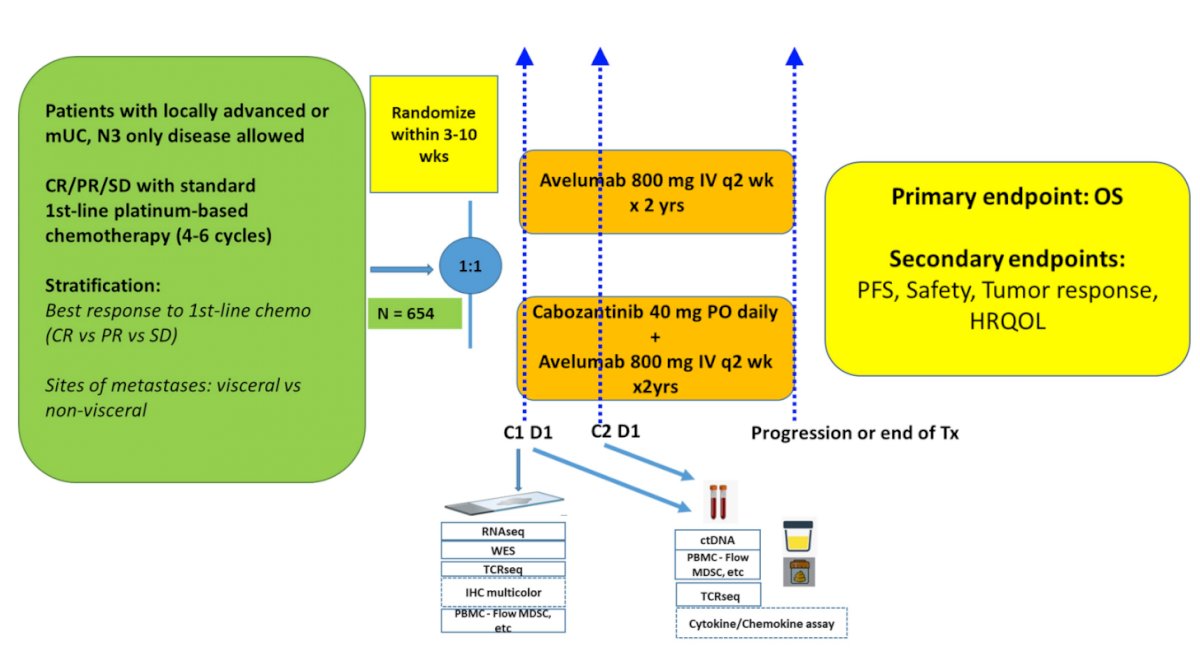
The primary study endpoint is OS. This trial is designed to detect an OS improvement from 21 to 28 months with combination avelumab + cabozantinib (HR: 0.75) at 80% power, assuming a one-sided alpha (type 1) error of 0.025. Key secondary endpoints include progression-free survival, safety, tolerability, and activity of cabozantinib/avelumab compared to avelumab alone, based on RECIST 1.1 and iRECIST criteria and PD-L1 status of patients’ tumors. Quality of life (QOL) will be assessed using EQ-5D-5L, PROMIS-Fatigue 4a, EORTC QLQ-C30, and EORTC QLQ-BLM30.
Biomarkers of response and resistance to avelumab will be assessed using baseline archival tissues, baseline and serial blood, circulating tumor DNA (ctDNA), stool and urine. Imaging studies will test correlation of established and new radiomic signatures with OS, adverse events and QoL and incorporate both radiologic and biologic features to predict outcomes.
Dr. Gupta concluded that this trial would be the first to systematically address whether adding a multitargeted TKI, cabozantinib, to avelumab leads to an improvement in clinical outcomes compared to avelumab alone.
Presented by: Shilpa Gupta, MD, Associate Professor, Director of the Genitourinary Medical Oncology at Taussig Cancer Institute and Co-Leader of the Genitourinary Oncology Program at Cleveland Clinic, Cleveland, OH
Written by: Rashid Sayyid, MD, MSc – Society of Urologic Oncology (SUO) Clinical Fellow at The University of Toronto, @rksayyid on Twitter during the 2023 American Society of Clinical Oncology (ASCO) Annual Meeting, Chicago, IL, Fri, June 2 – Tues, June 6, 2023.
Reference: