

(UroToday.com) The 2022 ASCO annual meeting featured a session on prostate cancer, including a presentation by Dr. Arun Azad discussing a post hoc analysis of the ARCHES trial assessing the prevalence of DNA damage repair (DDR) alterations in patients with mHSPC receiving enzalutamide or placebo + ADT. DDR alterations, such as ATM, BRCA1/2, and CHEK2, are associated with poorer prognosis, including shorter overall survival (OS), in patients with mHSPC. In ARCHES,1 patients with mHSPC treated with enzalutamide + ADT had a reduced risk of radiographic progression or death and improved OS versus placebo + ADT. This post hoc analysis assessed the prevalence of DDR alterations and associated baseline characteristics in patients with mHSPC in ARCHES.
Patients with mHSPC (n=1,150) were randomized 1:1 to enzalutamide (160 mg/day) + ADT or placebo + ADT. Germline DDR alteration testing was performed in blood using Ambry Genetics CustomNext-Cancer panel, and 16 DDR-related genes were reported in the subset of patients who consented to participate in a pharmacogenomic study (n=652):
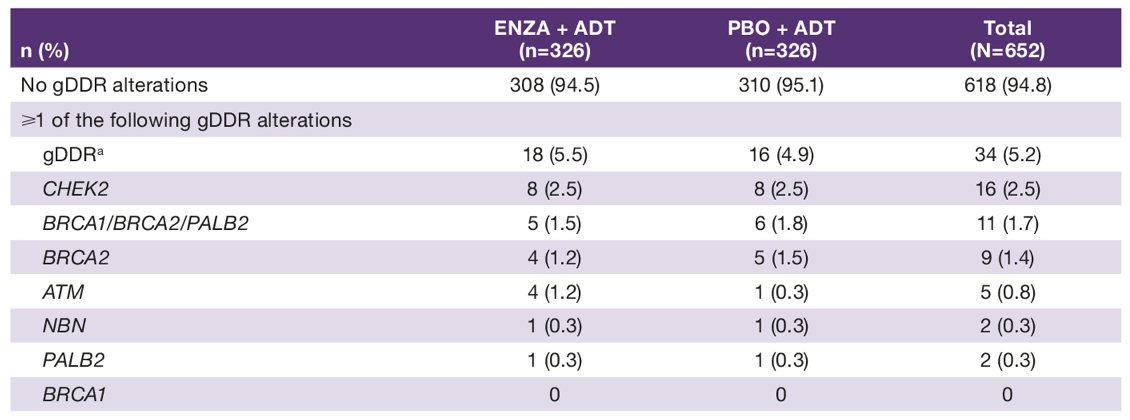
Descriptive analyses of baseline demographics and disease characteristics by DDR status were performed.
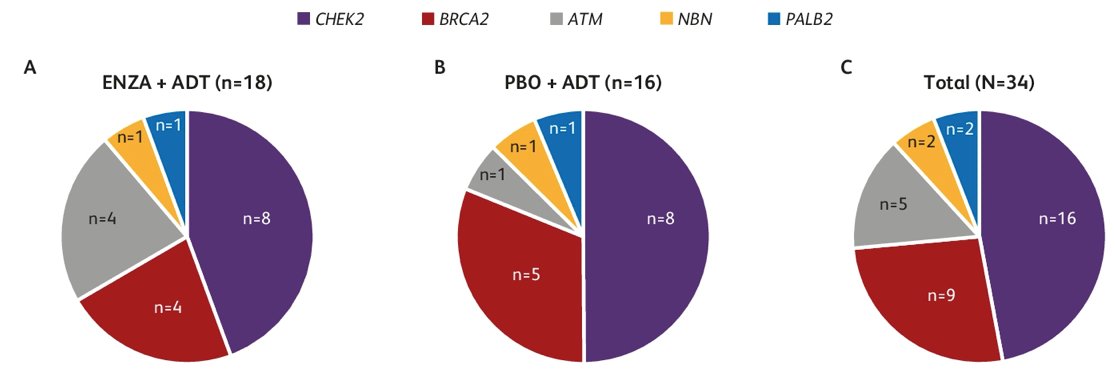
Of 664 patient samples tested, 652 were evaluable for analysis (enzalutamide + ADT, n=326; placebo + ADT, n=326). Baseline characteristics of these patients were similar to the ARCHES intent-to-treat population. The prevalence of DDR+ patients was lower than expected (n=34/652, 5.2%):
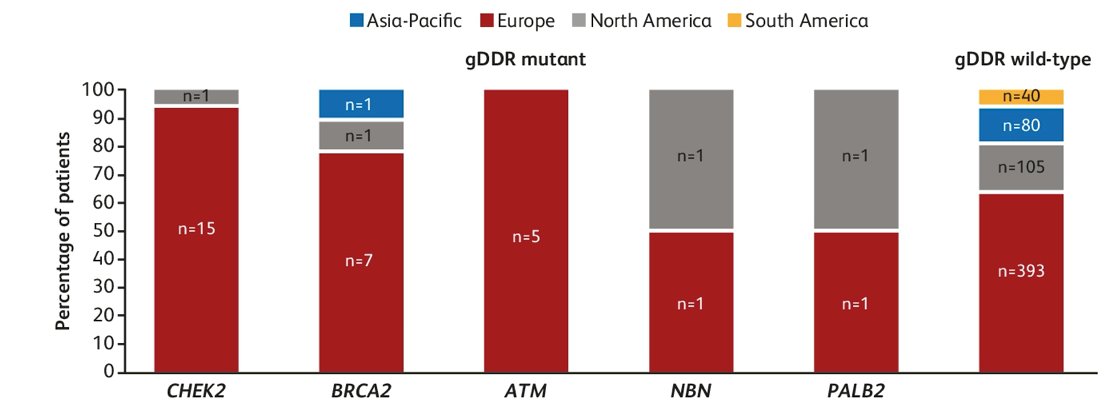
Of DDR+ patients, 13 (38.2%) had low-volume disease, compared with 228 (36.9%) of DDR− patients. High-volume disease was present in 21 (61.8%) DDR+ and 390 (63.1%) DDR− patients. Of DDR+ patients, 6 (17.6%) had localized disease at initial diagnosis (M0), compared with 145 (23.5%) DDR− patients. De novo metastatic disease at initial diagnosis (M1) was present in 28 (82.4%) DDR+ patients and 465 (75.2%) DDR− patients. Of DDR+ patients, 29 (85.3%) were from Europe, four (11.8%) were from North America, and one (2.9%) was from the Asia-Pacific region:
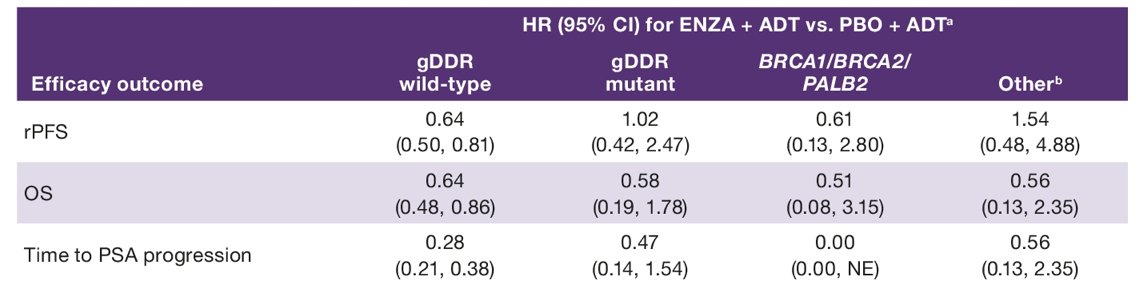
In patients with germline DDR-wild-type tumors, the magnitude of benefit from enzalutamide + ADT versus placebo + ADT was similar to that seen in the ITT population of ARCHES, based on HRs for rPFS, OS, and time to PSA progression:
Dr. Azad concluded his presentation discussing a post hoc analysis of the ARCHES trial assessing the prevalence of DDR alterations in patients with mHSPC receiving enzalutamide or placebo + ADT with the following summary points:
- This post hoc analysis found a lower prevalence of germline DDR alterations in patients with mHSPC in ARCHES, compared with the 7–8% previously reported in patients with metastatic castration-resistant prostate cancer2,3
- There was no difference in baseline disease characteristics based on DDR status
- Analyses of the impact of DDR alteration status on response to enzalutamide + ADT should be interpreted with caution due to the small sample size of patients with germline DDR alterations and wide confidence intervals
- Further research is required to determine whether differences in clinical response between patients with germline DDR-mutation and germline DDR-wild-type tumors are substantiated
Presented by: Arun Azad, PhD, Peter MacCallum Cancer Centre, Melbourne, VIC, Australia
Written by: Zachary Klaassen, MD, MSc – Urologic Oncologist, Assistant Professor of Urology, Georgia Cancer Center, Augusta University/Medical College of Georgia, @zklaassen_md on Twitter during the 2022 American Society of Clinical Oncology (ASCO) Annual Meeting, Chicago, IL, Fri, June 3 – Mon, June 7, 2022.
References:
- Armstrong AJ, Szmulewitz RZ, Petrylak DP, et al. ARCHES: A Randomized, Phase III Study of Androgen Deprivation Therapy with Enzalutamide or Placebo in Men with Metastatic Hormone-Sensitive Prostate Cancer. J Clin Oncol. 2019 Nov 10;37(32):2974-2986.
- Lozano R, Castro E, Aragon IM, et al. Genetic aberrations in DNA repair pathways: A cornerstone of precision oncology in prostate cancer. Br J Cancer. 2021 Feb;124(3):552-563.
- Pritchard CC, Mateo J, Walsh MF, et al. Inherited DNA-Repair gene mutations in men with metastatic prostate cancer. N Engl J Med. 2016;375(5):443-453.