

(UroToday.com) The 2022 ASCO annual meeting featured a session on prostate cancer, including a presentation by Dr. Alicia Morgans discussing the feasibility of a novel wrist-worn thermal device for management of vasomotor symptoms in patients with prostate cancer. Vasomotor symptoms, or hot flashes, are a common side effect of ADT for prostate cancer. Vasomotor symptoms negatively impact sleep, fatigue, and quality of life in prostate cancer survivors and there are few nonpharmacological treatments for vasomotor symptoms. The Embr Wave is a wearable thermal device that applies cooling to thermoreceptors on the inside of the wrist and has been associated with patient reported decreases in hot flash interference in women:
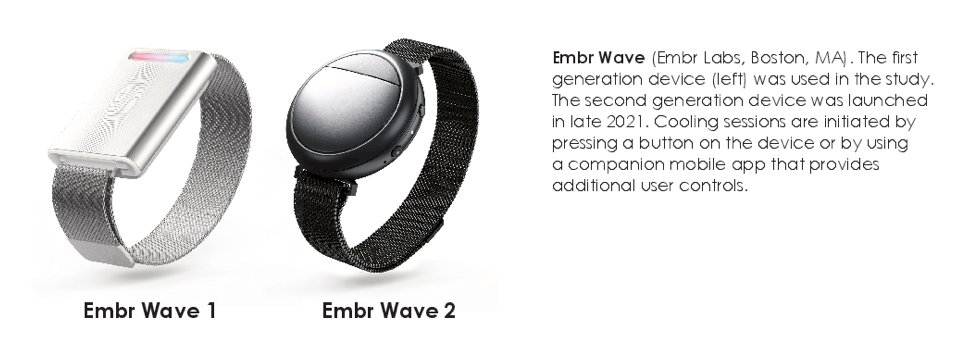
Dr. Morgans and colleagues presented results of a single-arm feasibility study evaluating the Embr Wave for management of vasomotor symptoms in prostate cancer survivors.
Between May 2021 and December 2021, 57 prostate cancer survivors reporting bothersome hot flashes were enrolled and instructed to use the device as needed for vasomotor symptoms during the 4-week study. The trial schema is as follows:
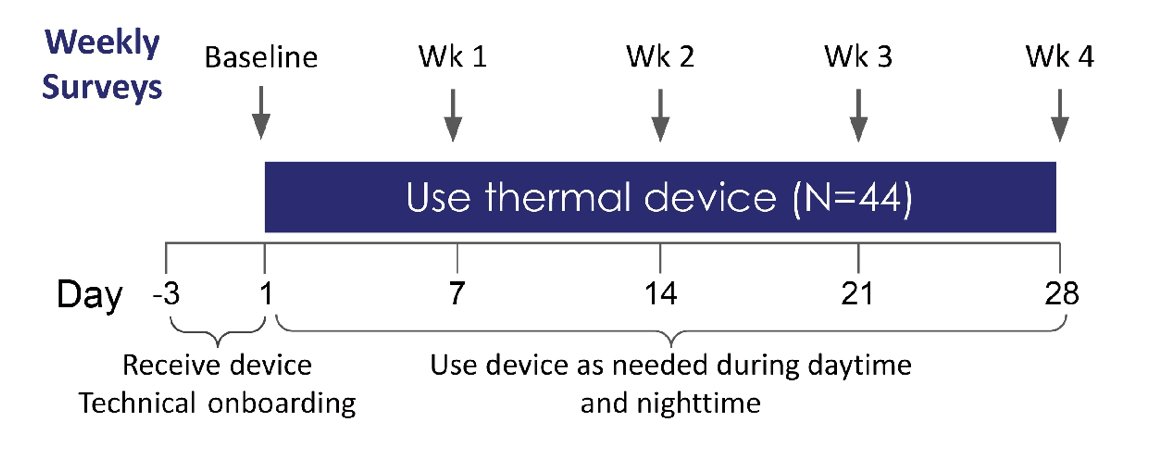
The primary outcome was device usage recorded by the device (minutes and sessions). Additional outcomes included the change in patient reported Hot Flash Related Daily Interference Scale (HFRDIS, range 0-10) and Patient Reported Outcomes Measurement Information System Sleep Disturbance 4a (PROMIS SD, range 0-100) and Sleep Related Impairment 8a (PROMIS SRI, range 0-100). Study procedures were conducted remotely using a virtual clinical trial management platform.
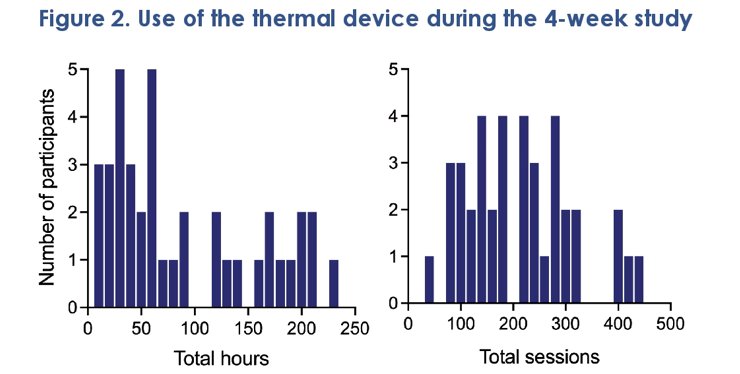
Among 118 men screened, 57 men were enrolled, 44 men completed the study, and 39 men had retrievable usage data. The median age was 66 (range 57-78) years and median 3 (1-23) years since prostate cancer diagnosis. The most common hormonal treatments were leuprolide (n=22), abiraterone (n=13), and enzalutamide (n=6). Baseline scores indicated moderate hot flash interference and mild sleep disturbance. Mean ± SD usage of the Embr device was 3.2 ± 2.5 (median 2.3) hours and 7.6 ± 3.6 (median 7.5) sessions per day. There were 26 (67%) participants that reported using the device 7 days/nights each week:
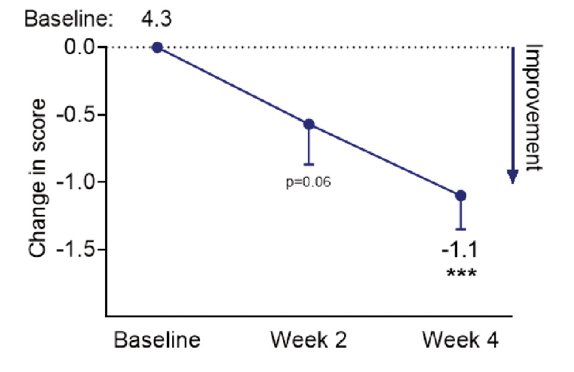
Improvements were observed in HFRDIS, PROMIS SD, and PROMIS SRI scores. As follows is a figure demonstrating a chance from baseline in HFRDIS score:
There were also improvements in subjective ratings of hot flash frequency, duration, interference with daily life/sleep, bothersomeness and control (all p<0.01):
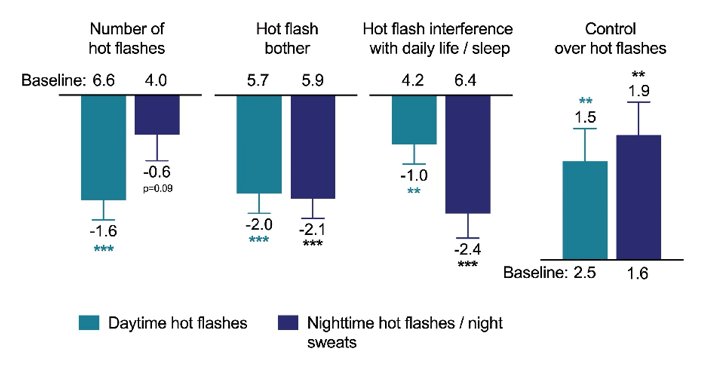
The majority (69%) of participants reported that the device was effective at helping them manage hot flashes. No adverse events were reported.
Dr. Morgans concluded her presentation discussing the feasibility of a novel wrist-worn thermal device for management of vasomotor symptoms in patients with prostate cancer with the following concluding statements:
- Results of this study support the feasibility of the use of the thermal device for management of bothersome hot flashes in prostate cancer survivors
- Future randomized controlled studies are warranted to evaluate patient reported outcomes related to frequency and severity of vasomotor symptoms, sleep quality, fatigue, and overall quality of life, in addition to defining the potential utility of the Embr thermal device in prostate cancer survivors experiencing vasomotor symptoms
Presented by: Alicia K. Morgans, MD, MPH, Dana-Farber Cancer Institute, Harvard Medical School, Boston, MA
Written by: Zachary Klaassen, MD, MSc – Urologic Oncologist, Assistant Professor of Urology, Georgia Cancer Center, Augusta University/Medical College of Georgia, @zklaassen_md on Twitter during the 2022 American Society of Clinical Oncology (ASCO) Annual Meeting, Chicago, IL, Fri, June 3 – Mon, June 7, 2022.