

(UroToday.com) The 2026 Advanced Prostate Cancer Consensus Conference (APCCC) meeting featured a poster session and a presentation by Dr. Peter Godolphin discussing a STOPCAP meta-analysis of individual participant data assessing which patients with synchronous, metastatic hormone-sensitive prostate cancer (mHSPC) benefit from prostate radiotherapy.
The APCCC 2024 consensus was that patients with synchronous, low-burden mHSPC should be treated with ADT + prostate radiotherapy ± an androgen receptor pathway inhibitor. This STOPCAP collaborative meta-analysis of individual participant data aimed to assess, more precisely, the effects of prostate radiotherapy. Dr. Godolphin and colleagues sought updated individual participant data from all completed randomized controlled trials examining the effects of adding prostate radiotherapy to ADT-based standard of care for mHSPC.
Analyses of main effects were based on overall survival, progression-free survival, and symptomatic local events requiring an intervention. Pooled effects were estimated using two-stage common-effect meta-analysis of hazard ratios, adjusted for age, PSA, performance status, Gleason score, planned docetaxel use, and adaptations to trial design. Absolute effects at 5 years were estimated using one-stage adjusted flexible parametric survival models with time-varying effects and regression standardization.
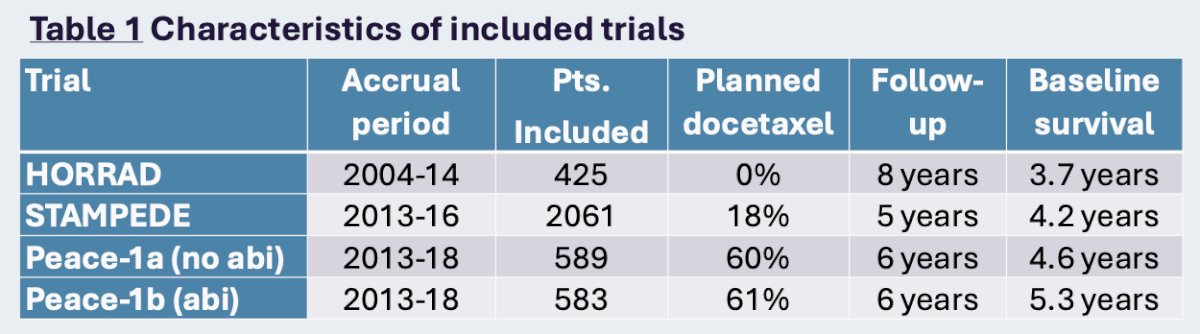
The investigators obtained updated individual participant data from all 3 eligible trials (4 trial comparisons), which represents >99% of all eligible participants. They also split the PEACE-1 trial by abiraterone use as part of the standard of care:
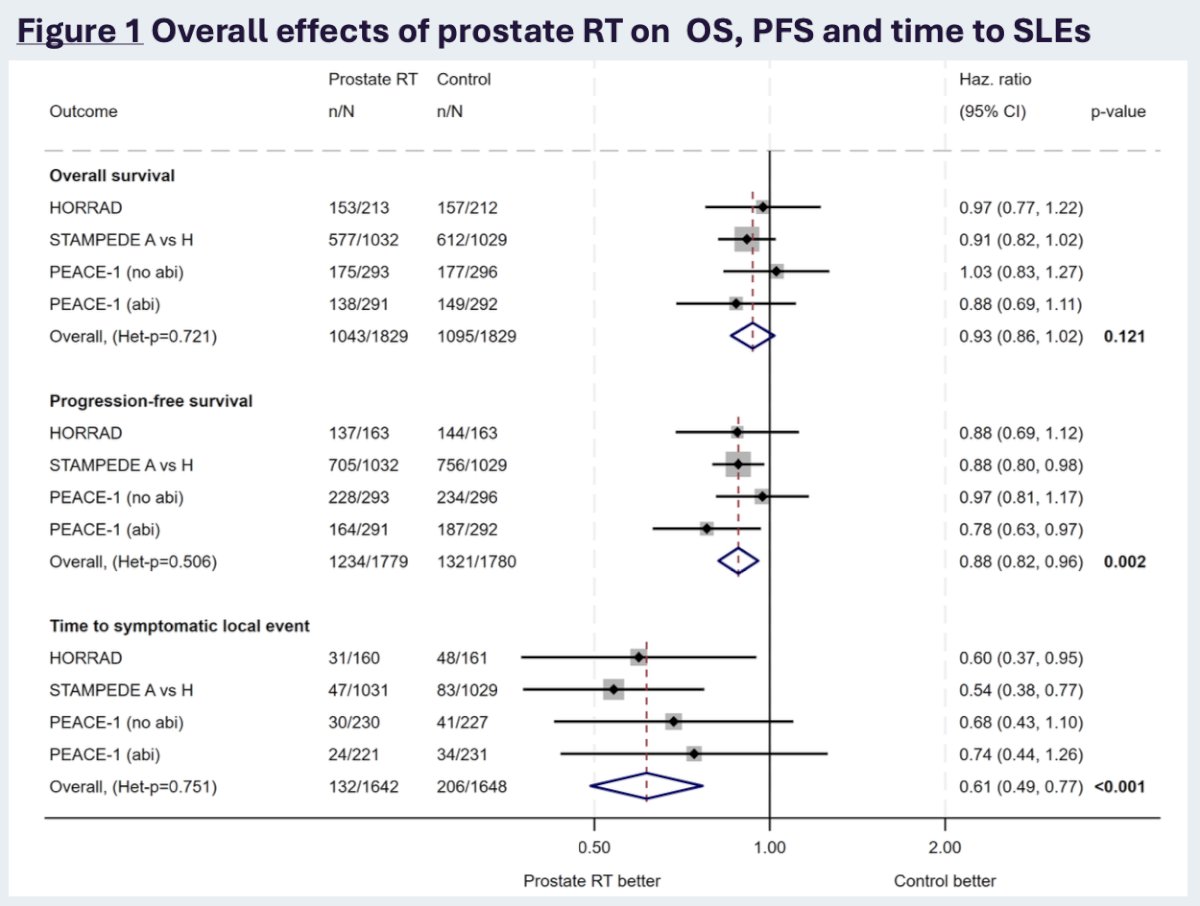
Based on all participants, there was no clear benefit of adding prostate radiotherapy on overall survival, with a potential absolute benefit of only 2% at 5 years. However, there was a clear benefit in adding prostate radiotherapy to progression-free survival, a 5% absolute benefit at 5 years. There was also a clear benefit of adding prostate radiotherapy on time to symptomatic local events requiring an intervention, a 6% absolute benefit at 5 years:
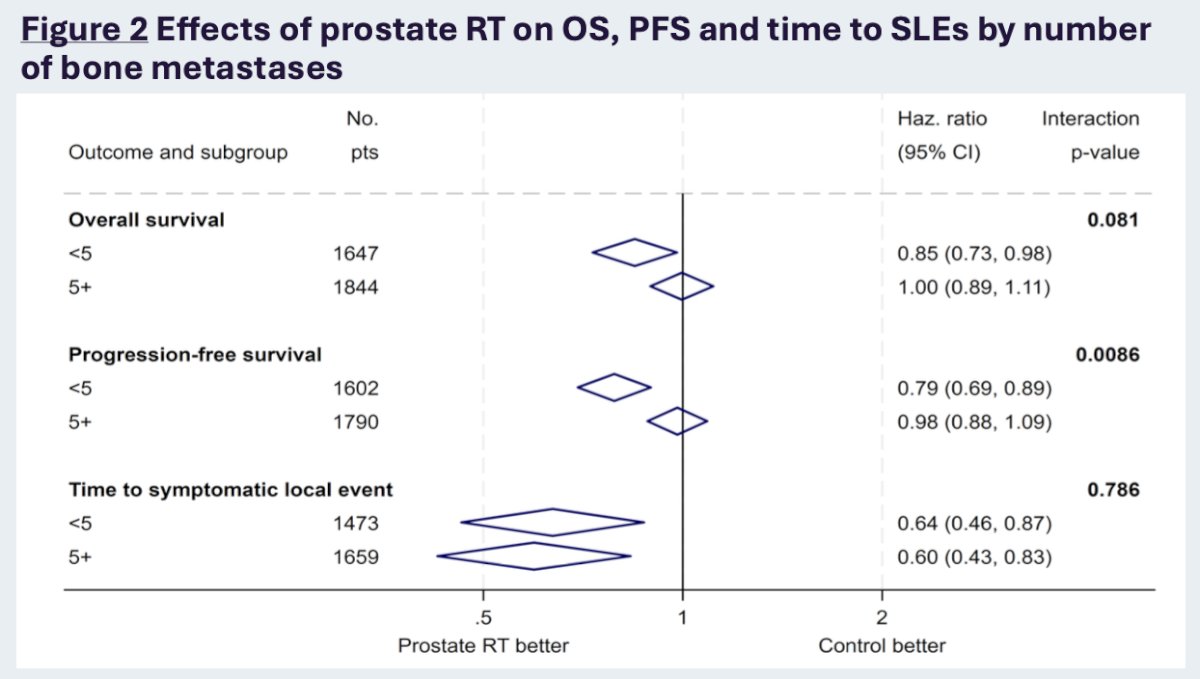
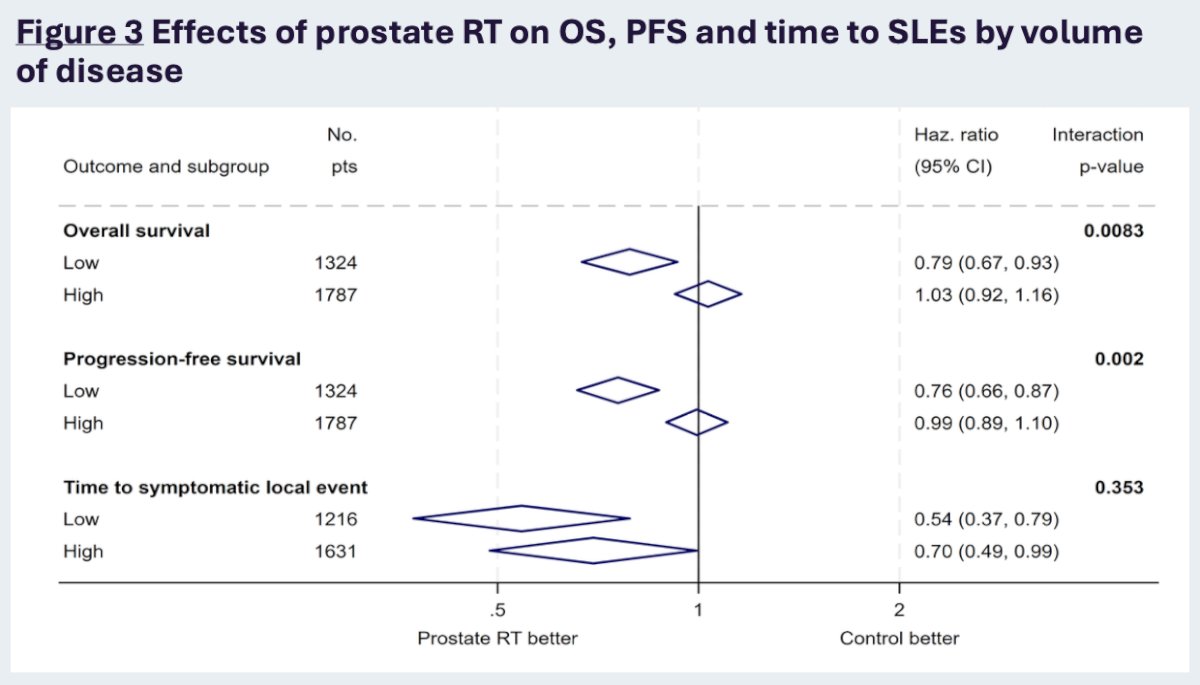
Benefits of prostate radiotherapy on overall survival were confined to participants with <5 bone metastases (6% improvement at 5-years) and low volume disease (8% improvement at 5 years):
Similarly, the benefits of prostate radiotherapy on progression-free survival are confined to the same patients. There was no evidence that the benefits of prostate radiotherapy in terms of time to symptomatic local events requiring an intervention varied by metastatic burden:
There was no evidence that the benefits of prostate radiotherapy varied by age, BMI, performance status, nodal status, tumour stage, Gleason score, and planned docetaxel use.
Dr. Godolphin concluded his presentation discussing which patients with synchronous mHSPC benefit from prostate radiotherapy with the following take-home points:
- The benefits of prostate radiotherapy on overall survival and progression-free survival were limited to patients with less extensive metastatic disease
- There was an overall, clear benefit of prostate radiotherapy on time to symptomatic local events requiring an intervention (number needed to treat = 17)
- When selecting patients for prostate radiotherapy, there is a need to weigh the benefits against the risks of radiotherapy toxicity and reducing the urinary quality of life
Presented by: Peter Godolphin, PhD, MRC Clinical Trials Unit at UCL, London, United Kingdom
Written by: Zachary Klaassen, MD, MSc – Urologic Oncologist, Associate Professor of Urology, Georgia Cancer Center, Wellstar MCG Health, @zklaassen_md on Twitter during the 2026 Advanced Prostate Cancer Consensus Conference (APCCC), Lugano, Switzerland, Thurs, April 30 – Sat, May 2, 2026.