

(UroToday.com) The 2026 Advanced Prostate Cancer Consensus Conference (APCCC) meeting featured a session discussing how we ensure everyone gets the best possible care in different contexts and a presentation by Dr. Stacy Loeb discussing how to address inequalities in access driven by a lack of specialist knowledge.
Up to 85% of patients with cancer are treated in non-specialist centers, with significant challenges for providers working across multiple sites (ie, oncological, geographical). This results in inequalities in guideline-concordant care. Ultimately, where you are treated should not determine the quality of care or outcomes.
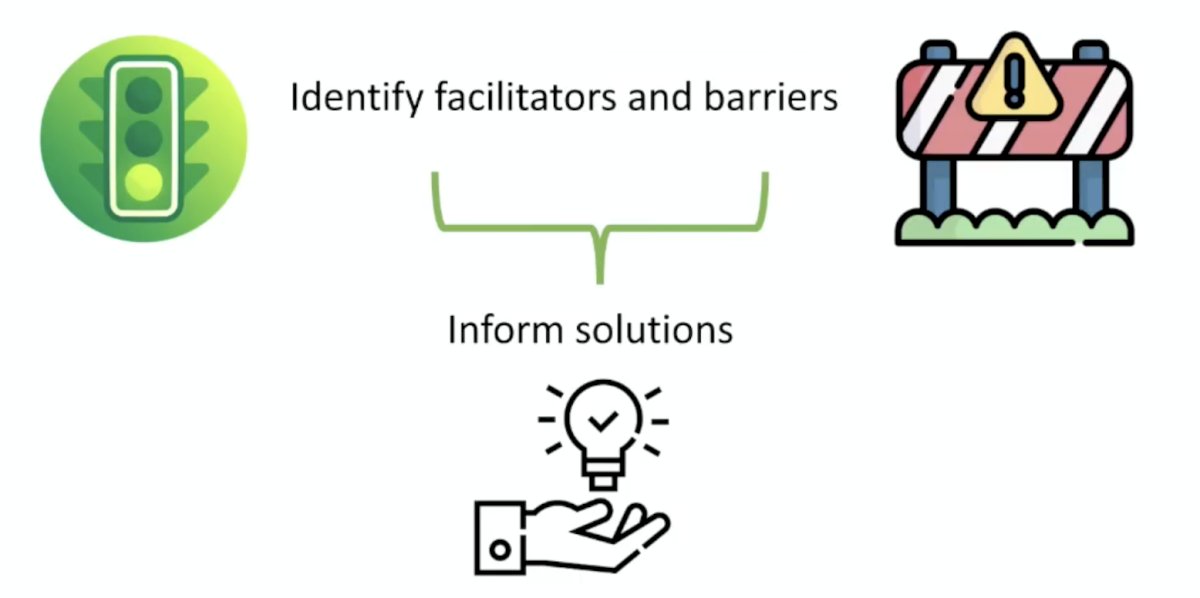
Dr. Loeb emphasized that it is important to identify facilitators and barriers in order to inform solutions and close the gap using implementation science:
Example #1 is the underutilization of germline testing. Dr. Loeb’s group previously published a study noting that only 1% of prostate cancer patients are receiving germline testing, compared to 52% of breast and ovarian cancer patients.1 Additional work from her group assessed barriers and facilitators to germline testing in a qualitative fashion.2 The dominant themes in the decision to conduct germline genetic evaluation were at the physician and organizational levels. Physician knowledge, coordination of care, perceptions of the guidelines, and concerns about cost were most frequently discussed as the main factors affecting utilization of germline genetic evaluation.
Dr. Loeb also highlighted two studies addressing provider knowledge gaps on eligibility for germline testing. Her group found that 31% of providers test/refer patients with metastatic disease if no family history, which increases to 52% that test/refer low-risk patients with BRCA2 mutations in the patient’s mother.3 Paller and colleagues4 performed a survey, noting that 38% of providers only test in metastatic disease if there is a positive family history and/or eligible for a clinical trial. Further, only 12% test all patients with high-risk localized disease.
Dr. Loeb and colleagues have developed Helix, a digital tool to address provider needs for prostate cancer genetic testing in clinical practice.5 Genetic counseling gaps included low rates of discussing genetic discrimination laws (45%). Provider interviews (n = 14) identified barriers to family history intake, including access to details and time needed. In user testing (n = 10), providers found Helix helpful for family history collection, and all providers found Helix easy to use, suggesting expanded clinical use:

Example #2 is treatment intensification for metastatic castration sensitive prostate cancer (mCSPC). Guidelines recommend treatment intensification (ie, ADT combined with androgen receptor pathway inhibitors +/- docetaxel) for mCSPC, which is associated with a survival benefit. Yet, in real-world practice, Dr. Loeb notes that <50% of patients receive treatment intensification.
Based on this information, Dr. Loeb and colleagues developed the IMPLEMENT study, a mixed-method study of US oncologists and urologists in order to identify key barriers to treatment intensification.6 There were 352 participants included in IMPLEMENT, and in each phase of the trial, half of the participants were oncologists and half were urologists. In phase 1, 5 domains had the greatest perceived influence on intensification: (i) memory, attention, and decision processes; (ii) environmental context and resources; (iii) knowledge; (iv) beliefs about consequences; and (v) social or professional role. Urologists more commonly reported barriers to intensification, while oncologists more commonly reported facilitators. In phase 2, urologists found decision-support tools most helpful (coefficient of helpfulness 3.27; 95% CI, 2.90-3.65), while oncologists preferred databases of posttreatment options (coefficient of helpfulness 2.58; 95% CI, 2.29-2.89) and clinical trial summaries (coefficient of helpfulness 2.41; 95% CI, 2.14-2.69). Data-driven solutions to increase uptake of guideline-concordant treatment intensification included:
- Consolidation of data
- Cross-specialty tumor boards
- Journal clubs
- Database post-treatment options
- Immersive case-based modular learning
Dr. Loeb concluded her presentation discussing how to address inequalities in access driven by a lack of specialist knowledge with the following take-home points:
- Inequalities in cancer care often result from preventable knowledge gaps
- Every eligible patient should have access to guideline-concordant options such as germline testing and treatment intensification, regardless of where they get their care
- The IMPLEMENT study provides a roadmap for addressing barriers and capitalizing on facilitators by setting and specialty, then co-creating solutions with frontline physicians
Presented by: Stacy Loeb, MD, MSc, PhD (Hon), Professor, Urologic Oncologist, Perlmutter Cancer Center, NYU Langone Health, Manhattan Veterans' Affairs, New York, NY
Written by: Zachary Klaassen, MD, MSc – Urologic Oncologist, Associate Professor of Urology, Georgia Cancer Center, Wellstar MCG Health, @zklaassen_md on Twitter during the 2026 Advanced Prostate Cancer Consensus Conference (APCCC), Lugano, Switzerland, Thurs, April 30 – Sat, May 2, 2026
- Thakker S, Loeb S, Giri VN, et al. Attitudes, perceptions, and use of cancer-based genetic testing among healthy U.S. adults and those with prostate or breast/ovarian cancer. Urol Pract. 2023 Jan;10(1):26-32.
- Loeb S, Li R, Sánchez Nolasco T, et al. Barriers and facilitators of germline genetic evaluation for prostate cancer. Prostate. 2021 Aug;81(11):754-764.
- Loeb S, Byrne N, Walter D, et al. Knowledge and practice regarding prostate cancer germline testing among urologists: Gaps to address for optimal implementation. Cancer Treat Res Commun. 2020:25:100212.
- Paller CJ, Antonarakis ES, Beer TM, et al. Germline genetic testing in advanced prostate cancer: practices and barriers. Survey results from the germline genetics working group of the prostate cancer clinical trials consortium. Clin Genitourin Cancer. 2019 Aug;17(4):275-282.
- Giri VN, Walker A, Gross L, et al. Helix: A digital tool to address provider needs for prostate cancer genetic testing in clinical practice. Clin Genitourin Cancer. 2022 Apr;20(2):e104-e113.
- Leob S, Agarwal N, El-Chaar N, et al. Barriers and facilitators of treatment intensification in metastatic castration-sensitive prostate cancer. JAMA Netw Open. 2025 Oct 1;8(10):e2535728.