

(UroToday.com) The 2026 Advanced Prostate Cancer Consensus Conference (APCCC) meeting featured a poster session and a presentation by Dr. Ros Eeles discussing data from the IMPACT study assessing targeted prostate cancer screening in BRCA1 or BRCA2 pathogenic germline variant carriers and the detection of clinically relevant disease.
BRCA2 germline pathogenic variants are a well-documented indicator for a higher risk of developing early-onset aggressive prostate cancer, which is approximately 5 times greater than the general population. BRCA1 germline pathogenic variants are similarly associated with more aggressive forms of prostate cancer, however, inconsistencies exist in the literature regarding their effect on the risk of developing the disease. The IMPACT study aimed to investigate:
- The efficacy of PSA screening as a tool to identify clinically significant prostate cancer
- The incidence of prostate cancer amongst individuals with a pathogenic variant of the BRCA1 and BRCA2 genes
- Severity and tumor characteristics of prostate cancer in pathogenic variant BRCA1 and BRCA2 carriers compared to non-carriers
- A positive predictive value for prostate biopsy using a PSA threshold of 3 ng/mL
For this study, individuals were recruited between 2005 and 2015 from 65 centers across 20 countries using the following framework:
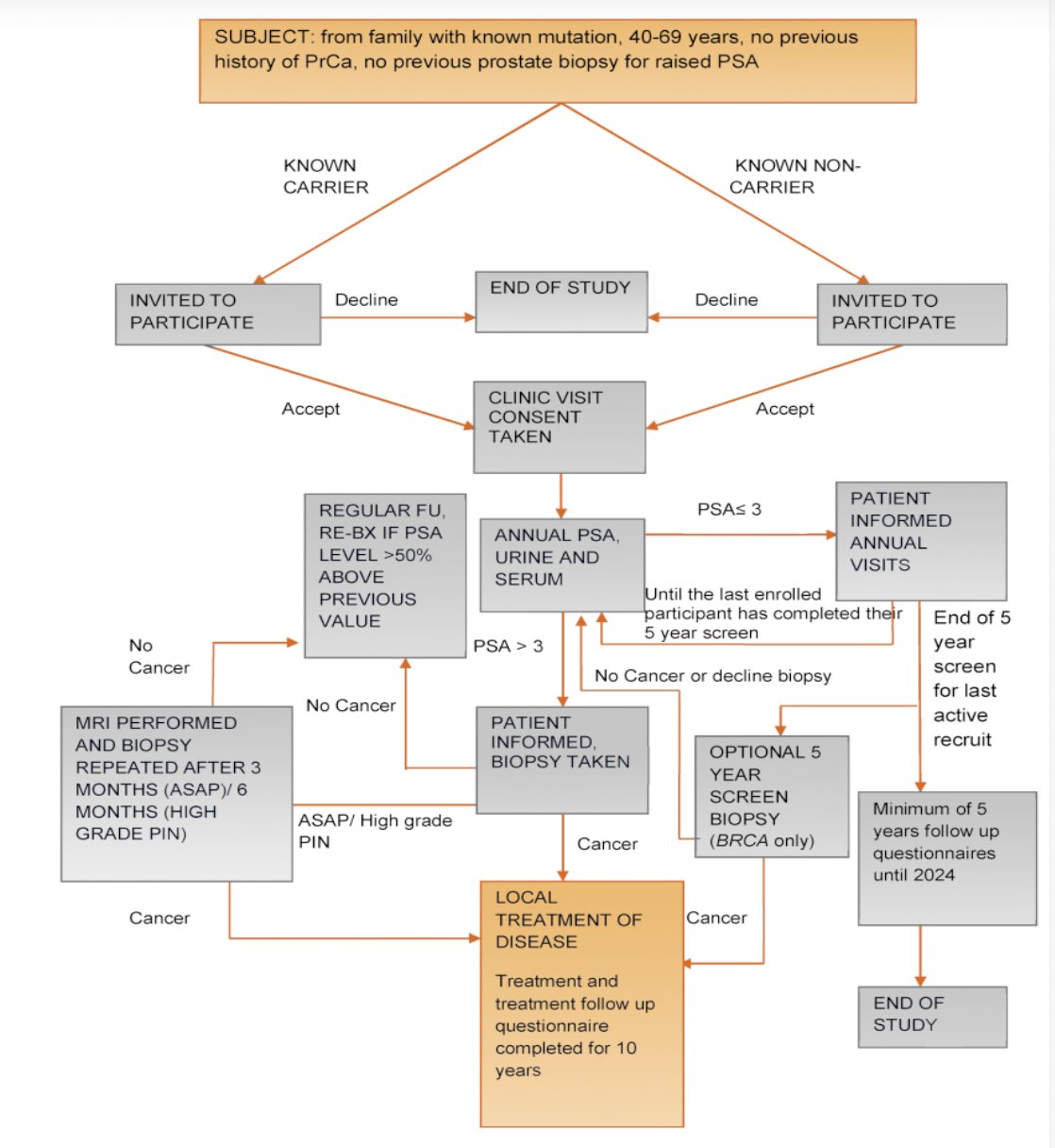
An annual PSA screening with a result of > 3ng/mL led to a prostate biopsy, and the number of diagnoses recorded for each group, with any cancers found to be Grade Group ≥2 or Gleason score ≥ 7, were classified as clinically significant. Prostate cancer was categorized in accordance with the NCCN risk classification to determine risk of metastasis, with a particular focus on ‘intermediate (unfavorable)’ and higher risk groups.
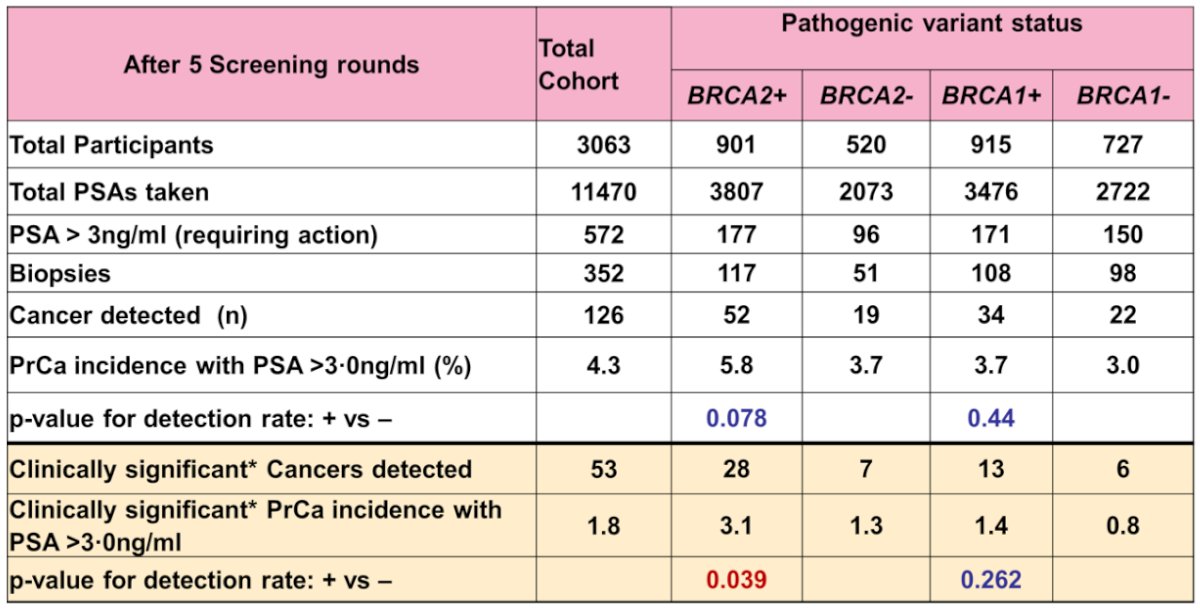
After 5 rounds of PSA screening, the incidence of clinically significant prostate cancer was significantly higher in BRCA2 pathogenic variant carriers compared to non-carriers (3.1% versus 1.35%, p = 0.039), with no statistically significant increase in clinically significant prostate cancer in BRCA1 pathogenic variant carriers compared to non-carriers (1.4% versus 0.8%, p = 0.262):
The median age of clinically significant prostate cancer diagnosis was 61 years (IQR 55, 64) in BRCA2 pathogenic variant carriers compared to 64 years (IQR 60, 68) in non-carriers (p = 0.03):
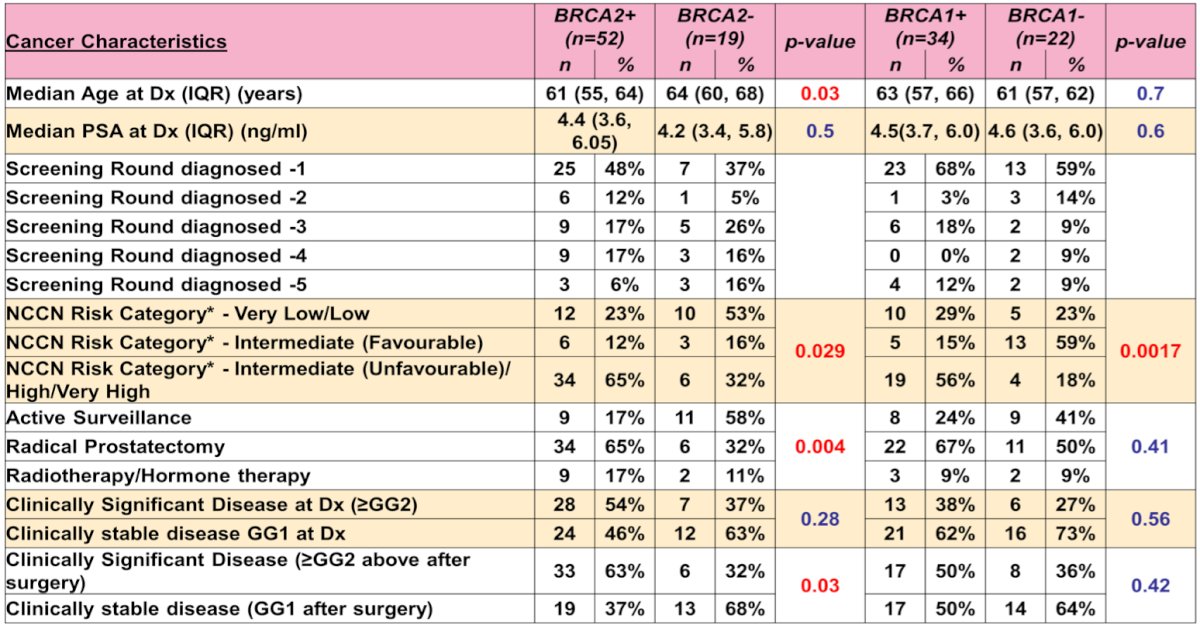
Using the NCCN risk classification, 65% of pathogenic variant BRCA2 carriers were in the ‘intermediate (unfavorable)’ risk group or worse versus 32% of non carriers (p = 0.029). Moreover, 56% of pathogenic variant BRCA1 carriers were in the ‘intermediate (unfavorable)’ risk group or worse versus 18% of non-carriers (p = 0.0017):
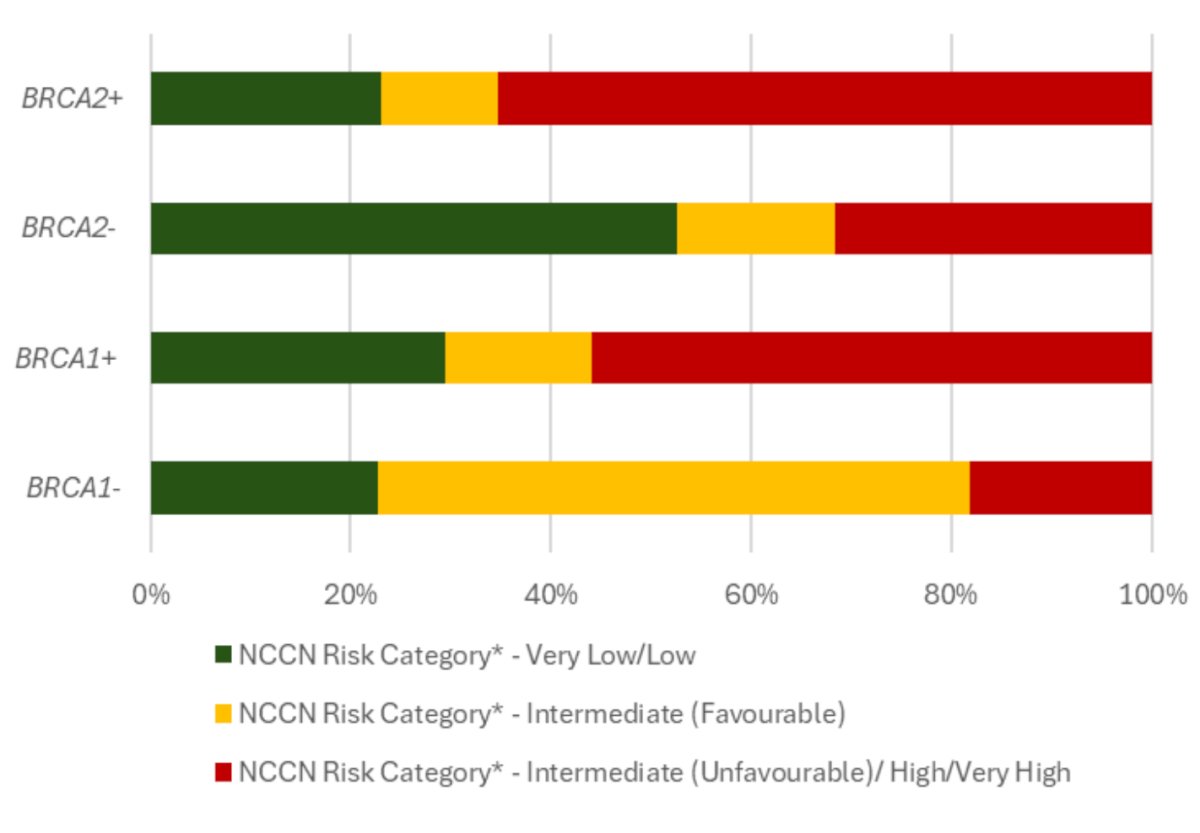
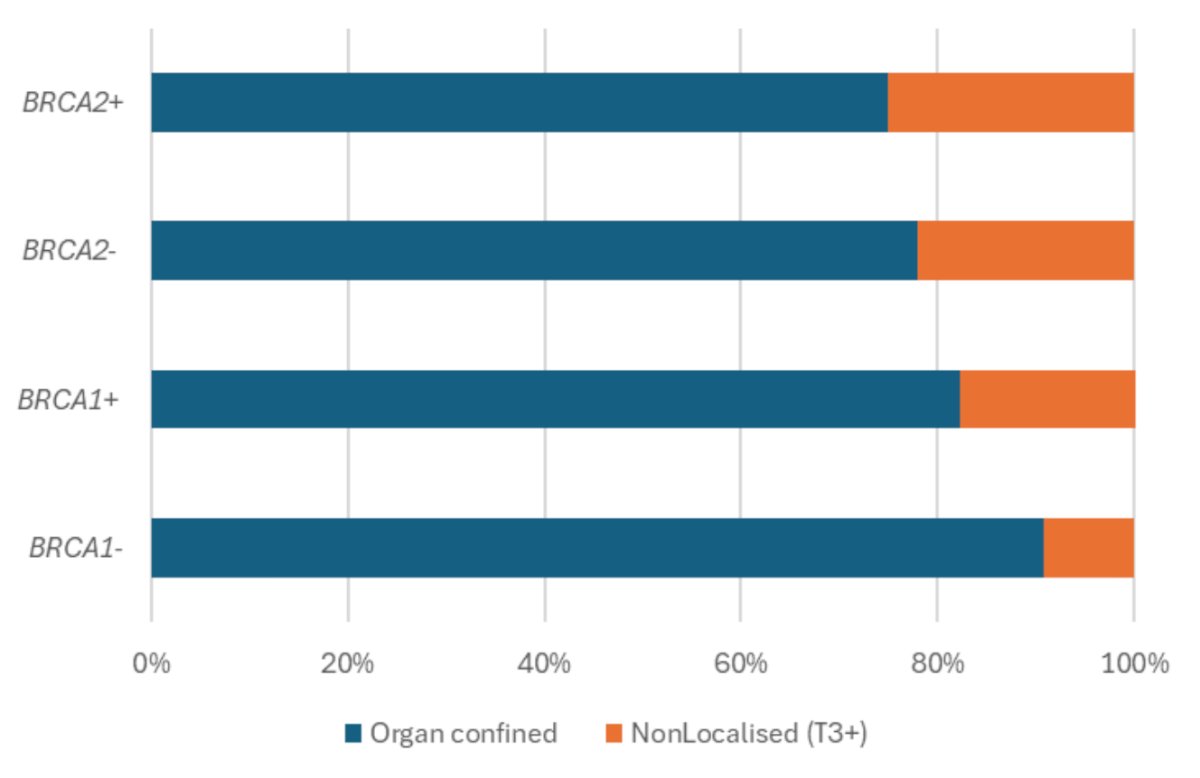
The majority of prostate cancer identified was organ-confined regardless of genetic status, illustrating the value of PSA screening and the 3.0 ng/mL threshold, particularly amongst pathogenic variant carriers who are at a greater risk of more aggressive disease:
Dr. Eeles concluded her presentation discussing data from the IMPACT study assessing targeted prostate cancer screening in BRCA1 or BRCA2 pathogenic germline variant carriers and the detection of clinically relevant disease with the following take-home points:
- Pathogenic variant BRCA2 carriers are at significantly greater risk of developing clinically significant prostate cancer compared to non-carriers, particularly at a younger age
- Pathogenic variants in the BRCA1 and BRCA2 genes both significantly increase the risk of more severe prostate cancer, with a greater risk of metastasis when compared to prostate cancer amongst non-carriers
- Annual PSA screening is indicated for BRCA1 and BRCA2 pathogenic variant carriers to identify prostate cancer before it spreads beyond the prostate
Presented by: Rosalind Eeles, PhD, FRCP, FRCR, Professor, The Institute of Cancer Research, London, United Kingdom
Written by: Zachary Klaassen, MD, MSc – Urologic Oncologist, Associate Professor of Urology, Georgia Cancer Center, Wellstar MCG Health, @zklaassen_md on Twitter during the 2026 Advanced Prostate Cancer Consensus Conference (APCCC), Lugano, Switzerland, Thurs, April 30 – Sat, May 2, 2026.