

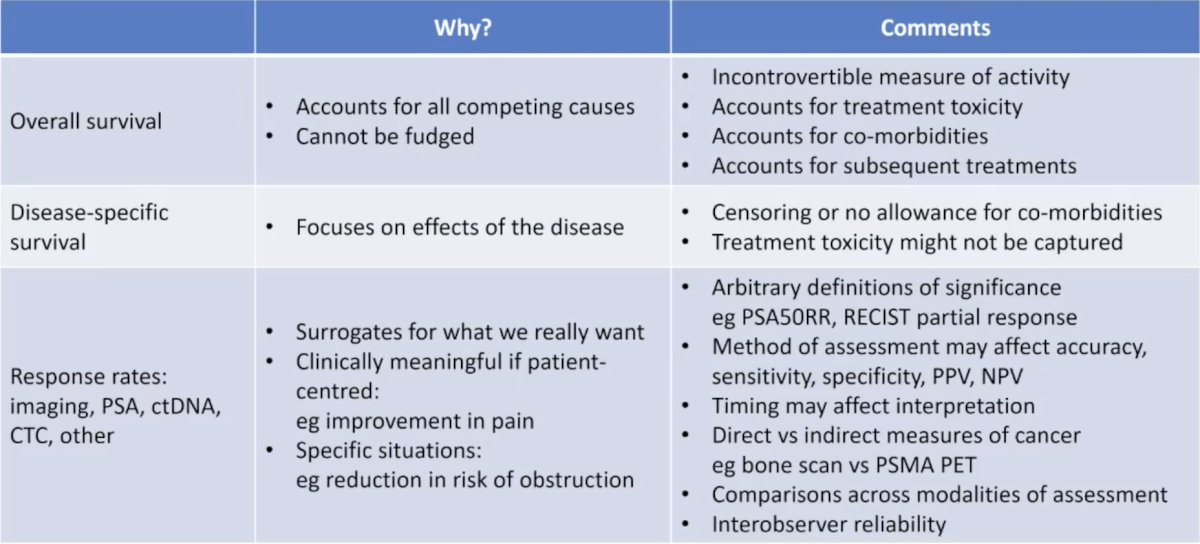
(UroToday.com) The 2026 Advanced Prostate Cancer Consensus Conference (APCCC) meeting featured a management of metastatic hormone sensitive prostate cancer (mHSPC) session and a presentation by Dr. Ian Davis discussing the relevant endpoints from a clinical point of view. Dr. Davis started his presentation by highlighting several “hard” oncologic endpoints:
- Overall survival: accounts for all competing causes and cannot be fudged
- Disease specific survival: focuses on effects of the disease
- Response rates (imaging, PSA, ctDNA, CTCs, others): surrogates for what we really want, and are clinically meaningful if they are patient centered
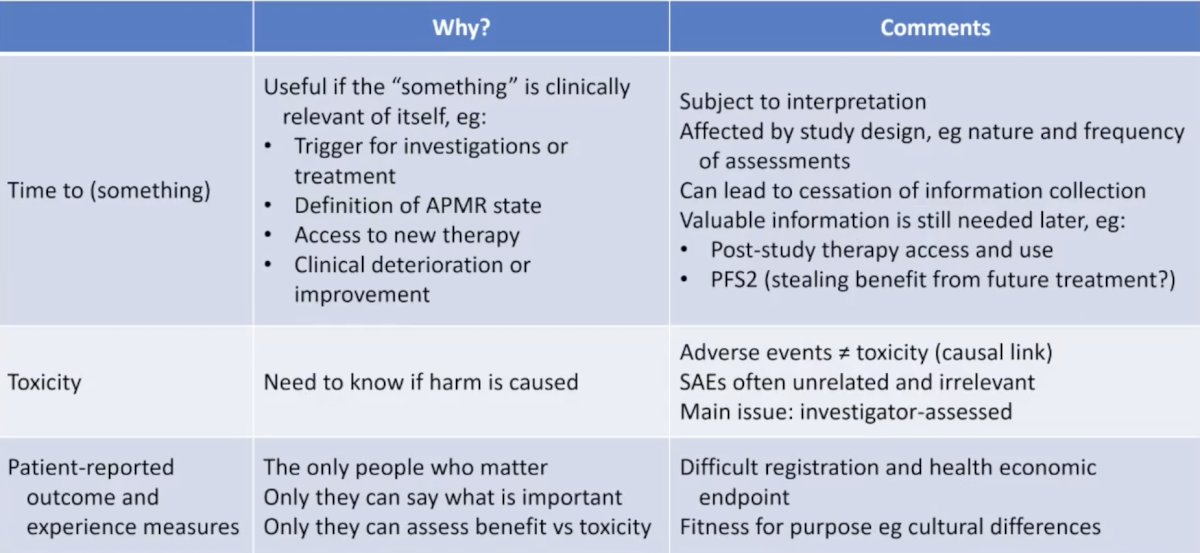
Moreover, there are also “soft” endpoints, which are subjective:
- Time to (something): is useful if the “something” is clinically relevant in and of itself (ie. trigger for investigations or treatment, access to new therapy, etc)
- Toxicity: we need to know if harm is caused
- Patient reported outcomes and experience measures: the only people who matter, and only they can say what is important
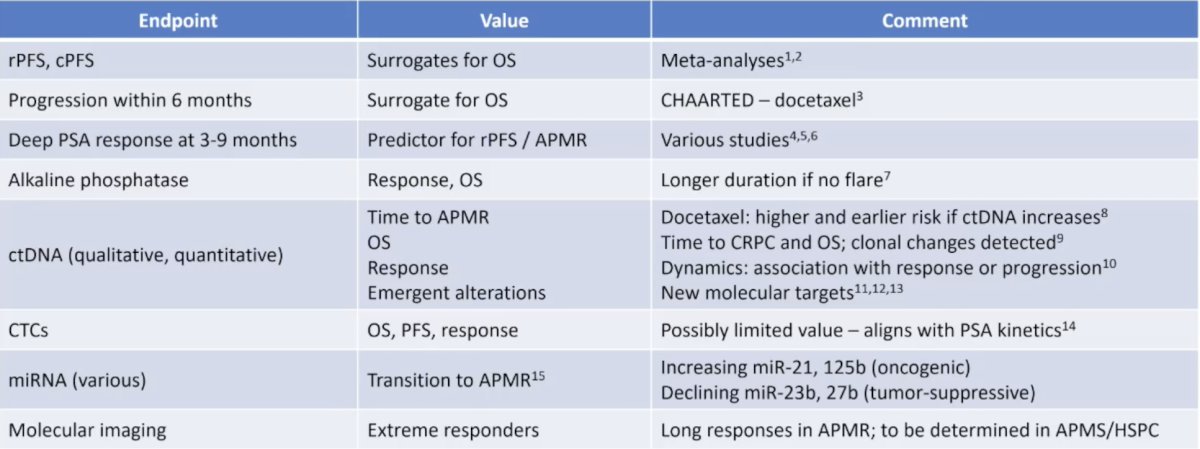
Several clinically relevant and emerging endpoints include: (i) radiographic and clinical progression free survival, (ii) progression within 6 months, (iii) PSA response at 3-9 months, (iv) alkaline phosphatase, (v) ctDNA, (vi) CTCs, (vii) miRNA, and (viii) molecular imaging:
Dr. Davis concluded his presentation discussing the relevant endpoints from a clinical point of view with the following take-home points:
- We cannot always extrapolate from advanced/metastatic prostate cancer or earlier settings: ie. “metastasis free survival” has a different meaning in the metastatic versus localized settings
- Regulatory approval endpoints might not be the most clinically important ones
- Subjectivity and design issues can affect the value of some endpoints
- Some endpoints are most useful for design of future trials: point estimates, confidence intervals, sample size calculations
- Toxicity and its impact should be reported and interpreted by the patient: there is a 64% discordance between patient reported outcomes and adverse events in randomized clinical trials
Presented by: Ian D. Davis, MBBS(Hons), PhD, FRACP, Monash University Eastern Health Clinical School, Melbourne, Australia
Written by: Zachary Klaassen, MD, MSc – Urologic Oncologist, Associate Professor of Urology, Georgia Cancer Center, Wellstar MCG Health, @zklaassen_md on Twitter during the 2026 Advanced Prostate Cancer Consensus Conference (APCCC), Lugano, Switzerland, Thurs, April 30 – Sat, May 2, 2026.