

(UroToday.com) The 2025 PSMA and Beyond annual meeting featured a LuPSMA therapy session and a presentation by Dr. Amar Kishan discussing PSMA radioligand therapy for oligometastatic disease. Oligometastatic prostate cancer is a putative disease state characterized by the presence of a limited number of clinically detectable metastases (generally 1-5). It can be either “synchronous” (de novo) or “metachronous” (recurrent after definitive therapy). Conceptually, oligometastatic prostate cancer could encompass a combination of the following:
- Truly indolent disease biology with limited polymetastatic potential
- Truly aggressive disease biology identified early in the disease course
- Traditionally subclinical disease that has been identified by increasingly sensitive imaging
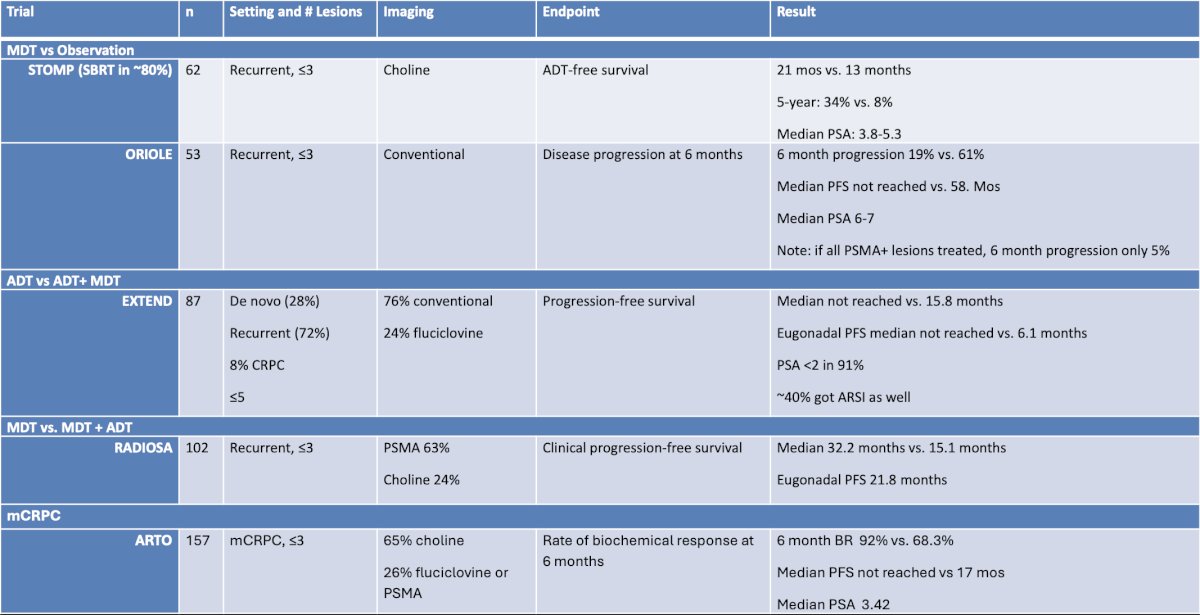
Most patients with recurrent prostate cancer after primary treatment relapse with <= 3 identifiable lesions, and ablation of all sites of disease in these patients may delay the initiation of systemic therapy and its attendant adverse events. For those patients already on systemic therapy, it may allow a longer time on existing systemic therapy. If patients truly have limited volume of disease at recurrence, metastasis directed therapy may prove to be curative in the same fashion that salvage radiotherapy after radical prostatectomy is thought to be curative. Dr. Kishan provided the following table reviewing the current evidence for metastasis directed therapy:
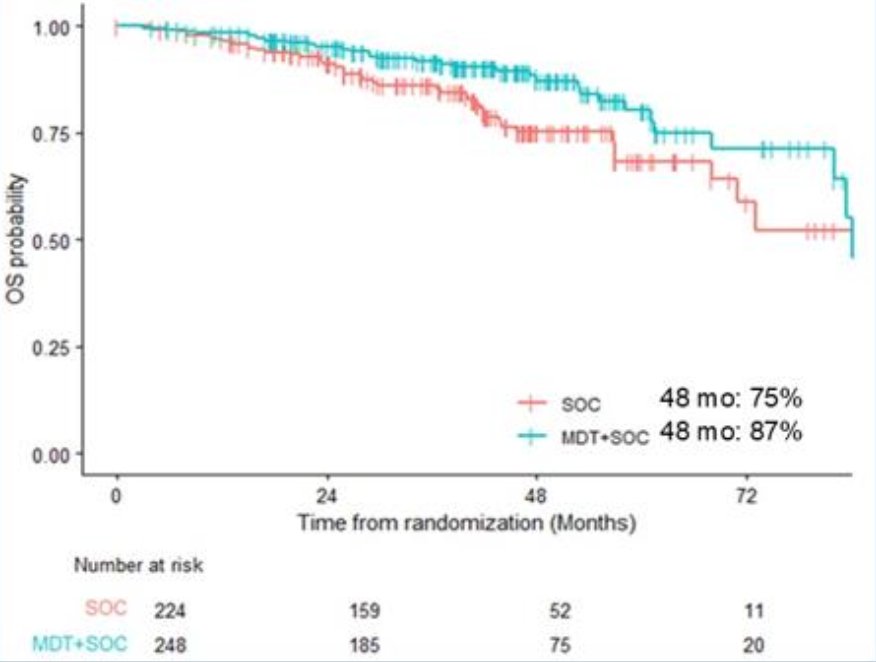
Presented at ASCO GU 2025, Dr. Kishan discussed a world-wide oligometastatic prostate cancer meta-analysis leveraging individual patient data from randomized trials (WOLVERINE) analysis from the X-MET collaboration. This collaboration includes 5 trials of 472 oligometastatic prostate cancer patients followed for a median of 41 months. The analysis showed that for overall survival, the addition of metastasis directed therapy to standard of care improved 48 month overall survival by 12% (87% versus 75%, HR 0.64, 95% CI 0.40–1.01, p = 0.057):
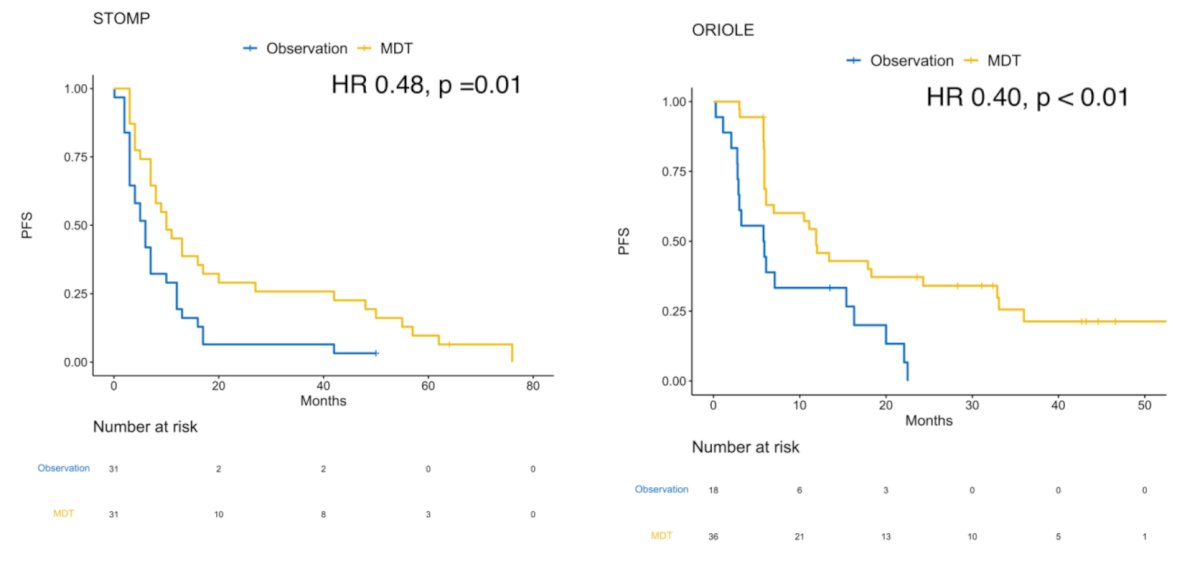
In an analysis of the STOMP and ORIOLE trials,1 progression free survival favored metastasis-directed therapy in both arms versus observation:
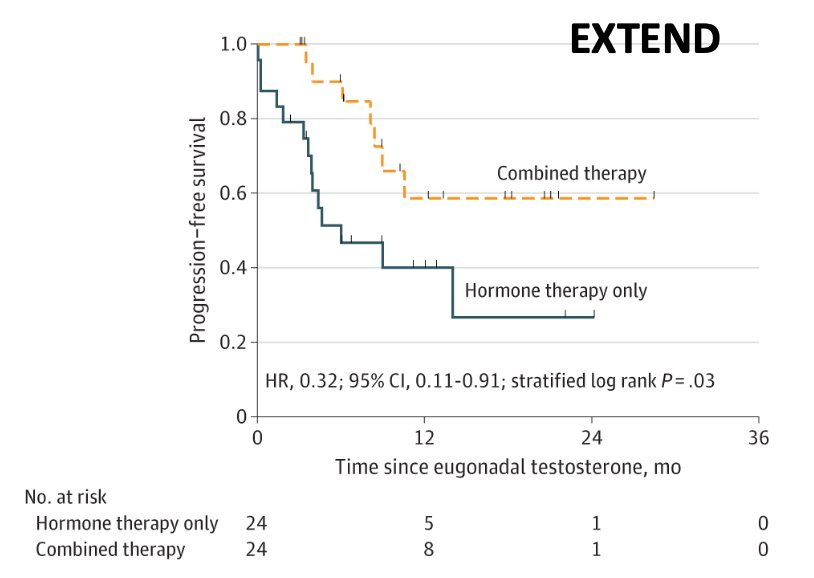
Assessing durability of metastasis-directed therapy with ADT, Dr. Kishan notes that the EXTEND trial2 showed that combined therapy had improved progression free survival compared to hormone therapy alone (HR 0.32, 95% CI 0.11-0.91):
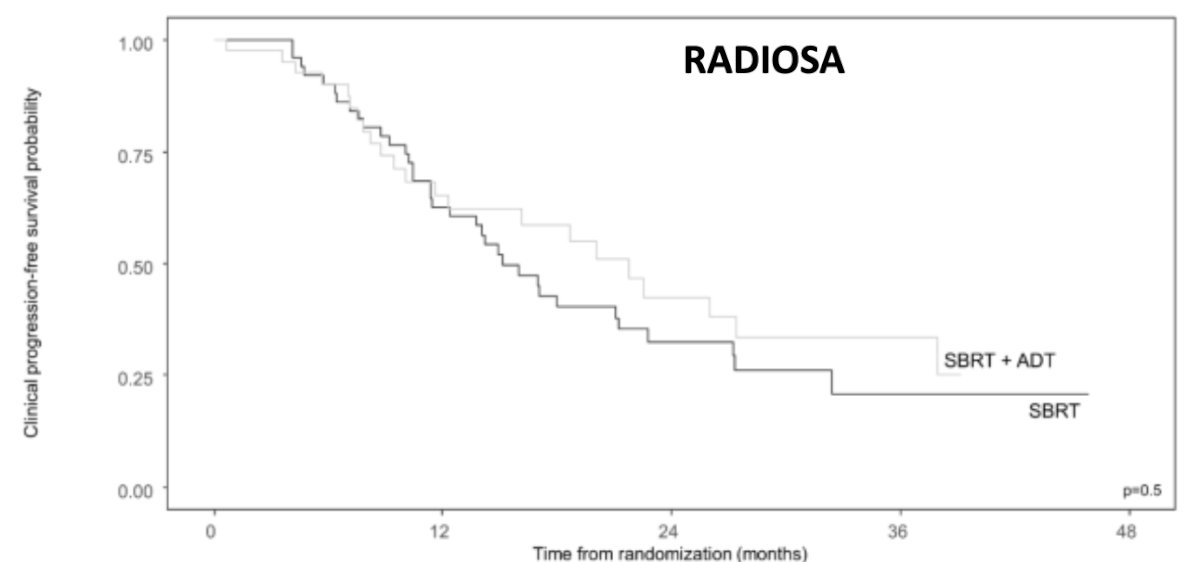
Additionally, in the RADIOSA trial,3 with a median follow-up of 31 months (IQR 16-36) for both groups, the median clinical progression-free survival was 15.1 months (95% CI 12.4-22.8) for the stereotactic body radiotherapy group versus 32.2 months (22.4 - NR) for the stereotactic body radiotherapy with ADT group (HR 0.43, 95% CI 0.26-0.72, p = 0.0010):
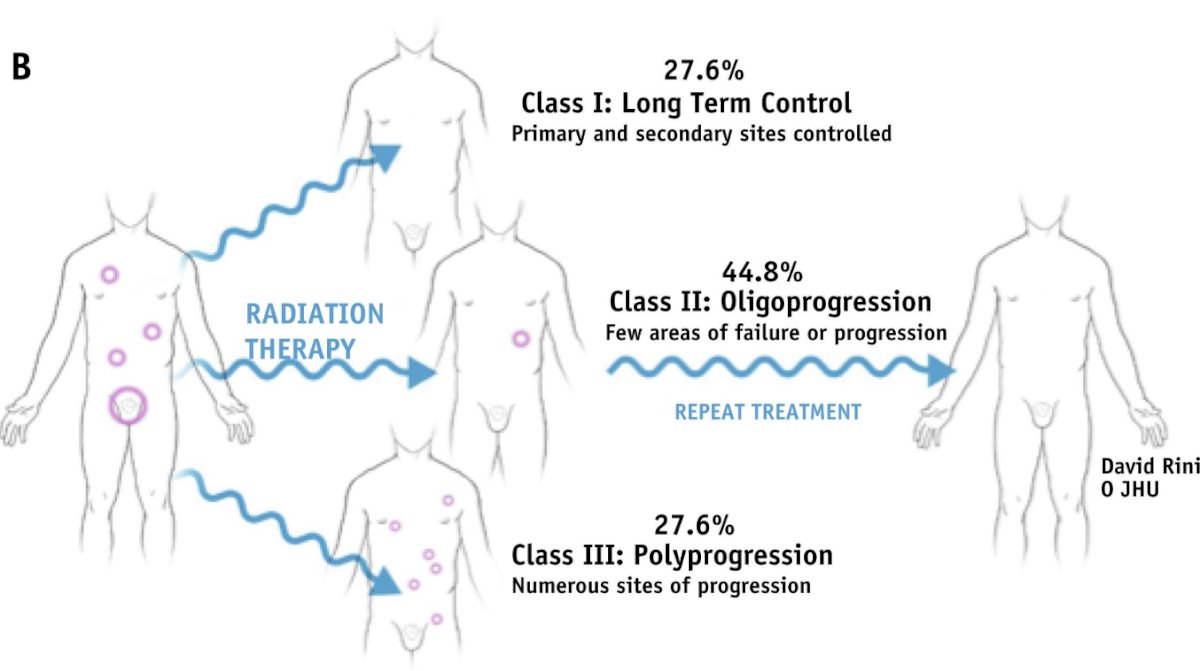
Dr. Kishan cautioned that few men after metastasis directed therapy have durable cures, in terms of eugonadal progression free survival. Progression, whether oligometastatic or polymetastatic, is common and may require intensification to be avoided :4
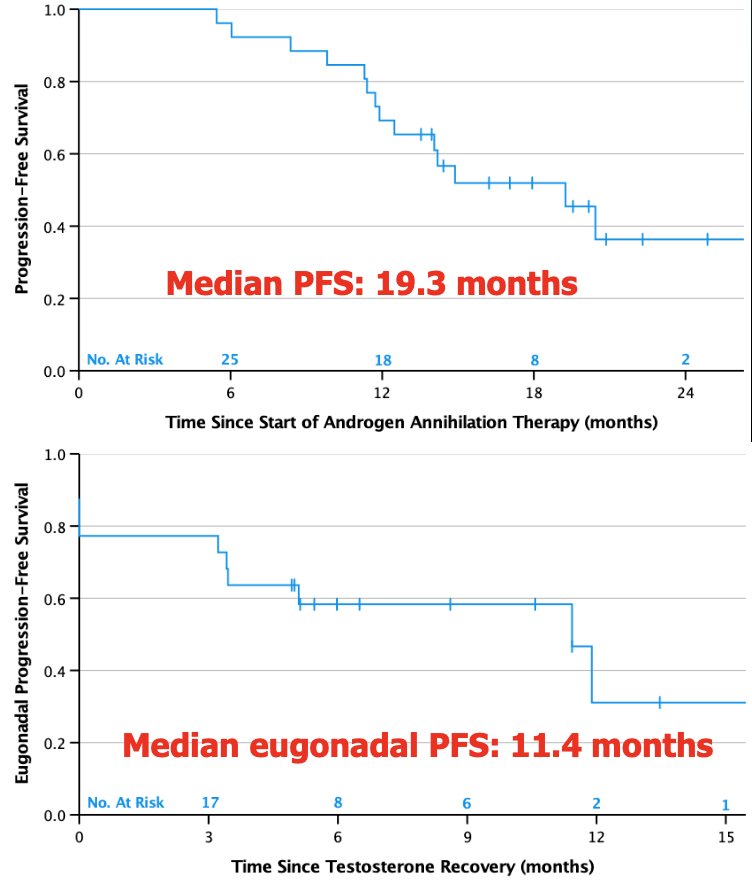
The SATURN trial5 was a prospective trial of 28 patients with 1-5 M1a-M1b lesions on PSMA PET/CT found when evaluating recurrence after radical prostatectomy (multiple recurrences were allowed) treated with stereotactic body radiotherapy to all lesions + 6 months of apalutamide, abiraterone acetate, and leuprolide. Of note, 43% were M1a, with a median number of lesions of 1. The percentage of patients who maintained a PSA < 0.05 ng/mL six months after testosterone recovery (the primary endpoint) was 50%, and grade 3 toxicity was 20%. The median progression free survival was 19.3 months and the median eugonadal progression free survival was 11.4 months:
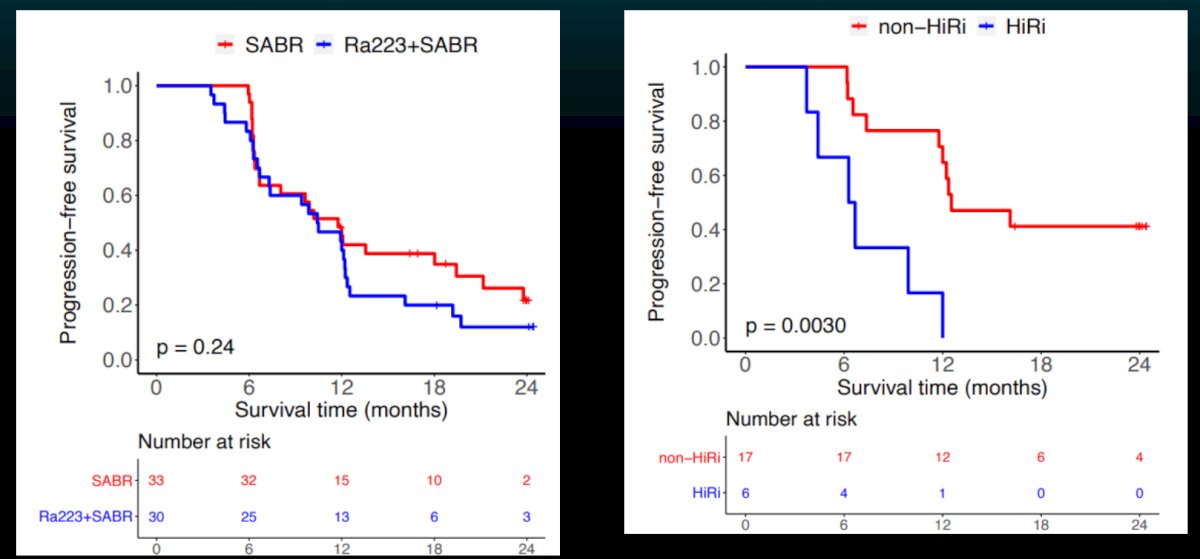
The RAVENS trial randomized 64 men with recurrence prostate cancer and 1+ bone metastases (<= 3 lesions on conventional imaging or <5 on advanced imaging) to stereotactic body radiotherapy alone or stereotactic body radiotherapy + 6 cycles of radium-223 (55 kBq/kg every 4 weeks). Patients in RAVENS had a median PSA of 5.61 ng/mL, bone only disease among 78% of patients, and 96.8% had <=3 lesions. The primary endpoint was progression free survival, a composite outcome of PSA increase of at least 2 ng/mL or 25% from nadir, concern for progression by conventional imaging, symptomatic progression, or initiation of ADT for any reason. The median progression free survival was 10.5 months versus 11.8 months (p = 0.24), and somatic mutations in TP53, RB, BRCA1/2, and ATM were highly prognostic:
Dr. Kishan contends that systemic intensification is warranted based on the frequency of oligometastatic and polymetastatic progression. Intensified ADT can achieve this, but with significant toxicity and with all the sequela of ADT. Intensification with radium-223 does not appear to achieve this, possibly due to limitations of the agent (bone only, requiring an osteoblastic reaction) and the low burden of disease. PSMA-based radioligand therapy would be an ideal mechanism for systemic therapy intensification by sparing ADT and allowing targeting of all micrometastatic niches rather than just bone.
In the BULLSEYE trial, men with mHSPC and <=5 lesions on PSMA PET with an SUVmax > 15 and PSA doubling time <= 6 months were randomized to 2-4 cycles of 177LuPSMA-617 (7.4 GBq per cycle) versus deferred ADT. The primary endpoint was progression within 6 weeks of cycle 2 (100% increase in PSA or clinical/radiographic progression). Very early results based on the first 42 patients showed progression rates of 10% versus 77%, with a median progression free survival not reached versus 4 months.
Dr. Kishan then discussed the LUNAR trial (NCT05496959), which is randomizing men with oligorecurrent prostate cancer naïve to ADT within the last 6 months or hormone sensitive and 1-5 sites of disease outside the prostate or prostate bed on PSMA PET/CT to two cycles of 177Lu-PNT2002 versus stereotactic body radiotherapy to all sites of PSMA PET/CT defined disease. The primary endpoint of progression free survival is expected to readout later this year. The PSMA-DC (NCT05939414) trial is randomizing men 1:1 with oligorecurrent HSPC to stereotactic body radiotherapy versus stereotactic body radiotherapy + 4 cycles of LuPMSA (7.4 GBq every 6 weeks). Patients must have <= 5 PSMA positive lesions with at least one M1 lesion, as well as negative conventional imaging (bone scan for bone and CT or MRI for soft tissue). The primary endpoint for PSMA-DC is blinded independent review committee assess metastasis free survival by conventional imaging.
Dr. Kishan concluded his presentation discussing PSMA radioligand therapy for oligometastatic disease by summarizing the prospective studies integrating radioligand therapy with external beam radiotherapy in oligorecurrent disease:6

Presented by: Amar Kishan, MD, University of California, Los Angeles, Los Angeles, CA
Written by: Zachary Klaassen, MD, MSc – Urologic Oncologist, Associate Professor of Urology, Georgia Cancer Center, Wellstar MCG Health, @zklaassen_md on Twitter during the 2025 PSMA and Beyond Annual Meeting, Los Angeles, CA, Fri, Mar 28 – Sat, Mar 29, 2025.
References:- Deek MP, Van der Eecken K, Sutera P, et al. Long-term outcomes and genetic predictors of response to metastasis-directed therapy versus observation in oligometastatic prostate cancer: Analysis of STOMP and ORIOLE trials. J Clin Oncol. 2022;40(29):3377-3382.
- Tang C, Sherry AD, Haymaker C, et al. Addition of metastasis-directed therapy to intermittent hormone therapy for oligometastatic prostate cancer: The EXTEND phase 2 randomized clinical trial. JAMA Oncol. 2023 Jun 1;9(6):825-834.
- Marvaso G, Corrao G, Zaffaroni M, et al. ADT with SBRT versus SBRT alone for hormone-sensitive oligorecurrent prostate cancer (RADIOSA): A randomized, open-label, phase 2 clinical trial. Lancet Oncol. 2025 Mar;26(3):300-311.
- Deek MP, Taparra K, Dao D, et al. Patterns of recurrence and modes of progression after metastasis-directed therapy in oligometastatic castration-sensitive prostate cancer. Int J Radiat Oncol Biol Phys. 2021 Feb 1;109(2):387-395.
- Nikitas J, Rettig M, Shen J, et al. Systemic and tumor-directed therapy for oligorecurrent metastatic prostate cancer (SATURN): Primary endpoint results from a phase 2 clinical trial. Eur Urol. 2024 Jun;85(6):517-520.
- Kishan AU, Siva S, Hofman MS, et al. The potential contribution of radiopharmaceutical therapies in managing oligometastatic disease. J Nucl Med. 2024 Feb 15 [Epub ahead of print].