

(UroToday.com) The 2025 PSMA and Beyond annual meeting featured a PSMA session and a presentation by Dr. Carissa Chu discussing the role of PSMA PET in surgical planning and post-operative management. In the perioperative setting, there are several opportunities for PSMA imaging:
- Improving surgical precision
- Optimizing outcomes after biochemical recurrence
- Designing neoadjuvant clinical trials with a translational impact
Dr. Chu discussed IS-002, which is a PSMA conjugated fluorophore (a PSMA targeting group chemically linked to a fluorescent dye that is detectable under near infrared spectrum) for intraoperative imaging:

In 2024, Nguyen and colleagues1 reported the first-in-human evaluation of IS-002 for fluorescence-based identification of prostate cancer in patients with high-risk prostate cancer undergoing robotic-assisted prostatectomy. In this phase 1 study of 24 men, IS-002 enabled real-time residual prostate cancer detection, showing disease not visible in white light endoscopy. Additionally, biopsied fluorescent tissue confirmed adenocarcinoma:
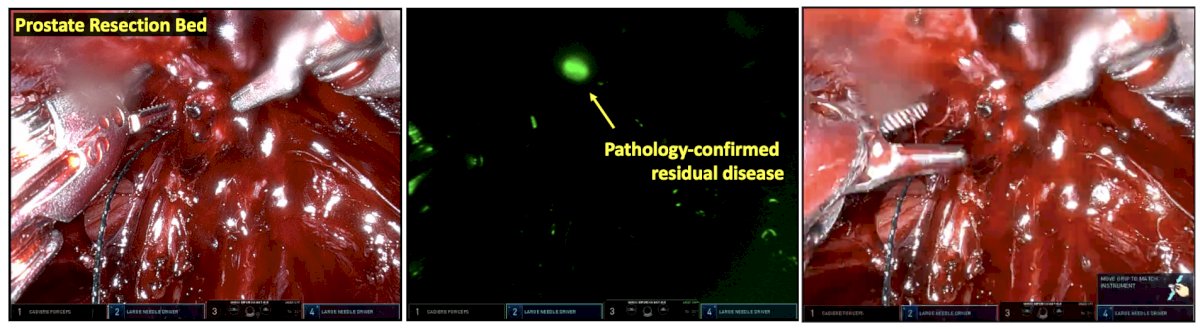
This study also showed that fluorescence imaging integrated into pathology processing steps, and IS-002 fluorescence correlated to prostate cancer regions as outlined on H&E slides by the pathologist:

With regards to when IS-002 will be FDA approved, Intuitive is currently planning a phase 3 pivotal study. The IS-002 clinical development road map is as follows:
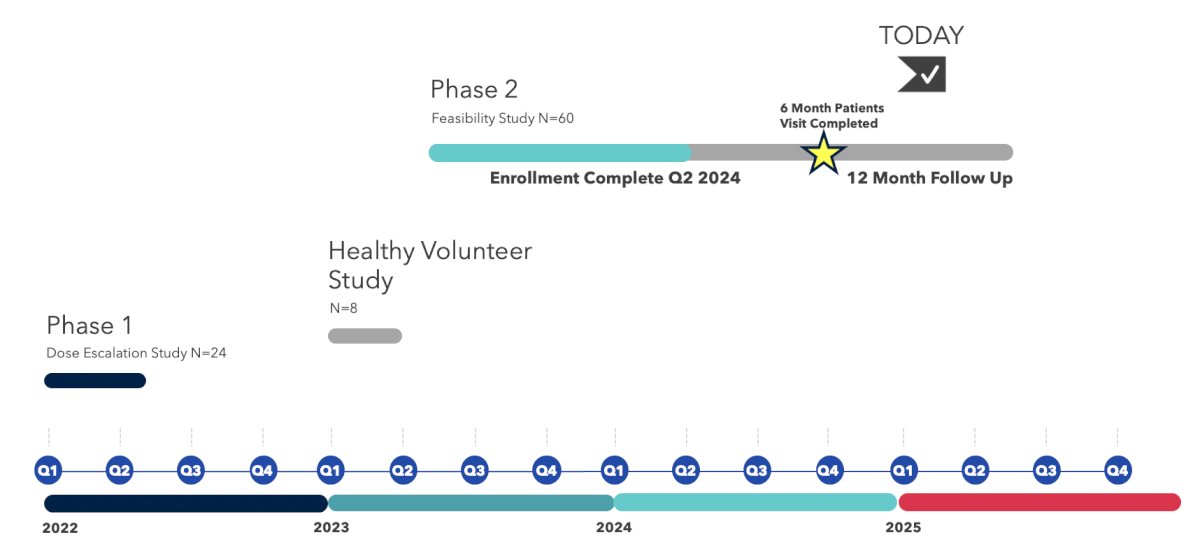
A phase 2 trial is currently ongoing, with the following trial schematic:

Inclusion criteria are as follows:
- Age 18 to 75
- Confirmed adenocarcinoma of the prostate as defined by histopathology
- CAPRA ≥6; Gleason sum score ≥8; or ≥T3 disease on imaging (TRUS and/or MRI); or regional lymphadenopathy suspicious for nodal metastases on imaging
The primary objective of this trial is to show a reduction of positive surgical margins by ‘downgrading’ positive surgical margins. In the following example, IS-002 helps surgeons identify potential positive surgical margins on a prostate specimen and corresponding tumor in the resection bed. Fluorescent tissue in the resection bed is removed until reaching a layer of tumor-negative tissue on frozen section. If final histopathology confirms the deep biopsy is tumor negative, then the corresponding positive surgical margin is downgraded to a negative surgical margin:

In work from Dr. Chu’s group, in the biochemical recurrence setting, they observed that PSMA-PET is more sensitive with 54% patients having positive imaging findings versus 10% in those after conventional imaging, at similar median PSA values of 0.24 versus 0.25 ng/mL, respectively. PSMA PET improved detection of intrapelvic disease, including the prostate bed (23% versus 15%) and pelvic nodes (39% versus 5%). While more findings were observed in the PSMA PET group, the detection of visceral and osseous disease was comparable between the PSMA PET and conventional groups. Extra-pelvic disease (which includes visceral, extra-pelvic and retroperitoneal lymph nodes) was comparable between groups:

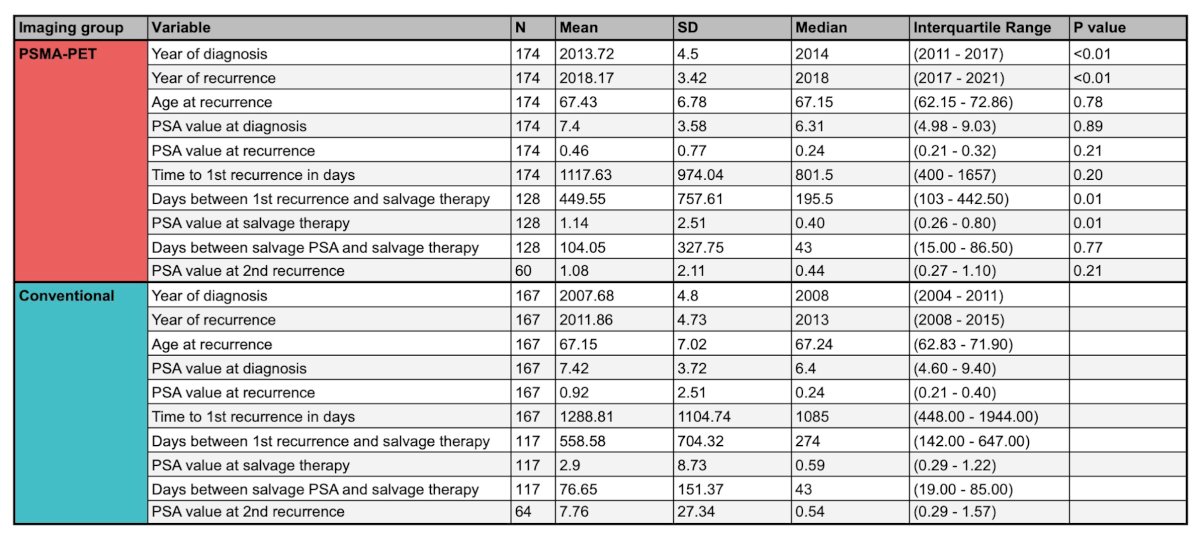
Although imaging modality was not associated with salvage therapy by either unadjusted or multivariate analyses, PSMA PET usage increased over this time period reflecting adoption and expected changes in practice (difference in year of recurrence 2018 versus 2013). Additionally,
PSA value at biochemical recurrence was similar between PSMA PET and conventional imaging groups. However, PSMA PET was also associated with earlier initiation of salvage therapy at lower median PSA of 0.4 versus 0.59 ng/mL, respectively (p = 0.01). This was also reflected in time to treatment in days with PSMA PET group receiving salvage therapy in 195 versus 274 days (p = 0.01) after first biochemical recurrence:
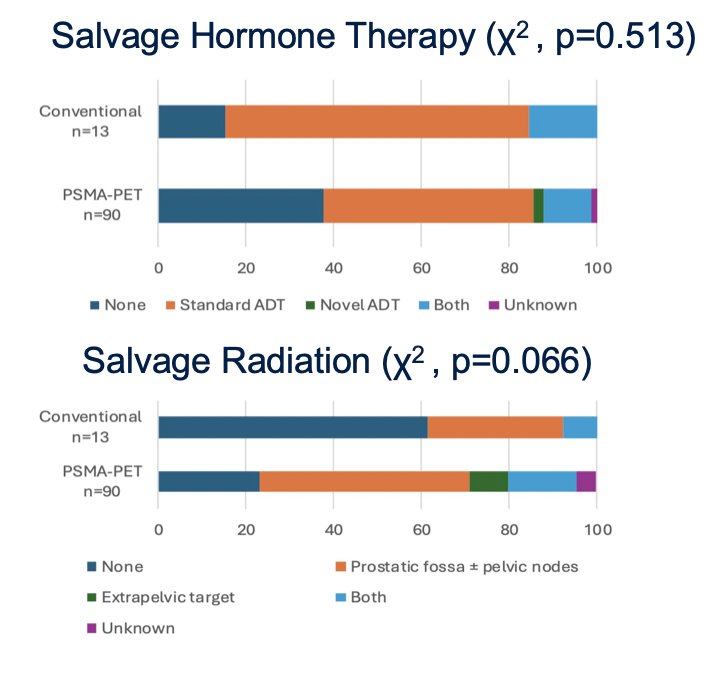
Notably, salvage therapy regimen was altered by positive PSMA PET findings:
The following graph shows incidence of second biochemical recurrence after salvage treatment in all patients (with both positive and negative findings), stratified by imaging group. Despite initiation of salvage therapy at lower median PSA levels in those who received PSMA PET, there was no impact (to date) on rates of second biochemical recurrence on unadjusted survival analyses:
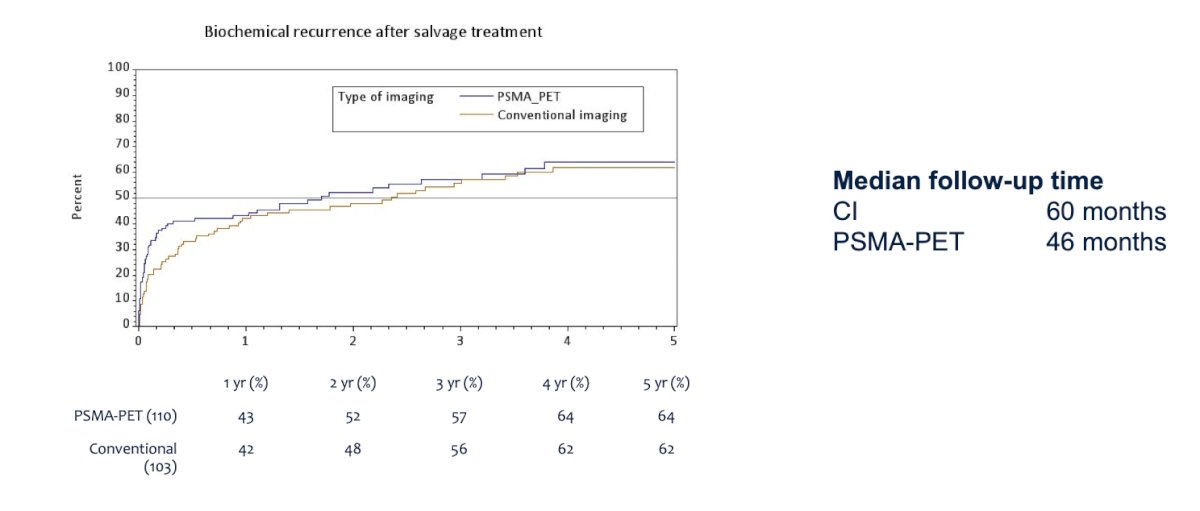
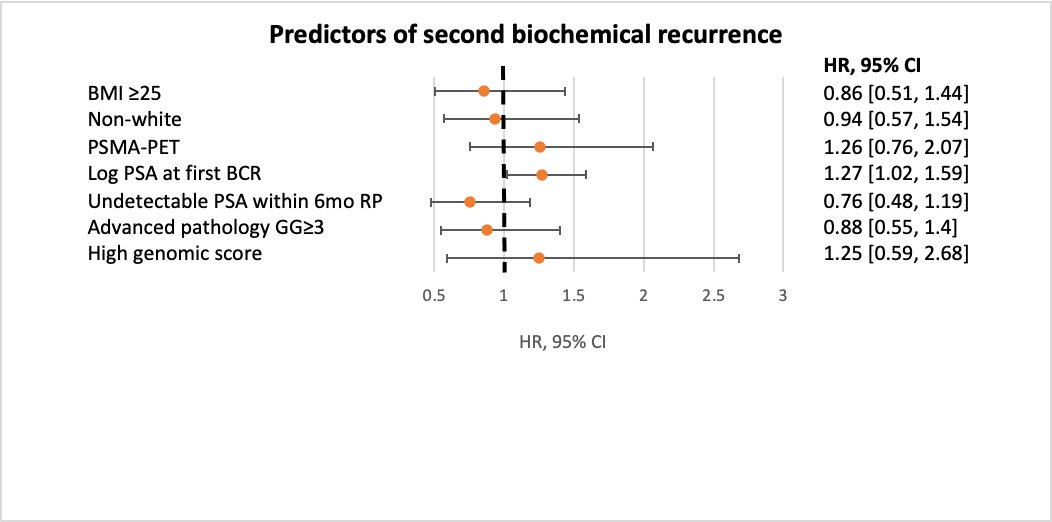
Similarly, imaging modality was not an independent predictor of second biochemical recurrence after salvage therapy, and the only clear predictor of second biochemical recurrence after salvage therapy was PSA at initial recurrence:
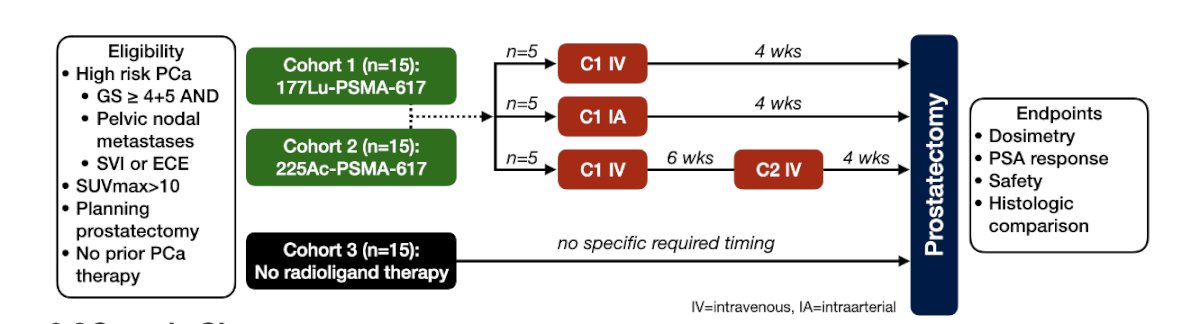
Dr. Chu concluded her presentation by discussing the role of PSMA PET in surgical planning and post-operative management by highlighting the LUTACT trial, a neoadjuvant clinical trial with translational impact:
Presented by: Carissa Chu, MD, University of California, San Francisco, San Francisco, CA
Written by: Zachary Klaassen, MD, MSc – Urologic Oncologist, Associate Professor of Urology, Georgia Cancer Center, Wellstar MCG Health, @zklaassen_md on Twitter during the 2025 PSMA and Beyond Annual Meeting, Los Angeles, CA, Fri, Mar 28 – Sat, Mar 29, 2025.
References:
- Nguyen HG, van den Berg NS, Antaris AL, et al. First-in-human evaluation of a prostate-specific membrane antigen targeted near-infrared fluorescent small molecule for fluorescence-based identification of prostate cancer in patients with high-risk prostate cancer undergoing robotic-assisted prostatectomy. Eur Urol Oncol. 2024 Feb;7(1):63-72.