

(UroToday.com) The 2025 PSMA and Beyond annual meeting featured a PSMA session and a presentation by Dr. Julian Hong discussing who benefits from oligo-metastases directed therapy. Oligometastatic prostate cancer is an intermediate state of cancer spread between localized disease and widespread metastases:
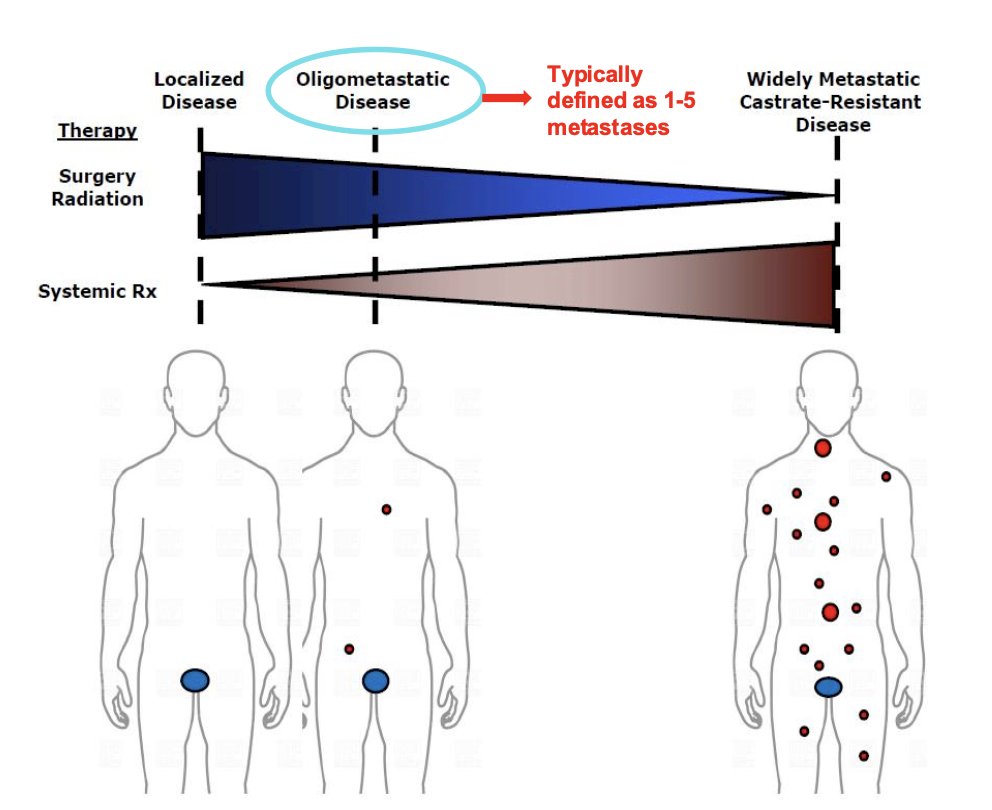
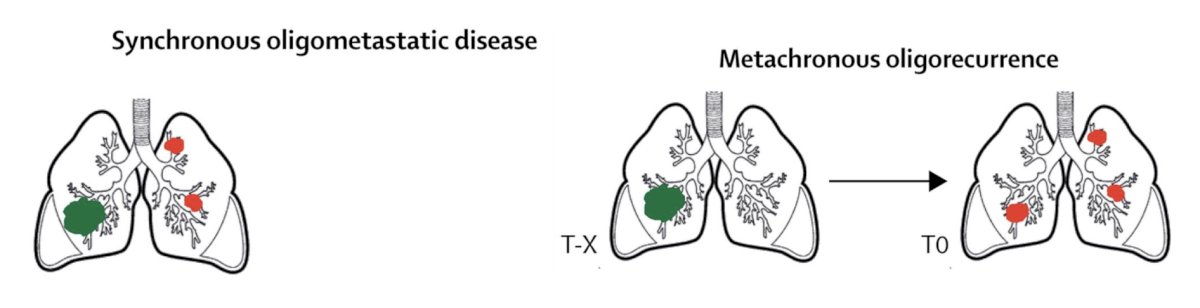
This disease was proposed as a distinct clinical state by Dr. Hellman and Dr. Weichselbaum noting “an attractive consequence of the presence of a clinically significant oligometastatic state is that some patients so affected should be amenable to a curative therapeutic strategy.” Early pooling of studies (breast, kidney, and prostate cancer) showed that among 92 patients with oligometastatic cancer, the three 3 year overall survival rate was 75% (95% CI 66-85%). It is important to distinguish the timing of oligometastasis, specifically synchronous oligometastatic disease or metachronous oligo-recurrence:
In the last several years, we have seen many studies and clinical trials published that have defined oligometastatic disease as either 1-3 or 1-5 lesions:
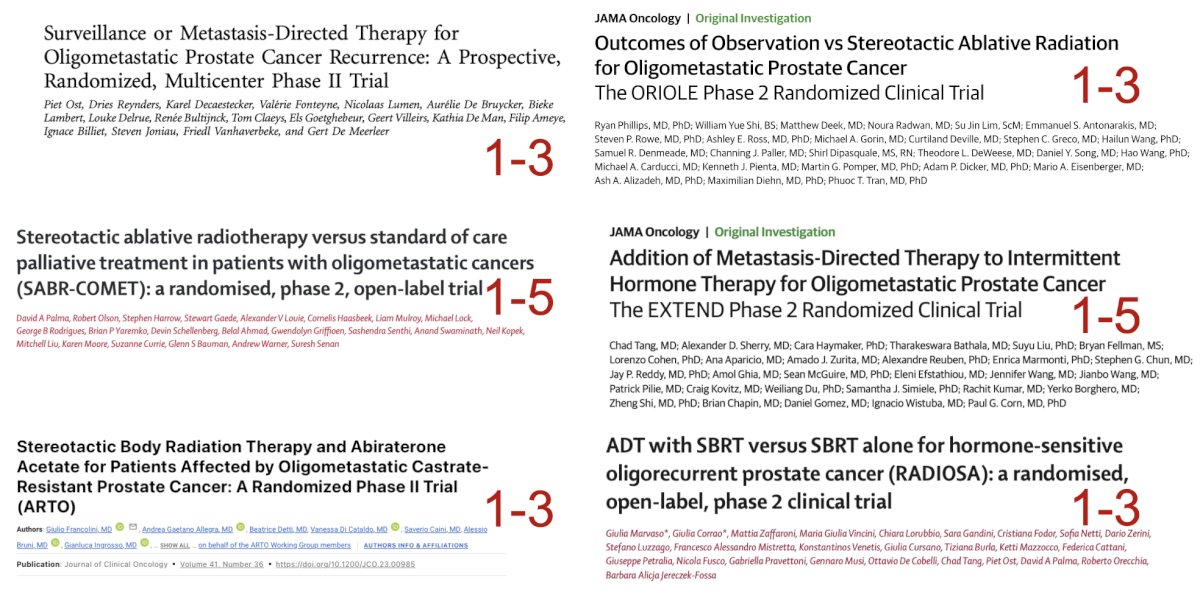
However, there is no consensus; even 4-10 oligometastatic sites may be used as a definition of oligometastatic prostate cancer, as in the SABR-COMET-10 phase 3 trial. So, can we do better?
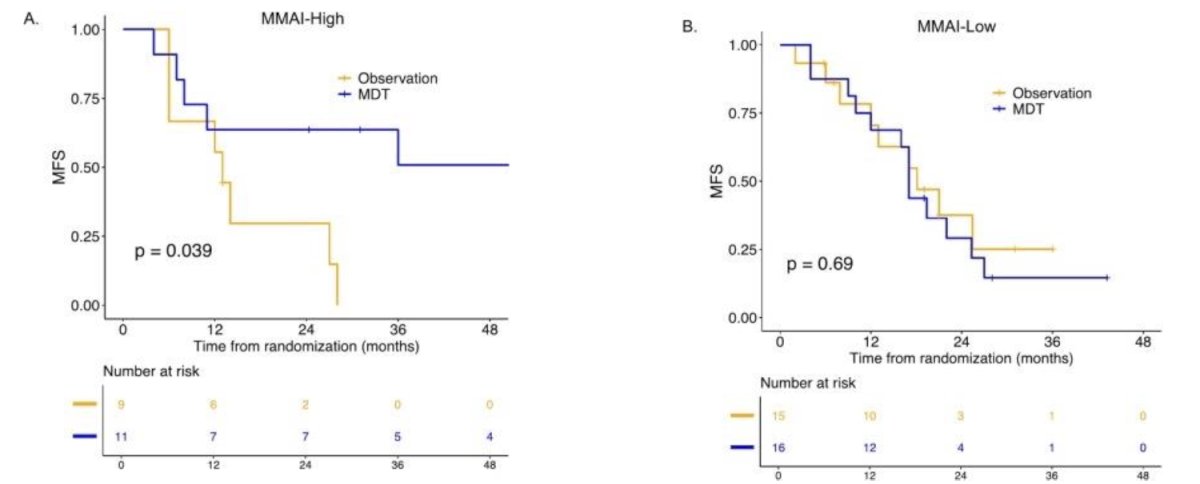
Earlier in 2025, Wang and colleagues1 performed a multicenter retrospective study to assess the prognostic and predictive performance of a multimodal artificial intelligence biomarker (the ArteraAI Prostate Test) in 222 men with oligometastatic castration sensitive prostate cancer, in addition to 51 patients from the STOMP2 and ORIOLE3 phase 2 trials. In the overall cohort, patients with a high ArteraAI Prostate Test score had significantly worse overall survival (HR 6.46, 95 % CI 1.44-28.9; p = 0.01) and shorter time to CRPC (HR 2.07, 95% CI 1.15-3.72; p = 0.015). In the subset of patients randomized in the STOMP and ORIOLE trials, high ArteraAI Prostate Test score corresponded to improved metastasis free survival with metastasis directed therapy (p = 0.039) compared to patients with a low score, with pinteraction = 0.04:
A second way of potentially improving patient selection is the use of PSMA+ extracellular vesicles as a biomarker for stereotactic body radiotherapy in oligorecurrent prostate cancer. Andrews et al.4 assessed plasma samples from 46 patients with oligometastatic castration sensitive prostate cancer on the ORIOLE trial, and 127 patients with oligometastatic castration sensitive prostate cancer on the STOMP trial protocol treated with stereotactic body radiotherapy. In the pooled cohorts, the median biochemical progression free survival was 26.1 and 15.0 months (p = 0.005). The combination of pre-stereotactic body radiotherapy low levels of both PSMA+ extracellular vesicles and PSA was associated with a lower risk of radiographic progression (HR, 0.34, 95% CI, 0.18-0.58; p = 0.0002). In the ORIOLE cohort, which included both a stereotactic body radiotherapy arm and an observation arm, low PSMA+ extracellular vesicles was predictive of benefit from stereotactic body radiotherapy (p = 0.012). Perhaps in the near future, assessment of circulating tumor cells in these oligometastatic castration sensitive prostate cancer patients will also help further clarify who may benefit from treatment.
Dr. Hong concluded his presentation by discussing who benefits from oligo-metastases directed therapy with the following take home points:
- Oligometastatic disease is currently driven primarily by disease burden
- We need to continue generating data in clinical contexts
- Advanced patient selection requires a thorough assessment of disease biology
Presented by: Julian Hong, MD, MS, University of California, San Francisco, San Francisco, CA
Written by: Zachary Klaassen, MD, MSc – Urologic Oncologist, Associate Professor of Urology, Georgia Cancer Center, Wellstar MCG Health, @zklaassen_md on Twitter during the 2025 PSMA and Beyond Annual Meeting, Los Angeles, CA, Fri, Mar 28 – Sat, Mar 29, 2025.
References:
- Wang JH, Deek MP, Mendes AA, et al. Validation of an artificial intelligence-based prognostic biomarker in patients with oligometastatic castration-sensitive prostate cancer. Radiother Oncol. 2025 Jan:202:110618.
- Ost P, Reynders D, Decaestecker K, et al. Surveillance of metastasis-directed therapy for oligometastatic cancer recurrence: A prospective, randomized, multicenter phase II trial. J Clin Oncol. 2018 Feb 10;36(5):446-453.
- Phillips R, Shi WY, Deek M, et al. Outcomes of Observation vs Stereotactic Ablative Radiation for Oligometastatic Prostate Cancer: The ORIOLE Phase 2 Randomized Clinical Trial. JAMA Oncol 2020 Mar 26;6(5):650-659.
- Andrews JR, Kim Y, Horjeti E, et al. PSMA+ Extracellular Vesicles are a Biomarker for SABR in Oligorecurrent Prostate Cancer: Analysis from the STOMP-like and ORIOLE trial cohorts. Clin Cancer Res. 2025 Mar 17;31(6):1142-1149.