

(UroToday.com) The 2025 PSMA and Beyond annual meeting featured a LuPSMA therapy session and a presentation by Dr. Thomas Hope discussing whether SPECT or PSMA PET is the best way to evaluate response. Dr. Hope starting by emphasizing the EANM/SNMMI guidelines that state the “optimal modality for imaging-based restaging is PSMA PET/CT. Where PSMA-PET is not available, PSMA SPECT or scintigraphy is possible.”
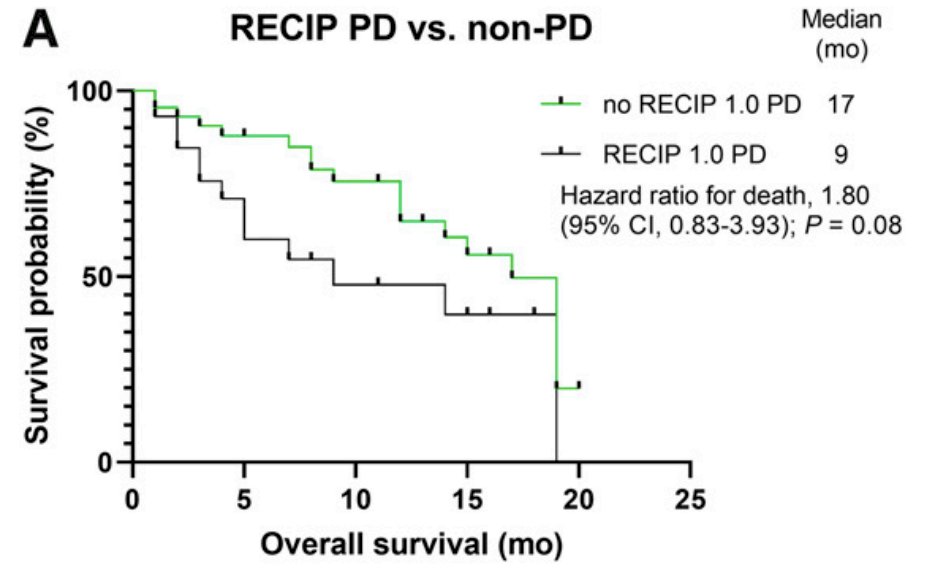
In 2024, Hartrampf et al.1 evaluated the prognostic performance of RECIP 1.0 for overall survival in patients undergoing radioligand therapy imaged with [18F]PSMA-1007 PET/CT and compared the prognostic performance with the PSA-based response assessment. Among 73 patients, PSMA PET after cycle 2 correlated with outcomes:
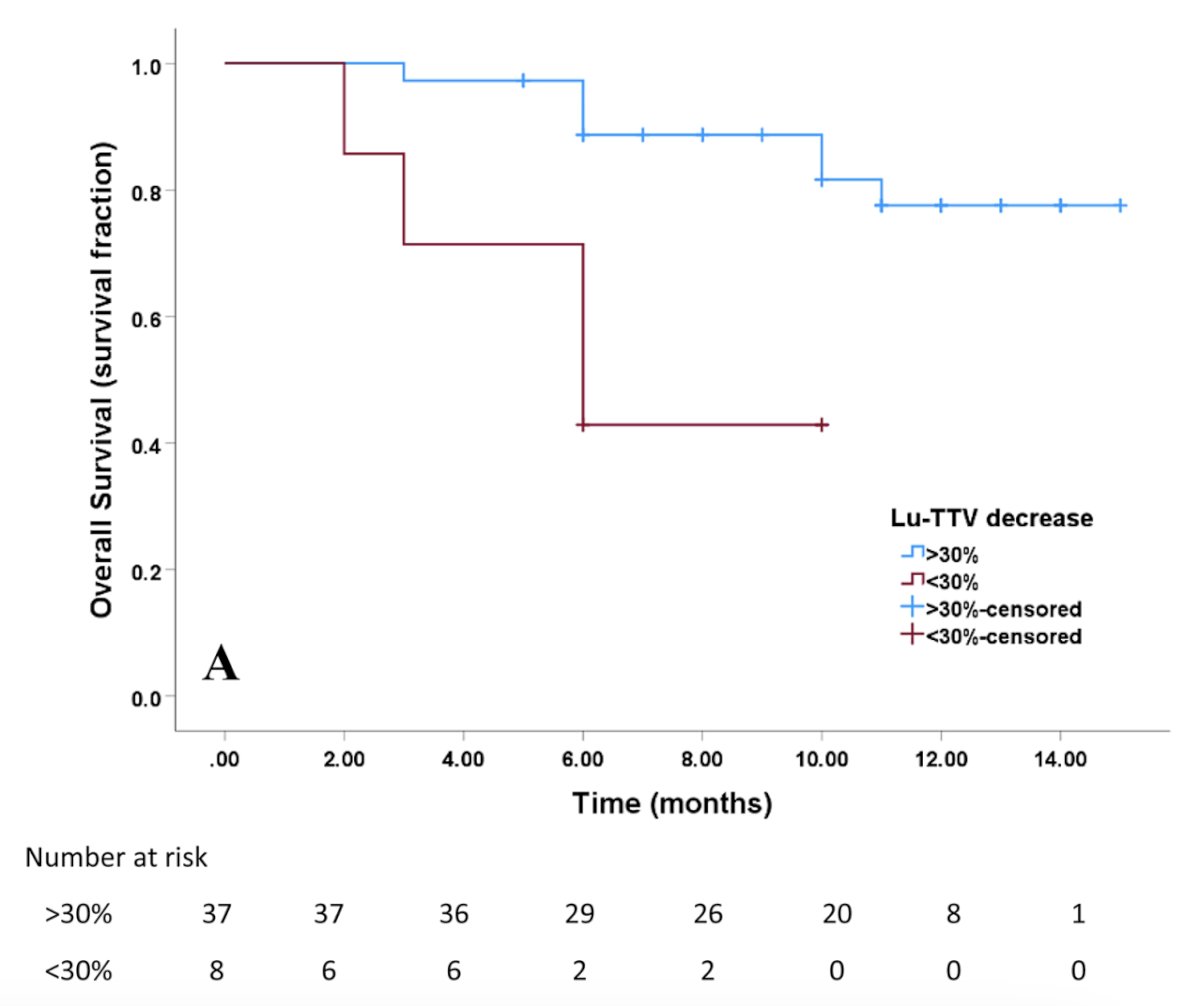
Importantly, SPECT post-treatment is also associated with survival outcomes. Song and colleagues2 examined the clinical utility of a next-generation SPECT/CT system in same-day post-infusion assessment and early treatment response to 177Lu-PSMA-617. Among 56 patients who underwent at least 2 post-therapy SPECT/CTs, at a median of 10-months follow-up, the median overall survival was not reached. Quantitative analysis of SPECT/CT images showed that 37 patients (66%) had > 30% reduction in Lutetium-total tumor volume, associated with significantly improved overall survival (median not reached versus 6 months, p = 0.008):
Recent work from Dr. Hope’s group assessed the impact of posttreatment SPECT/CT on patient management during 177Lu-PSMA-617 radiopharmaceutical therapy.3 Among 122 consecutive patients examined, 42%-56% exhibited stable disease, whereas 19%-39% of patients exhibited response on visual assessment across treatment cycles. In total, 49% of patients experienced changes in management, of which 57% were due to progression, 40% were due to response, and 3% were due to miscellaneous changes. Changes due to disease progression were observed mostly after cycles 2 and 4, highlighting the importance of frequent, reliable post-treatment imaging:

Dr. Hope notes that the timing of baseline PSMA PET is critical, showing the following example of a completely different 3.5 month imaging after cycle 1 of radioligand therapy:

Although post-treatment SPECT detects fewer lesions compared to PSMA PET, there is much less of an issue with timing post-treatment imaging:

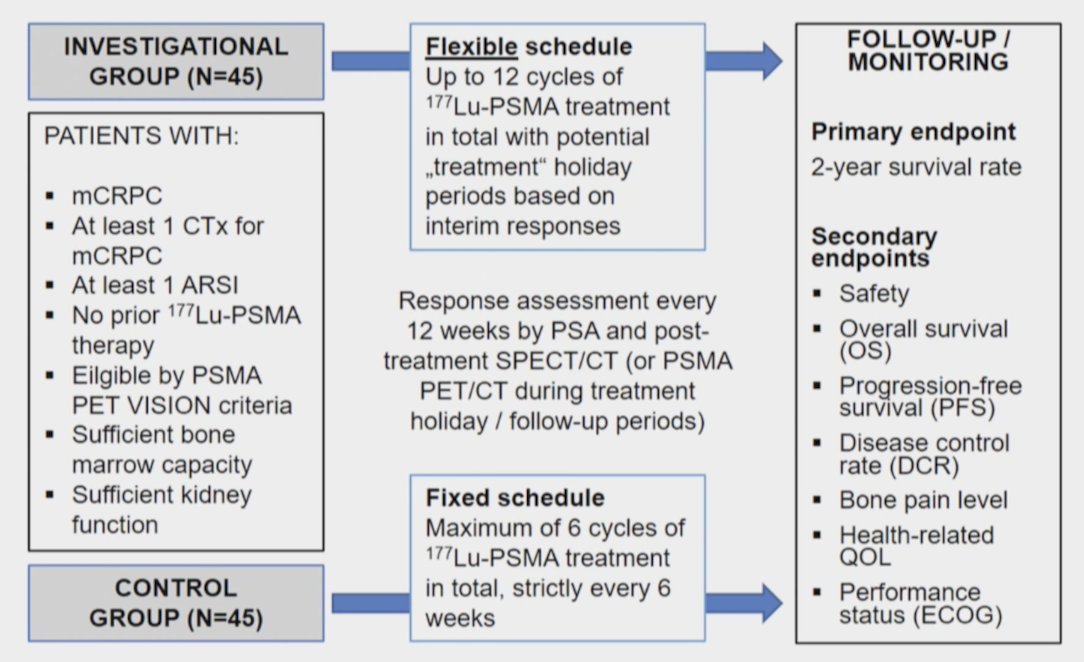
This concept of timing of imaging to assess treatment response will form the basis of Dr. Calais’ FLEX MRT clinical trial:
Dr. Hope concluded his presentation by discussing whether SPECT or PSMA PET is the best way to evaluate response with the following take home points:
- SPECT/CT should be used in place of PSMA PET/CT for response evaluation
- It can be performed after each cycle
- It is cheap, with no additional injection
- It gives you the same information as the PSMA PET
- It removes issues with timing of baseline PSMA PET
- There are several important caveats:
- Clinical practice is very different than clinical trials
- You cannot use the post-treatment SPECT for response assessment in clinical trials, as timing of imaging studies are likely to be different between treatment arms
- We should use post treatment SPECT to follow these patients

Presented by: Thomas Hope, MD, University of California, San Francisco, San Francisco, CA
Written by: Zachary Klaassen, MD, MSc – Urologic Oncologist, Associate Professor of Urology, Georgia Cancer Center, Wellstar MCG Health, @zklaassen_md on Twitter during the 2025 PSMA and Beyond Annual Meeting, Los Angeles, CA, Fri, Mar 28 – Sat, Mar 29, 2025.
References:
- Hartrampf PE, Huttmann T, Seitz AK, et al. Prognostic performance of RECIP 1.0 based on [18F]PSMA-1007 PET in Prostate Cancer Patients Treated with [177Lu]Lu-PSMA I&T. J Nucl Med. 2024 Apr 1;65(4):560-565.
- Song H, Leonio MI, Ferri V, et al. Same-day post-therapy imaging with a new generation whole-body digital SPECT/CT in assessing treatment response to [177Lu]Lu-PSMA-617 in metastatic castration-resistant prostate cancer. Eur J Nucl Med Mol Imaging. 2024 Jul;51(9):2784-2793.
- Yadav S, Lowery B, Tuchayi AM, et al. Impact of posttreatment SPECT/CT on patient management during 177Lu-PSMA-617 radiopharmaceutical therapy. J Nucl Med. 2024 Sep 3;65(9):1395-1401.