(UroToday.com) The 2025 GU Oncology Early Career Thought Leaders Conference featured a building successful teams in medicine session and a presentation by Dr. Sherita King discussing how to build your network outside of oncology. As a urologist specializing in sexual medicine and incontinence, Dr. King highlighted several aspects of her career, partnering with her urologic oncology colleagues in order to develop a survivorship care program for improving post-cancer treatment care. At a high level, there are several reasons to network beyond oncology, including the following:
- Expanding patient care: by addressing sexual dysfunction, incontinence, mental health, and pelvic floor rehabilitation needs
- Adopting a multidisciplinary approach, which enhances patient outcomes through collaboration
- Professional growth, which strengthens referral pathways and research collaborations
The key specialties to network with are many, including (i) urologic oncologists/radiation oncologists/medical oncologists (manage the cancer), (ii) sexual medicine specialists (post-cancer sexual dysfunction and incontinence treatment), (iii) reconstruction specialists, (iv) endocrinologists (ie. management of hypogonadism), (v) mental health providers (address emotional, psychological, and intimacy concerns), (vi) pelvic floor physical therapists (improving mobility and pelvic health post-treatment), (vii) social workers and patient navigators (help with financial issues, support groups, and survivorship needs), and (viii) primary care providers (long-term survivorship care).
Finding local experts may be challenging, and Dr. King recommends using professional directories (SMSNA, AASECT, APTA), institutional networking (reaching out to hospital departments), and using conferences and CME events (attending multidisciplinary survivorship-focused events). When connecting with local experts, formal introductions can lead to collaboration, and these experts may be invited to educational talks in addition to participating in quarterly survivorship meetings. Networking outside of oncology helps patients in several ways, such as improving quality of life, enhancing the patient journey, and facilitation of research and education: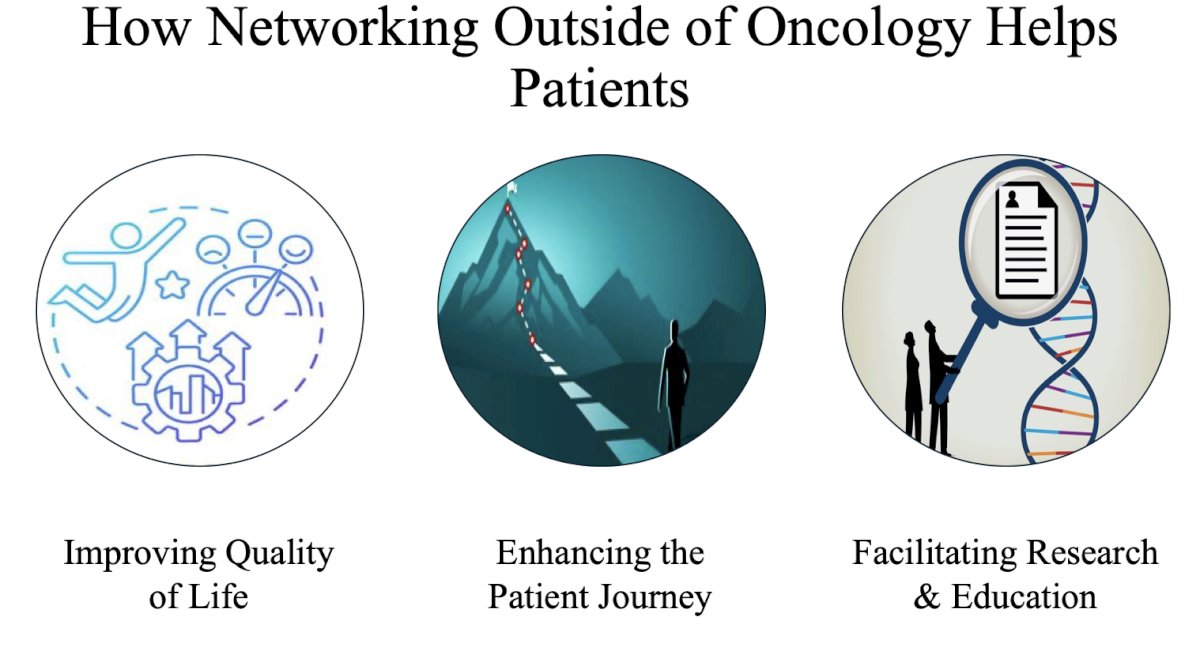
Dr. King also highlighted a study assessing what patients and partners want in interventions that support sexual recovery after prostate cancer treatment.1 Mehta et al. identified 5 related themes that they considered important to sexual recovery:
- Pretreatment preparation for sexual side effects, rehabilitation strategies, emotional reaction to the side-effects, and realistic expectations of outcomes
- Improved communication about sexual concerns within couples
- Strategies for promoting sexual intimacy beyond penetrative intercourse
- Attentiveness to partners' needs
- Access to peer support
Dr. King also highlighted several of the patient remarks noted in this study:
- “My doctor was great about a lot of information, but that particular piece [around sexual side effects] was not really addressed.”
- “I wasn’t quite so sure about what happened, you know if I cure the cancer, what about the sexual aspect…with that stated I think full disclosure up front and working on removing not just the cancer but helping the patient get over the fact that…they have another battle to fight—that is, getting back online with your sexual performance”
The reason this is important is because of potential evolving issues that these side effects may lead to depression and even suicidal ideation. Work from Dr. King’s group assessed the implications of screening for depression, erectile dysfunction, and suicidal ideation, providing the following screening algorithm for patients with prostate cancer that she uses in her clinic:2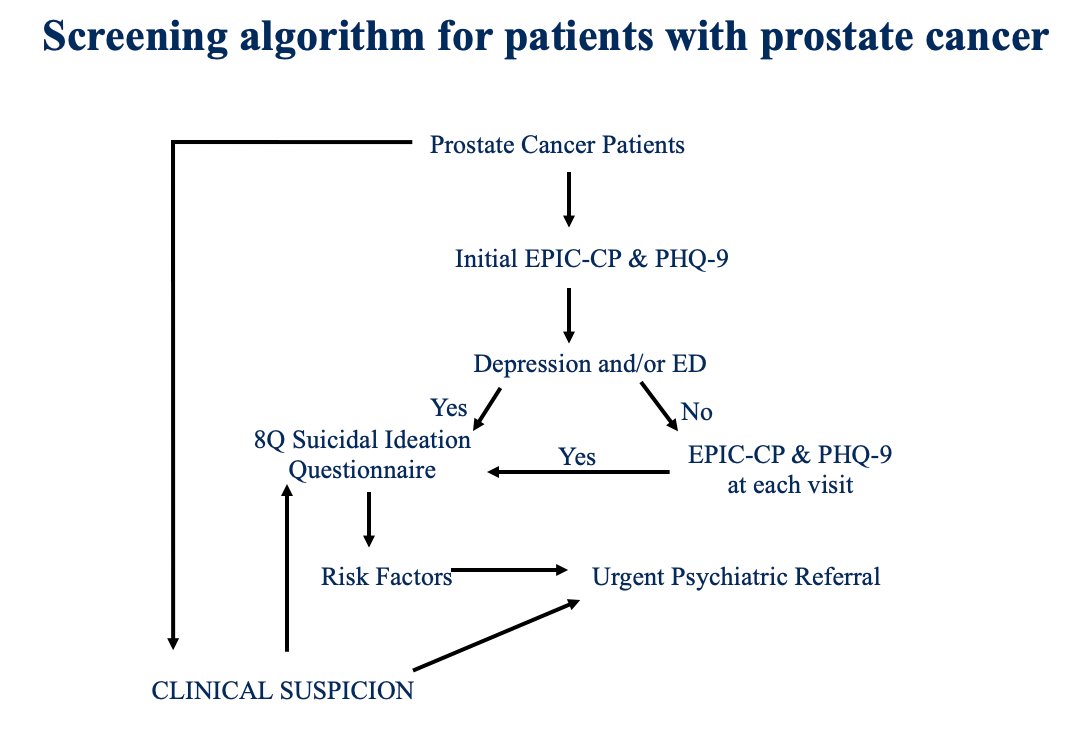
Ultimately, all aspects of prostate cancer treatment lead to side effects (erectile dysfunction, stress urinary incontinence, urge incontinence, hypogonadism, etc) and require a multi-disciplinary approach, which Dr. King has built at her center: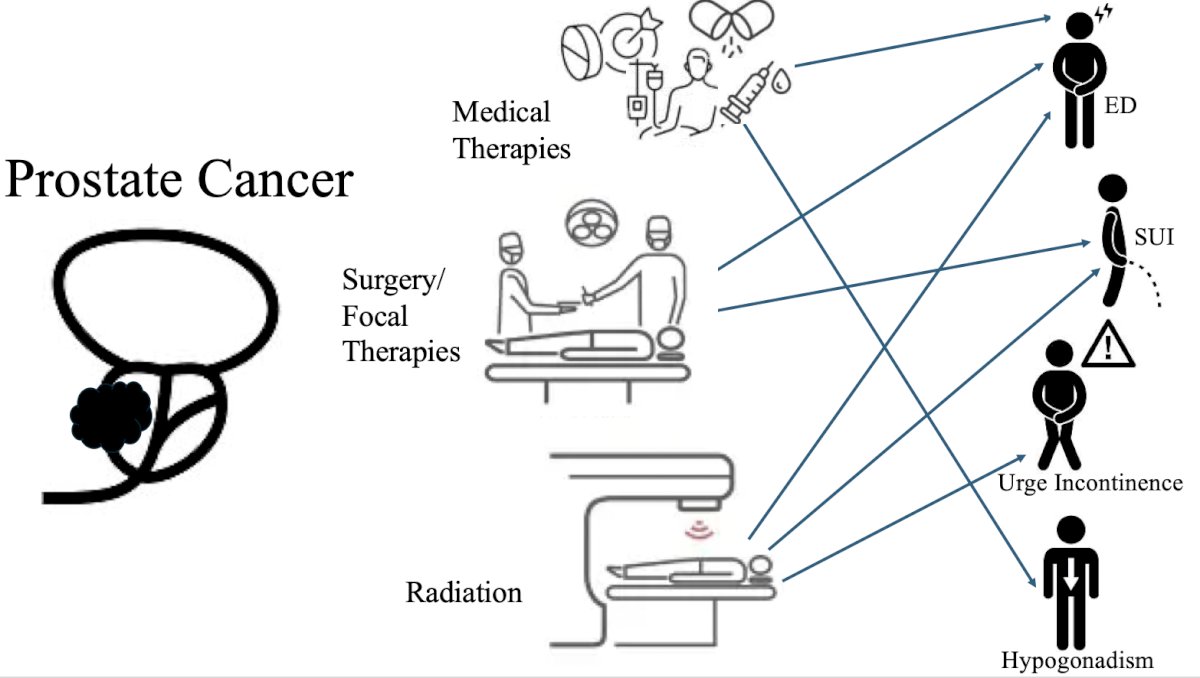
Dr. King concluded her presentation by emphasizing that bladder cancer patients can also benefit from a referral to a sexual medicine/incontinence specialist. In her practice, she treats these patients for erectile dysfunction and stress urinary incontinence (for those patients with a neobladder urinary diversion).
Presented by: Sherita King, MD, Wellstar MCG Health, Augusta, GA
Written by: Zachary Klaassen, MD, MSc – Urologic Oncologist, Associate Professor of Urology, Georgia Cancer Center, Wellstar MCG Health, @zklaassen_md on Twitter during the 2025 GU Oncology Early Career Thought Leaders Conference, Philadelphia, PA, Thurs, Mar 6 – Sat, Mar 8, 2025.
References:
- Mehta A, Pollack CE, Gillespie TW, et al. What Patients and Partners Want in Interventions that Support Sexual Recovery after Prostate Cancer Treatment: An Exploratory Convergent Mixed Methods Study. Sex Med. 2019 Jun;7(2):184-191.
- Klaassen Z, Arora K, Wilson SN, et al. Decreasing suicide risk among patients with prostate cancer: Implications for depression, erectile dysfunction, and suicidal ideation. Urol Oncol. 2018;36(2):60-66.