

(UroToday.com) In a podium presentation at the 2022 American Urologic Association Annual Meeting held in New Orleans and virtually, Dr. de Barros presented preliminary data regarding the feasibility of robotic-assisted, Prostate-Specific Membrane Antigen (PSMA)-targeted radio-guided salvage surgery. The use of intraoperative PSMA-targeted radio guidance has been shown to be valuable for the detection of recurrent prostate cancer lesions during open salvage surgery.
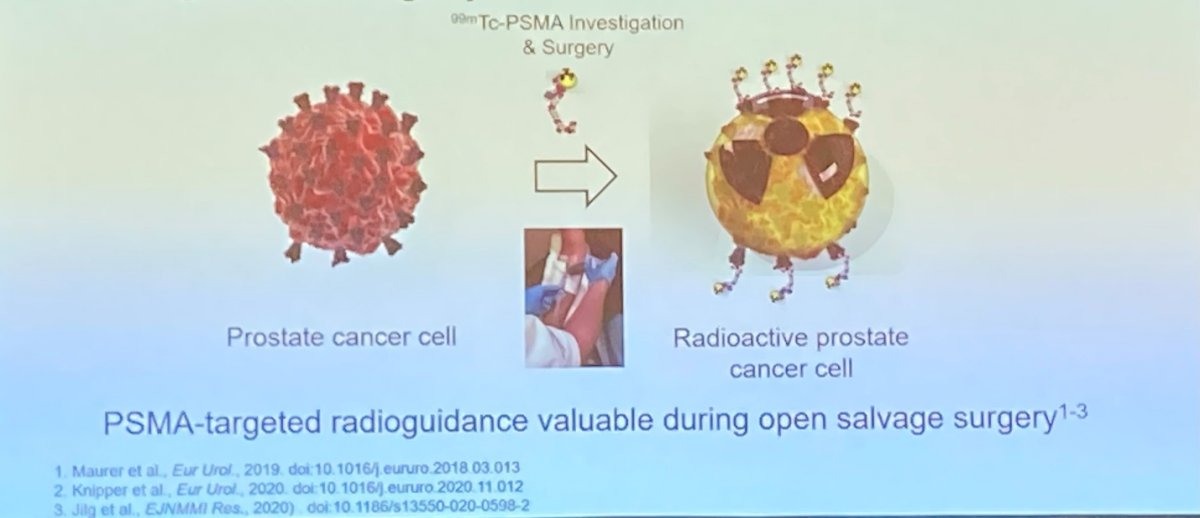
However, much prostate cancer surgery is now performed robotically. Thus, there is an increasing need to make PSMA-radioguided surgery (RGS) robot compliant. In this presentation, Dr. de Barros presented results of a miniaturized DROP-IN gamma probe to facilitate translation of PSMA-targeted radioguidance to salvage robotic surgery in men with recurrent prostate cancer.
The authors performed this prospective feasibility study (NCT03857113) among twenty patients with biochemical recurrence (PSA ≥ 0.2 ng/ml) after radical prostatectomy or radiotherapy. Patients could have up to 3 pelvic prostate cancer recurrences (either nodal or local) on PSMA positron emission tomography (PET)/CT.
Patients received an intravenous injection of 99mTc-PSMA I&S (median activity 541 MBq, IQR 526-578) one day prior to surgery followed by scintigraphy as a control for tracer injection and distribution. Robot-assisted PSMA-RGS was performed using a tethered gamma probe 19-23 hours post-injection.
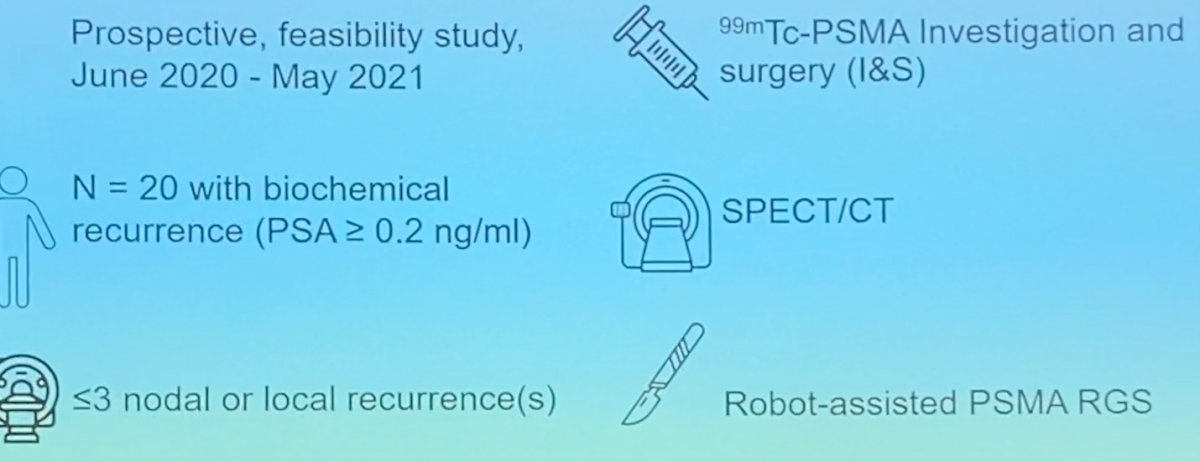
The authors sought to assess the primary endpoint of the feasibility of PSMA-RGS in a robotic setting. Secondarily, the authors performed a comparison of the radioactive status (i.e., positive or negative) of the resected specimens and final histopathology results, the frequency of >50% prostate-specific antigen (PSA) reduction, complete biochemical response (cBR; PSA <0.2 ng/ml) 6 weeks postoperatively, and complications according to Clavien-Dindo 30 days postoperatively.
At the time of surgery, the median age of included patients was 68 years (IQR 66-72) and median PSA was 1.02 ng/ml (IQR 0.46-2.43). Using the DROP-IN probe, 19 out of 21 (90%) PSMA PET-avid lesions could be resected robotically with a median surgical duration of 128 min (IQR 103-157). The signal to background noise ratio was favourable in both in-vivo and ex-vivo assessment.
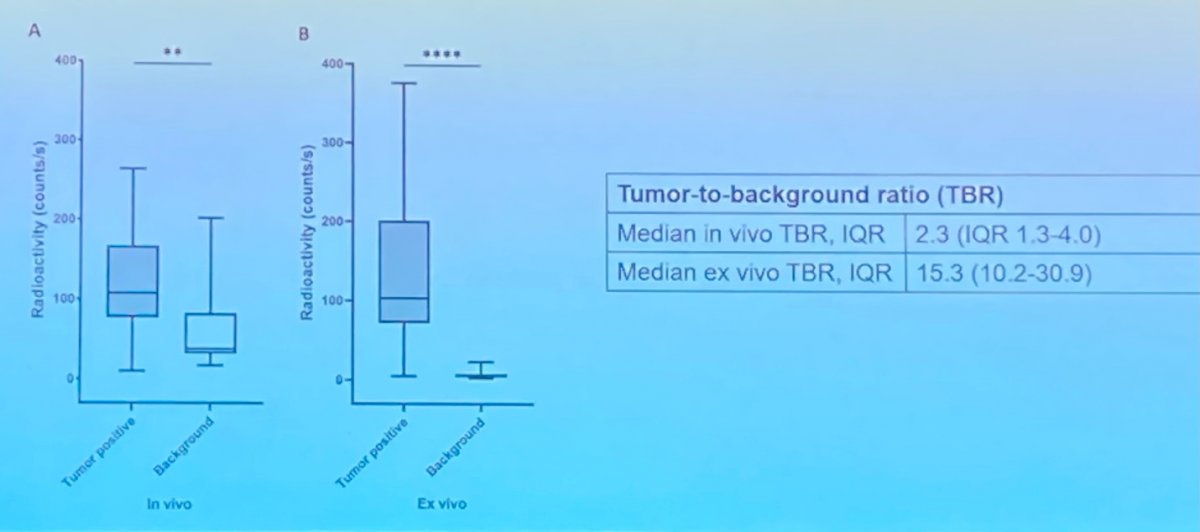
All benign specimens were not radioactive though there were 3 false negative results, though each of these had <2.6mm of tumor. On a per-lesion basis, the overall diagnostic sensitivity and specificity of robot-assisted PSMA-RGS was 86% and 100%, respectively. A PSA reduction of 50% or greater was seen in 12 out of 18 (67%) patients and complete biochemical response (PSA <0.2 ng/mL) was seen in 4 out of 18 (22%) patients. No Clavien-Dindo grade ≥2 complications occurred related to this portion of the procedure though there was one Grade 5 event.
The authors concluded that the DROP-IN probe allows for robot-assisted PSMA-RGS.
Presented by: Hilda De Barros, MD, MSC – Netherlands Cancer Institute