|
|
|
|
|
|
|
PEER-TO-PEER CLINICAL CONVERSATION
|
|
|
|
|
|
|
Advancing Microhematuria Evaluation: The Impact of Urinary Biomarkers and Updated Guidelines
|
|
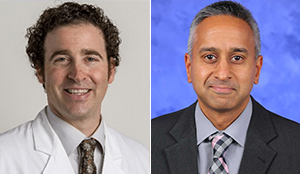
Jay Raman, MD, FACS & Yair Lotan, MD In this discussion Zachary Klaassen is joined by Jay Raman and Yair Lotan to explore the latest updates in the evaluation of microhematuria. They discuss the unmet need in risk stratifying patients, the evolution of guidelines from 2020 to 2025, and the role of urinary biomarkers in optimizing patient care.
|
|
|
|
|
|
|
|
|
|
|
|
|
|
Highlights from the 2025 American Urological Association Annual Meeting |
|
|
|
|
| Clinical Utility of a Urinary Biomarker (Cxbladder Triage) Compared to Standard of Care for Microscopic Hematuria Evaluations in a Large Independent Delivery Network
|
| Christopher Filson, MD
|
| Christopher Filson presented a study evaluating the clinical utility of CxBladder Triage, a urinary biomarker test, compared to standard care for microscopic hematuria evaluations. The test significantly reduced unnecessary cystoscopies and CT urography in low-risk patients while increasing their use in high-risk cases, with cancer detection rates similar to the standard approach. The study highlights the potential to decrease procedural burden while maintaining diagnostic accuracy.
|
|
|
|
|
|
| Whitmore Lecture: The Evolving Role of Surgery for Bladder Cancer - The Surgeon can Make a Difference
|
| Bernard Bochner, MD, FACS
|
| Bernard Bochner's Whitmore Lecture at AUA 2025 highlighted the evolving role of surgery in bladder cancer treatment, emphasizing the significant advances in radical cystectomy outcomes over the past decades. He discussed the importance of neoadjuvant chemotherapy, improved surgical techniques, and the growing potential for bladder preservation with systemic therapies. Dr. Bochner concluded by stressing the critical role of quality surgical care and patient selection in achieving optimal outcomes.
|
|
|
|
|
|
| Case Discussions in NMIBC: Sequencing Therapy after BCG Failures
|
| Sima Porten MD, MPH, Stephen Boorjian, MD, Vikram Narayan MD, and Jeffrey Holzbeierlein MD, FACS
|
| Experts discussed sequencing therapy after BCG failures in NMIBC. In the first case, a patient with high-grade Ta and carcinoma in situ who failed initial BCG induction was considered for a second induction and maintenance therapy, with radical cystectomy as a definitive option. The second case focused on a patient with multifocal high-grade Ta disease, where the panel discussed various treatments, including pembrolizumab, nadofaragene firadenovec, and gemcitabine-docetaxel (Gem/Doce), with an emphasis on bladder preservation and the role of biomarkers in treatment decisions.
|
|
|
|
|
|
| Efficacy and Safety of Padeliporfin Vascular Targeted Photodynamic Therapy for Treatment of Low-Grade Upper Tract Urothelial Cancer: ENLIGHTED Phase 3 Study
|
| Vitaly Margulis, MD
|
| Vitaly Margulis presented preliminary results from the phase 3 ENLIGHTED study, showing that padeliporfin vascular targeted photodynamic therapy achieved a 78.8% complete response rate in patients with low-grade upper tract urothelial cancer, with manageable side effects. The treatment offers a promising, organ-sparing alternative, and enrollment in the trial is ongoing to support potential approval of this new therapy.
|
|
|
|
|
|
|

|
|
|
|
| Long-Term Outcomes of Treatment of Recurrent or New-Onset Low-Grade UTUC with UGN-101, a Mitomycin Reverse Thermal Gel
|
| Brian Hu, MD
|
| Brian Hu presented long-term follow-up data showing that patients with low-grade upper tract urothelial carcinoma who achieved a complete response with UGN-101 (mitomycin reverse thermal gel) experienced durable outcomes, with a median response duration of 47.8 months. Nearly half of the patients remained recurrence-free at a median follow-up of over four years, regardless of whether the cancer was new-onset or recurrent.
|
|
|
|
|
|
| Phase II Study of Tislelizumab as Neoadjuvant Treatment for Cisplatin-Ineligible High-Risk Upper Tract Urothelial Carcinoma
|
| Jiwei Huang, MD
|
| Jiwei Huang presented results from a phase II trial showing that neoadjuvant tislelizumab achieved a 20% pathological complete response rate and 45% downstaging to ≤pT1 in cisplatin-ineligible patients with high-risk upper tract urothelial carcinoma, with manageable toxicity. Exploratory analyses suggested that MRI ADC entropy and immune microenvironment markers like PD-L1+ macrophages may predict response to therapy.
|
|
|
|
|
|
|
|
|
|
|