|
|
|
|
|
|
|
PEER-TO-PEER CLINICAL CONVERSATIONS |
|
|
|
|
|
| Cost-Effectiveness of 89Zr-DFO-Girentuximab PET Scan for Small Renal Mass Diagnosis |
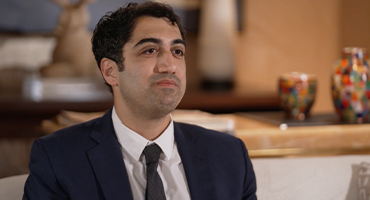
Pratik Kanabur, MD
Zachary Klaassen interviews Pratik Kanabur about a presentation on the cost-effectiveness of zirconium-girentuximab PET imaging for small renal masses. |
|
|
|
|
|
|
|
|

|
|
| Advancing Imaging Techniques for Indeterminate Renal Mass Diagnosis and Clinical Decision-Making |
| Sam Chang, MD, MBA |
| Zach Klaassen and Sam Chang discuss the ZIRCON trial, which highlights a novel PET-CT imaging modality targeting carbonic anhydrase IX (CAIX) for diagnosing small renal masses, particularly clear cell renal cell carcinoma. |
|
|
|
|
|
|
|
|
|

|
|
| AI in Renal Mass Classification: Current Challenges and Future Potential |
| Nicholas Kavoussi |
| Zach Klaassen and Sam Chang discuss the ZIRCON trial, which highlights a novel PET-CT imaging modality targeting carbonic anhydrase IX (CAIX) for diagnosing small renal masses, particularly clear cell renal cell carcinoma.
|
|
|
|
|
|
|
|
|
|
|
|
| Controversies in Initial Staging for Renal Cell Cancer: Evaluation with Molecular Imaging Is the Way to Go |
| Peter Mulders, MD, PhD |
| Professor Peter Mulders presented findings from the ZIRCON trial, which showed that molecular imaging using 89Zr-DFO-girentuximab PET/CT effectively detects clear cell RCC with high sensitivity (85.5%) and specificity (87%). This CAIX-targeted tracer offers a promising non-invasive tool for initial RCC staging, outperforming conventional imaging and potentially guiding treatment decisions, particularly in small or indeterminate renal masses. |
|
|
|
|
|
| A Fully Automated Artificial Intelligence-Based Approach to Predict Renal Function after Radical or Partial Nephrectomy - Beyond the Abstract |
| Kieran Lewis & Steven Campbell, MD, PhD |
| This study introduces a fully automated AI-based method using deep learning (nnU-Net) to predict new-baseline GFR (NB-GFR) after partial or radical nephrectomy, aiming to guide surgical decisions for RCC patients. The AI model accurately estimates split renal function from preoperative CT scans, matching the performance of traditional models while eliminating the need for manual input. This approach could enhance clinical efficiency and objectivity, though further validation in real-world settings is needed. |
|
|
|
|
|
|

|
|
|
|
| Cost-Effectiveness Analysis of 89Zr-Girentuximab PET—CT (TLX250) to Guide Management of Small Renal Masses |
| Pratik Kanabur, MD |
| Pratik Kanabur presented a cost-effectiveness analysis showing that TLX250 (89Zr-girentuximab PET-CT) is a valuable strategy for managing small renal masses. Using TLX250 followed by biopsy for negative scans offered the best balance—minimizing overtreatment of benign lesions and risk of missing malignancies, while proving more cost-effective than empiric surgery or biopsy alone. TLX250 alone also emerged as the most cost-effective option across a wide range of scenarios. |
|
|
|
|
|
A Urine DNA Methylation Assay for Early Detection of Renal Cancer - Beyond the Abstract
|
| Jian-Bing Fan, PhD |
| The Renal Cancer Early Detector (RED) is a urine-based DNA methylation assay designed to improve early detection of renal cell carcinoma (RCC), particularly small tumors often missed by ultrasound. Validated in large multicenter studies, RED demonstrated high sensitivity (up to 89.5% for tumors <2 cm) and specificity, with additional prognostic value based on methylation risk scores. |
|
|
|
|
|
| Debate – Renal Biopsy for Suspected Renal Cell Carcinoma |
| Anders Kjellman, MD, PhD, and Charles-Karim Bensalah, MD, PhD |
| Kjellman and Bensalah debated the value of renal mass biopsy (RMB) for small renal tumors. Dr. Kjellman supported RMB, citing its accuracy, safety, cost-effectiveness, and potential to reduce overtreatment of benign masses, while Dr. Bensalah argued against routine use due to non-diagnostic rates, possible complications, and the effectiveness and low morbidity of partial nephrectomy regardless of biopsy results. The debate highlighted the balance between avoiding overtreatment and minimizing unnecessary procedures in managing small renal masses. |
|
|
|
|
|
|
|
|
|
|