

(UroToday.com) The 2026 European Association of Urology (EAU) annual meeting featured an advancement in metastatic castration resistant prostate cancer (mCRPC) therapy session and a presentation by Dr. Naoki Fujita discussing an external validation of a prognostic risk model for overall survival after radium-223 treatment in mCRPC.
Dr. Fujita’s previous study, conducted in Japan and Taiwan, developed a risk model for poor overall survival following radium-223 treatment in patients with mCRPC. This model incorporated three prognostic factors: extent of disease, incomplete radium-223 treatment, and PSA levels. However, due to the limited sample size, definitive conclusions could not be drawn. Therefore, the present study, presented at EAU 2026, aimed to externally validate this risk model in a larger, independent cohort.
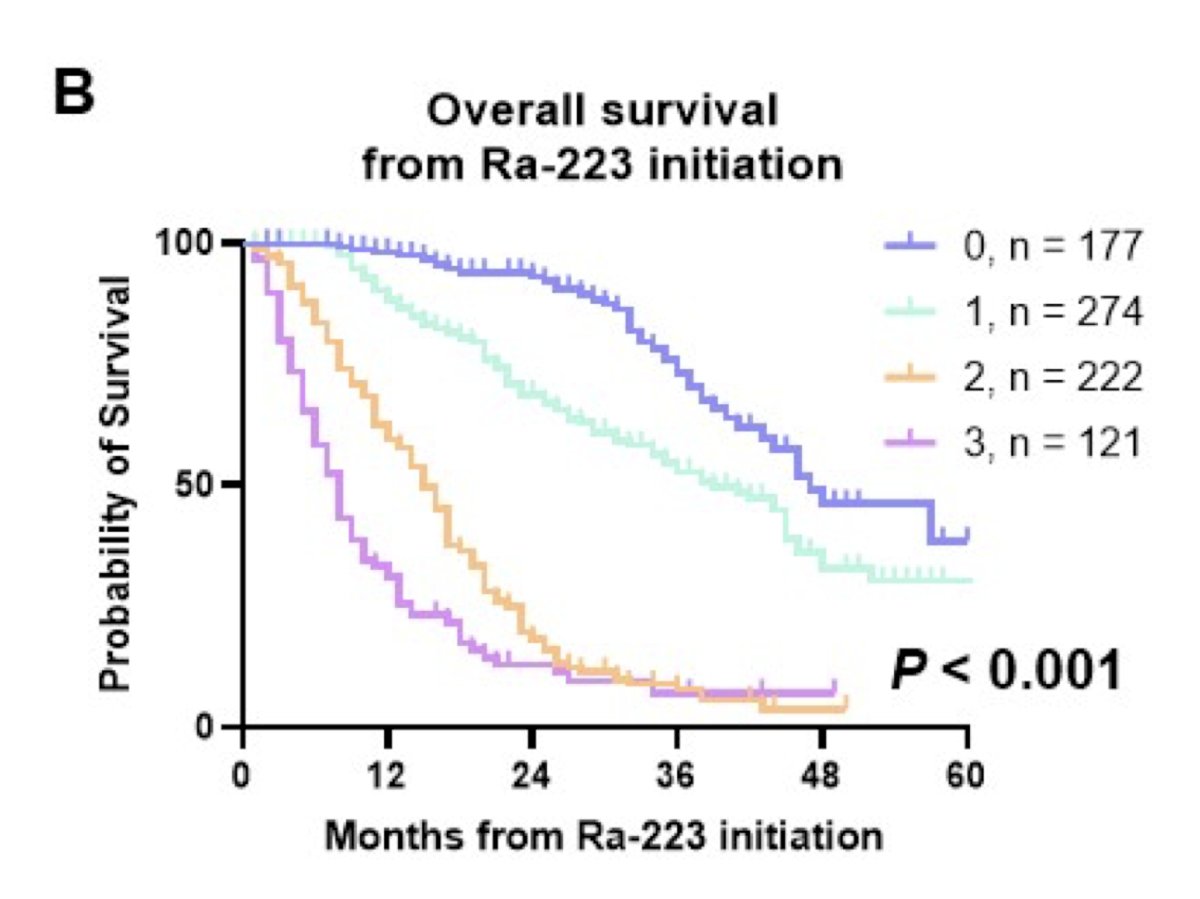
This multicenter retrospective study included 794 patients with mCRPC who received radium-223 treatment. First, multivariable Cox proportional hazards regression analysis was performed to assess the association between overall survival from radium-223 initiation and the three previously identified risk factors: extent of disease >1, incomplete radium-223 treatment (<6 cycles), and PSA >10 ng/mL at the start of radium-223. Patients were then stratified based on the number of these risk factors. Overall survival was estimated using the Kaplan–Meier method and compared across groups using the log-rank test. Furthermore, the predictive performance of these factors for 2-year and 3-year overall survival was evaluated using receiver operating characteristic curve analysis.
The median age at radium-223 initiation was 75 years, and the median follow-up durations from CRPC diagnosis and radium-223 initiation were 36 and 16 months, respectively. In multivariable analysis adjusted for age, ECOG performance status ≥1, Gleason score ≥8, prior lines of mCRPC treatment, and time from CRPC diagnosis to radium-223 initiation, all three risk factors were significantly associated with shorter overall survival: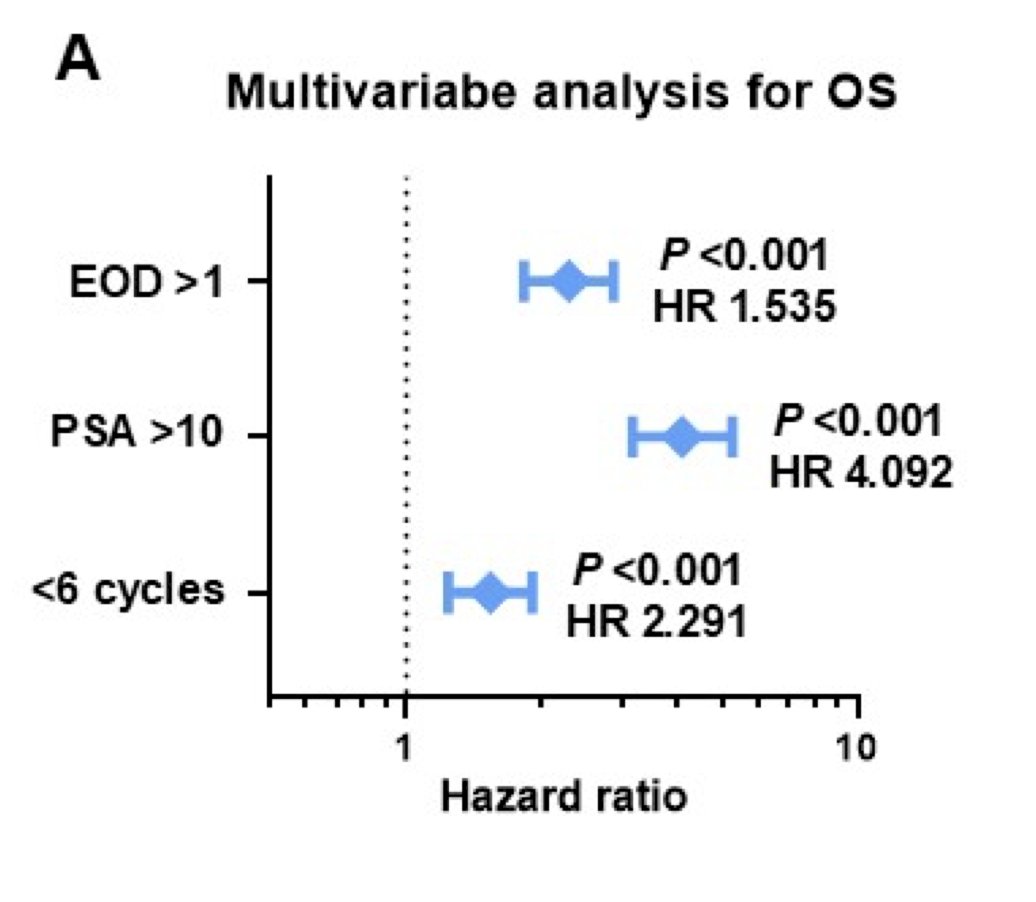
Kaplan–Meier curves demonstrated clear separation according to the number of risk factors:
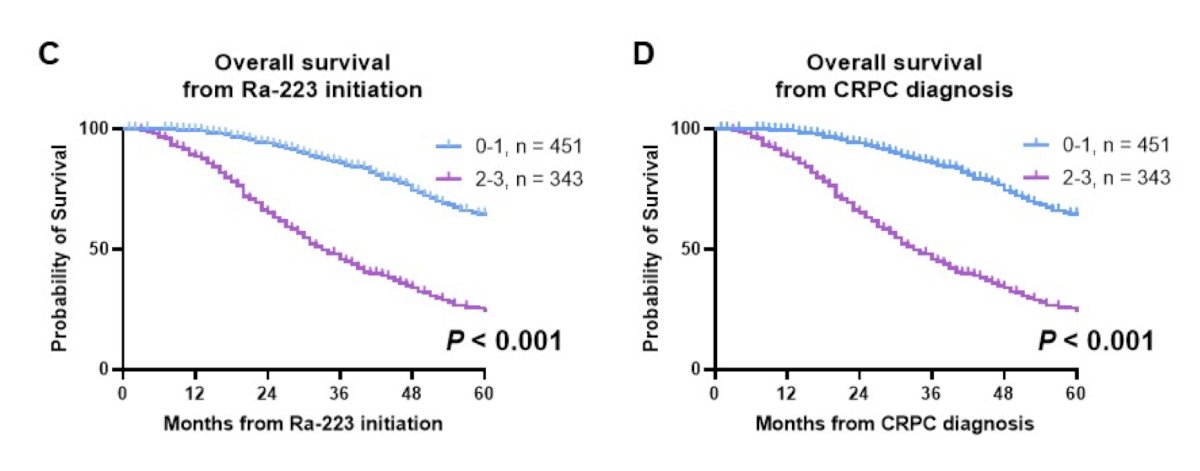
Patients with two or three risk factors had significantly shorter overall survival from both radium-223 initiation and CRPC diagnosis compared to those with zero or one risk factor:
The area under the receiver operating characteristic curve for predicting 2-year and 3-year overall survival was 0.811 (95% CI 0.781–0.841) and 0.778 (95% CI: 0.745–0.811), respectively: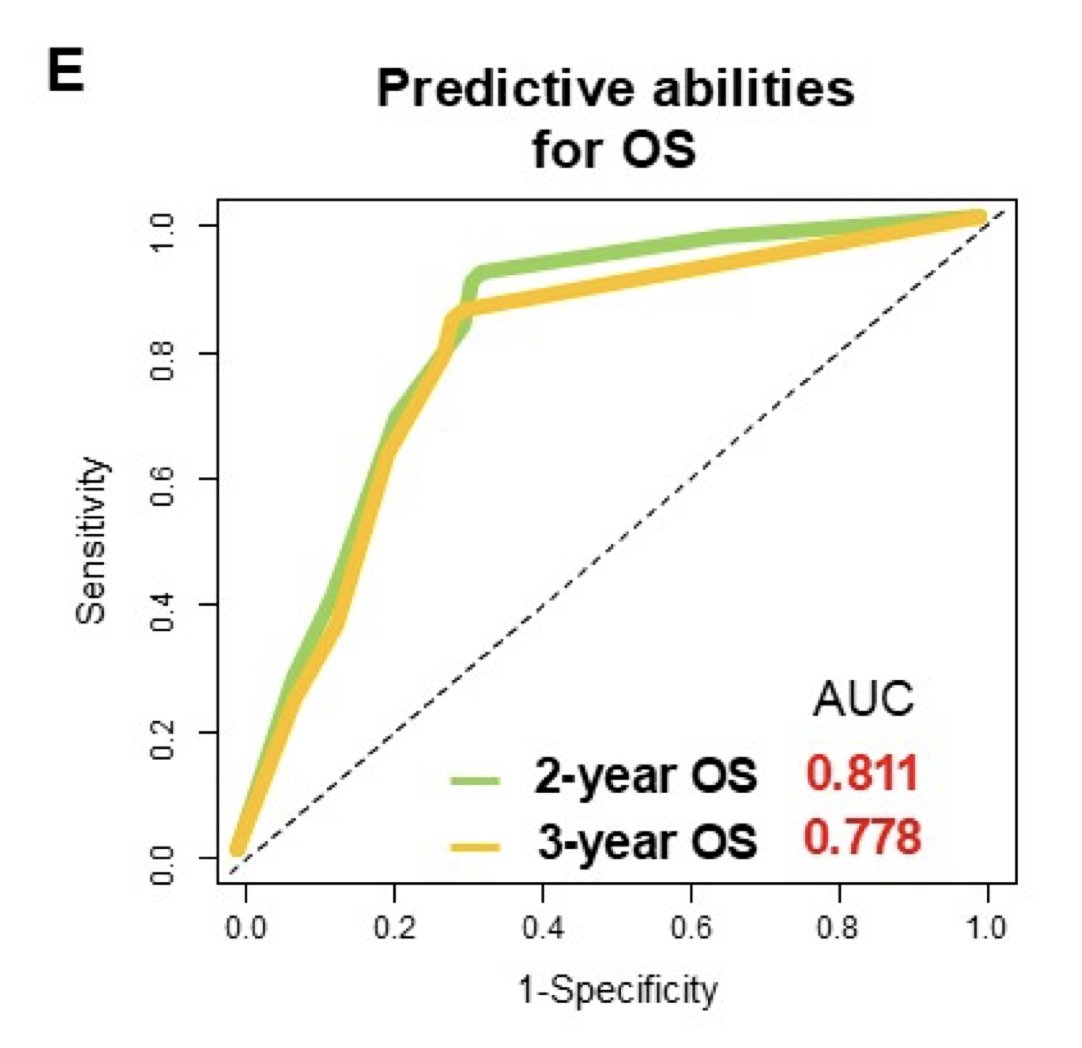
Dr. Fujita concluded this presentation discussing an external validation of a prognostic risk model for overall survival after radium-223 treatment in mCRPC by emphasizing that this external validation confirmed that extent of disease >1, PSA >10 ng/mL at radium-223 initiation, and incomplete radium-223 treatment are independent prognostic factors for poor overall survival in patients with mCRPC.
Presented by: Naoki Fujita, MD, PhD, Hirosaki University Graduate School of Medicine, Hirosaki, Japan
Written by: Zachary Klaassen, MD, MSc – Urologic Oncologist, Associate Professor of Urology, Georgia Cancer Center, Wellstar MCG Health, @zklaassen_md on Twitter during the 2026 European Association of Urology (EAU) Annual Meeting, London, United Kingdom, Fri, Mar 13 – Mon, Mar 16, 2026.